
Strategic push for safer highways
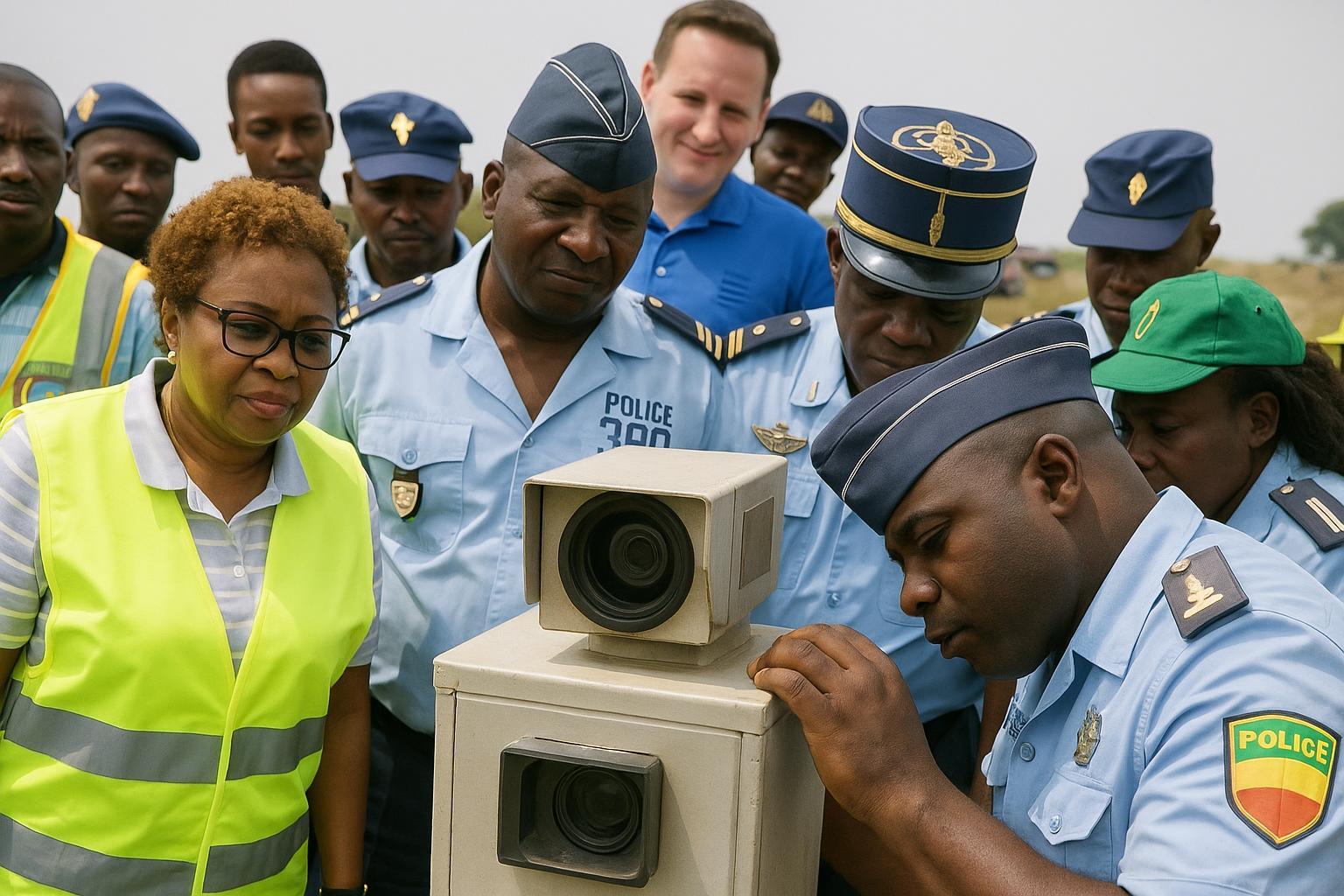
The Republic of Congo has taken a decisive technological leap to reinforce traffic discipline along its busiest corridor, National Road 1. From Brazzaville to Pointe-Noire, this arterial route underpins domestic commerce, yet it has long been synonymous with severe road incidents. In response, the Directorate-General for Land Transport organised a two-day hands-on seminar on 24–25 September 2025, bringing together specialised units from the police and gendarmerie. According to Director-General Atali Mopaya, the objective is straightforward: translate policy ambitions into operational capability so that reckless driving is met with immediate, incontrovertible evidence. His statement underscored that modern enforcement tools are no longer ancillary but integral to safeguarding lives and supporting economic continuity along RN1.
Inside the two-day specialist training
Participants immersed themselves in practical sessions that covered the complete deployment cycle of mobile radars, from site selection to post-capture data analysis. Trainers insisted on methodical calibration, ensuring every device adheres to international measurement standards before the officers hit the field. Over mock checkpoints, the trainees simulated multiple scenarios—speeding, lane infringement and handheld phone use—to verify the cameras’ ability to isolate and record each offence with high-resolution imagery. The practical emphasis of the programme reflects the Directorate’s conviction that classroom theory must yield tangible command of the equipment. Mopaya explained that real-world data collected during the exercises would serve as a benchmark for future nationwide roll-outs.
Digital vigilance: how the radars work
The newly introduced radar units couple Doppler speed detection with high-definition imaging. Once a vehicle breaches a regulatory threshold, the system simultaneously captures the licence plate and, crucially, the driver’s visage. This dual-evidence model, Mopaya argued, eliminates ambiguities that have historically complicated the issuing of fines. Drivers caught typing on mobile phones, for instance, will no longer be able to contest citations on procedural grounds because the photographic record establishes both the act and the identity. By automating acquisition and timestamping every infraction, the devices free officers from subjective roadside assessments and sharply reduce room for negotiation.
Partnership with Jenoptik and local actors
The choice of Germany’s Jenoptik as technical partner signals Congo’s intent to anchor its enforcement regime in globally certified technology. Jenoptik’s expertise spans speed enforcement solutions across several continents, lending the project immediate credibility. On the Congolese side, the collaboration involves the national freight company, Congolaise des Frets, whose logistical network facilitates swift delivery and maintenance of the equipment. The tripartite arrangement, Mopaya said, aligns with Brazzaville’s broader ambition to attract reputable foreign technology while deepening local competencies. Officers who completed the September session will in turn mentor colleagues in departmental units, seeding a domestic cadre of radar specialists.
Expected behavioural shift among motorists
Road users are already being warned that the margin for error is narrowing. Mopaya’s public reminder that any captured infraction is accompanied by a clear image of both plate and driver serves a dual purpose: deterrence and transparency. As the devices become visible fixtures along RN1, officials anticipate a gradual yet steady decline in speeding and distracted driving. Although exact projections remain internal, the Directorate emphasises that preventing even a fraction of the accidents historically recorded on the highway would signify a profound social and economic dividend. Beyond immediate safety gains, reliable traffic enforcement can bolster investor confidence by signalling a stable, well-regulated transport corridor.
À retenir
Two days of immersive fieldwork equipped Congolese police and gendarmerie with the know-how to install and operate mobile radars supplied by Jenoptik. The technology captures speed, licence plate and driver image in a single burst, providing irrefutable evidence for enforcement along the accident-prone National Road 1.
Le point juridique/éco
Under existing traffic regulations, photographic proof is admissible as primary evidence, streamlining the sanctioning process and reducing court backlog. On the economic front, fewer crashes translate into lower insurance payouts, sustained freight movement and reduced hospital costs—outcomes that collectively support the government’s fiscal consolidation efforts and its ambition to foster a safer, more predictable business environment.
