
Symbolic act ignites the enrolment phase
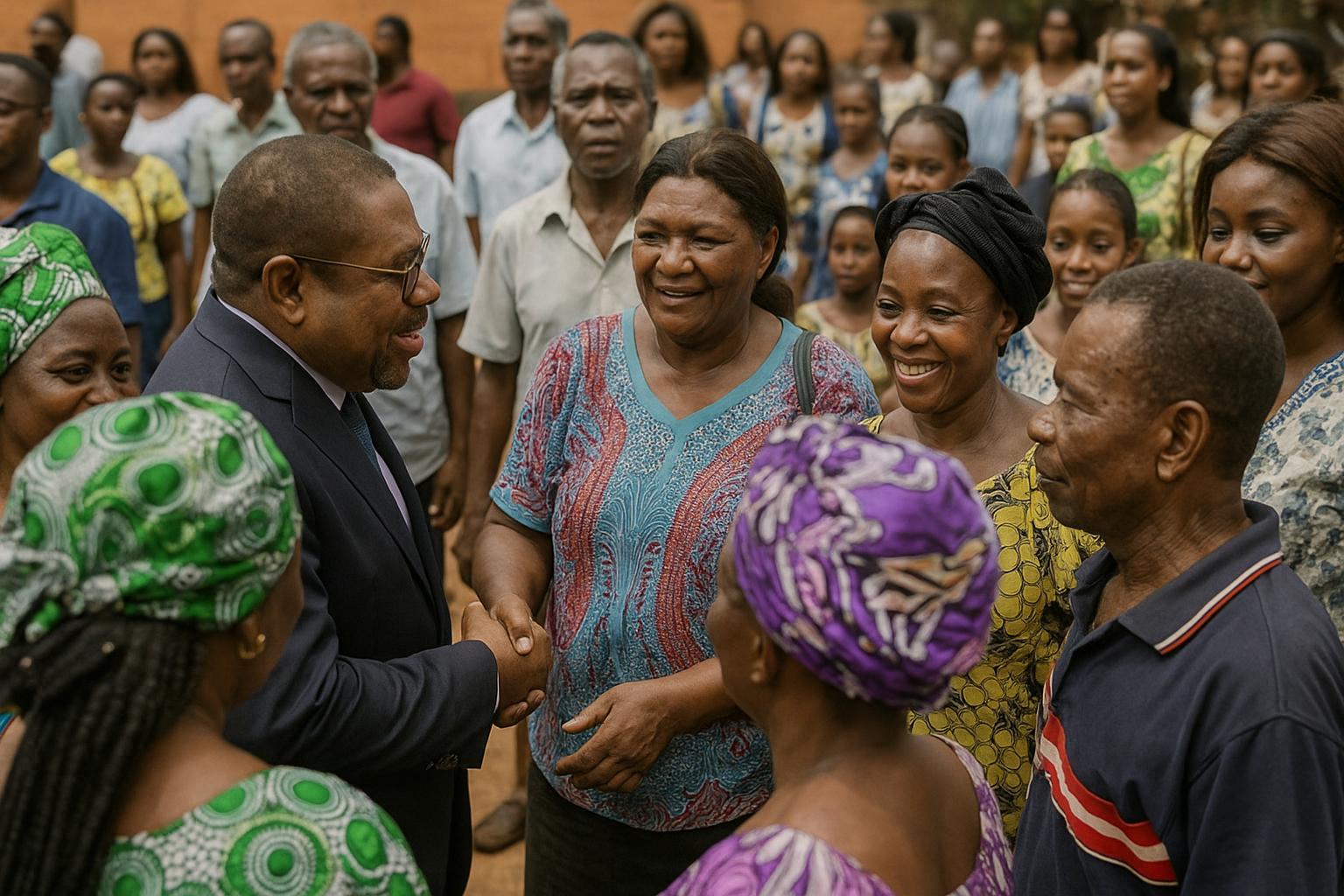
When the Minister of Urban Sanitation, Local Development and Road Maintenance, Juste Désiré Mondélé, stepped into a modest registration office in Brazzaville’s fifth arrondissement, he did more than verify his name on the list. He offered what he called “a civic reminder that elections begin long before the campaign trail”. By presenting his identification documents and signing the updated voter roll, the minister signalled the launch of a crucial pre-electoral phase that will culminate in the 2026 presidential poll. Local residents gathered outside applauded, interpreting the visit as a tangible commitment by the executive to accessible suffrage.
In brief remarks to reporters, Mondélé stressed the cyclical nature of democratic procedures, noting that the census completed earlier this year provides a “matrix that every citizen can consult”. The implication was clear: the responsibility for an inclusive ballot now lies with individuals willing to register and with parties prepared to mobilise their bases.
Leveraging census data for a modern roll
The current revision of the electoral roll is the first to be anchored in the findings of the General Census of Population and Housing completed in 2023. Technicians from the Ministry of the Interior argue that harmonising civil-status records with census data will reduce duplicate entries and inadvertent omissions. According to an internal briefing reviewed by the Agence Congolaise d’Information, more than ninety percent of enumeration zones have already transmitted their updated household files to the electoral commission.
Officials insist that the approach aligns with regional best practice. Comparable cross-referencing methods recently adopted in neighbouring CEMAC states have tightened electoral lists and, in turn, bolstered confidence in final results. By drawing on these experiences, Brazzaville hopes to demonstrate its readiness to meet—if not surpass—continental standards of transparency.
Grassroots networks take centre stage
Mondélé’s appearance carried an additional message targeted at political organisations. As secretary-general of Club 2002 Parti pour l’Unité et la République (PUR), he reminded militants that democracy is “not confined to hushed salons” but is enacted by ordinary members who guide neighbours to registration sites. District officials followed suit: Joseph Itoua, secretary-general of Brazzaville’s quartier 43, confirmed that information is relayed through handheld megaphones and block leaders who walk the streets at dusk. In markets and bus stops they explain what documentation—national identity card, passport or birth certificate—is acceptable under the revised electoral code.
This relational strategy, refined during past elections, relies less on mass rallies and more on sustained micro-mobilisation. Anecdotal reports already suggest a spike in first-time voters, especially among youth turning eighteen in 2024 and 2025. “They see registration as a rite of passage,” said political sociologist Anne-Marie Ngouabi, adding that early engagement frequently cements future turnout.
Early indicators point to heightened interest
Yowan Pandzou, a member of the local electoral commission in Ouenzé’s fifth constituency, offered a snapshot of that expanding interest. He recounted that on ordinary days only two or three voters would appear, yet the morning after the minister’s visit registrars handled a steady queue. Unlike previous cycles, many registrants arrived with complete paperwork, shortening verification times. Glory Obian, a young trader who used his passport for proof of identity, praised the “courteous” process and predicted that peers will follow once they hear how swiftly cards are issued.
Although official tallies will not be released until the close of the exercise, preliminary figures circulating within administrative circles suggest an enrolment rate already approaching sixty percent of the projected electorate—weeks ahead of schedule.
Legal safeguards and family consent
Beyond efficiency, administrators underscore the legal rigor guiding the exercise. Under the directive signed by Interior Minister Raymond Mboulou, any removal from the register requires written consent from the voter or, in the case of minors, the guardian’s authorisation. Itoua explained that street-side notice boards display draft lists so families can detect anomalies. Only minimal deletions have been recorded so far, and those involve duplicate entries uncovered by the census-roll cross-check. This incremental correction, officials argue, protects the constitutional right to vote while preserving the integrity of the register.
Legal analyst Bienvenu Makaya interprets the provision as a safeguard against arbitrary exclusions that once plagued electoral contests across Central Africa. “The Congolese framework now strikes a delicate balance between inclusiveness and accuracy,” he said, noting that the family-consent clause enjoys broad support in civil-society consultations.
A foretaste of the 2026 contest
Although no major party has formally announced its presidential candidate, the intensified enrolment foreshadows a competitive 2026 landscape. Observers believe that a robust voter roll will lend political legitimacy to whichever leader emerges from the poll. In that sense, the current drive forms the procedural bedrock upon which campaign rhetoric, policy platforms and eventual vote counting will rest.
Mondélé’s exhortation resonates with the government’s broader objective: consolidating political stability through orderly, participatory elections. For a nation accelerating infrastructure projects, negotiating energy partnerships and seeking greater regional influence, the credibility of its electoral machinery represents both a domestic imperative and an international credential. By merging updated demographic data, community outreach and legal safeguards, Brazzaville signals its determination to deliver on that promise.
