
A Consultative Verdict on Working Hours in Brazzaville
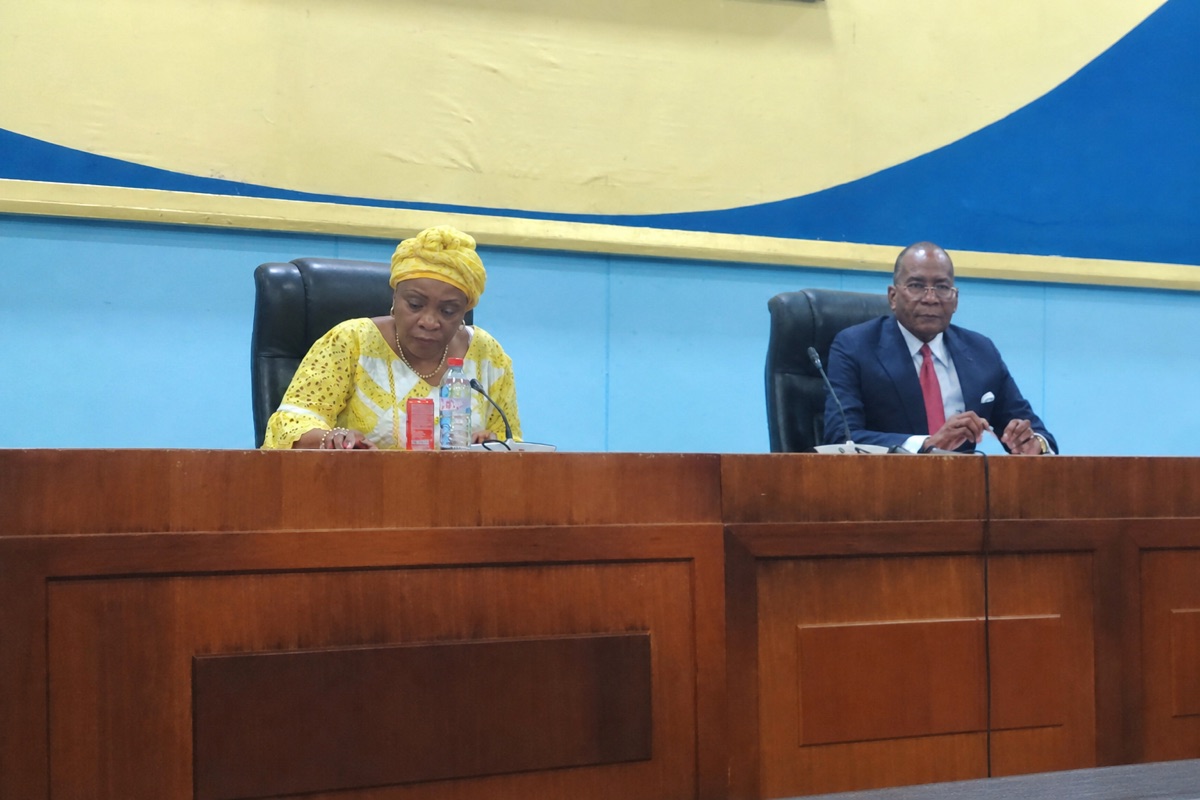
The Republic of Congo has edged a cautious but consequential step closer to redrawing the rhythm of its public administration. Meeting in ordinary session at the Palais des Congrès in Brazzaville and closing its deliberations on 15 July 2026, the National Consultative Labour Commission (Commission nationale consultative du travail, or CNCT) returned a favourable opinion on rescheduling the working hours of state employees. Under the proposed arrangement, civil servants would begin their day at 8 a.m. and finish at 3 p.m., in place of the long-established 7 a.m. to 2 p.m. window (ACI). The session, chaired by Pierre Mabiala, Minister of State for the Civil Service, Labour and Social Dialogue, gathered trade unions, employers and social partners around two dossiers of unusual weight: the reform of the Labour Code and the regulation of working time (Les Échos du Congo-Brazzaville).
Transport Strain Behind the 8 a.m. Start
Behind the seemingly technical adjustment lies a mundane yet persistent reality of urban life in Brazzaville. Union representatives argued that the current schedule bears little relation to how the working day actually unfolds. “From 7 a.m. most administrations are virtually closed, because civil servants often arrive late owing to the difficulties of public transport,” observed Jean-Bernard Malouka, Secretary-General of the Confederation of Free and Autonomous Trade Unions of Congo (Cosylac) (Vox Congo). His remarks, echoed across several accounts of the session, framed the later start not as an indulgence but as an acknowledgement of congestion, distance and the fragility of commuter networks in the capital. “You have seen that when one arrives at 7 a.m., the administrations are practically empty. The minister felt it was necessary to take account of this reality by shifting the working hours,” he added (ACI). The unions were at pains to stress that the revised timetable would leave salaries untouched while, in their reading, sharpening the efficiency of public services.
A Reform Framed Around Investor Confidence
If the unions read the measure through the lens of daily hardship, the government situated it within a broader economic ambition. Pierre Mabiala presented the rescheduling as a contribution to an improved business climate and to the country’s attractiveness in the eyes of investors (ACI). The framing is telling. In an economy still seeking to diversify beyond hydrocarbons, the orderly functioning of the administrative apparatus—counters that open on time, files that move, officials who are present—carries a signalling value well beyond the convenience of employees. By binding a question of working hours to the language of competitiveness, the authorities cast an internal management decision as part of the wider project of institutional credibility, one in which the punctuality of the state stands in for the reliability of the country as a whole.
Eleven Articles and the Slow Modernisation of Labour Law
The rescheduling did not stand alone. The commission devoted a substantial part of its work to the Labour Code, examining in particular provisions on the référé procedure and the regulation of working time, with more than eleven articles amended in the course of the session (Les Échos du Congo-Brazzaville). Malouka welcomed what he described as the “progressive and significant improvement in the working conditions of Congolese,” drawing attention to gains in judicial timeframes that stand to benefit employees. Juste Macaire Mboudimbou likewise noted that the eleven articles subjected to review “should contribute to improving working conditions.” The emphasis on procedural delays is not incidental: swifter labour adjudication touches directly on the everyday security of workers, and its inclusion signals an attempt to modernise a code whose architecture predates the present economic landscape. A third item on the agenda was held over to the next session, a reminder that the commission’s work remains deliberately unfinished (Les Échos du Congo-Brazzaville).
From Consultation to Parliament: The Road Ahead
Whatever their symbolic charge, the opinions issued in Brazzaville remain precisely that—opinions. The CNCT is a consultative body, and its conclusions carry no binding force of their own. The recommendations will be transmitted first to the Government and thereafter to Parliament, which alone can convert them into enforceable rules (Les Échos du Congo-Brazzaville). This procedural distance tempers the announcements: the eight-o’clock start is, for now, a proposal endorsed by the social partners rather than a fixed obligation. Vox Congo, which documented the session in a video report, captured the deliberative texture of the gathering. For the country’s workers and for the investors the reform hopes to reassure, the coming legislative stage will determine whether a favourable opinion hardens into the settled discipline of the working day.
