
A Continental Rallying Cry for UNESCO Leadership
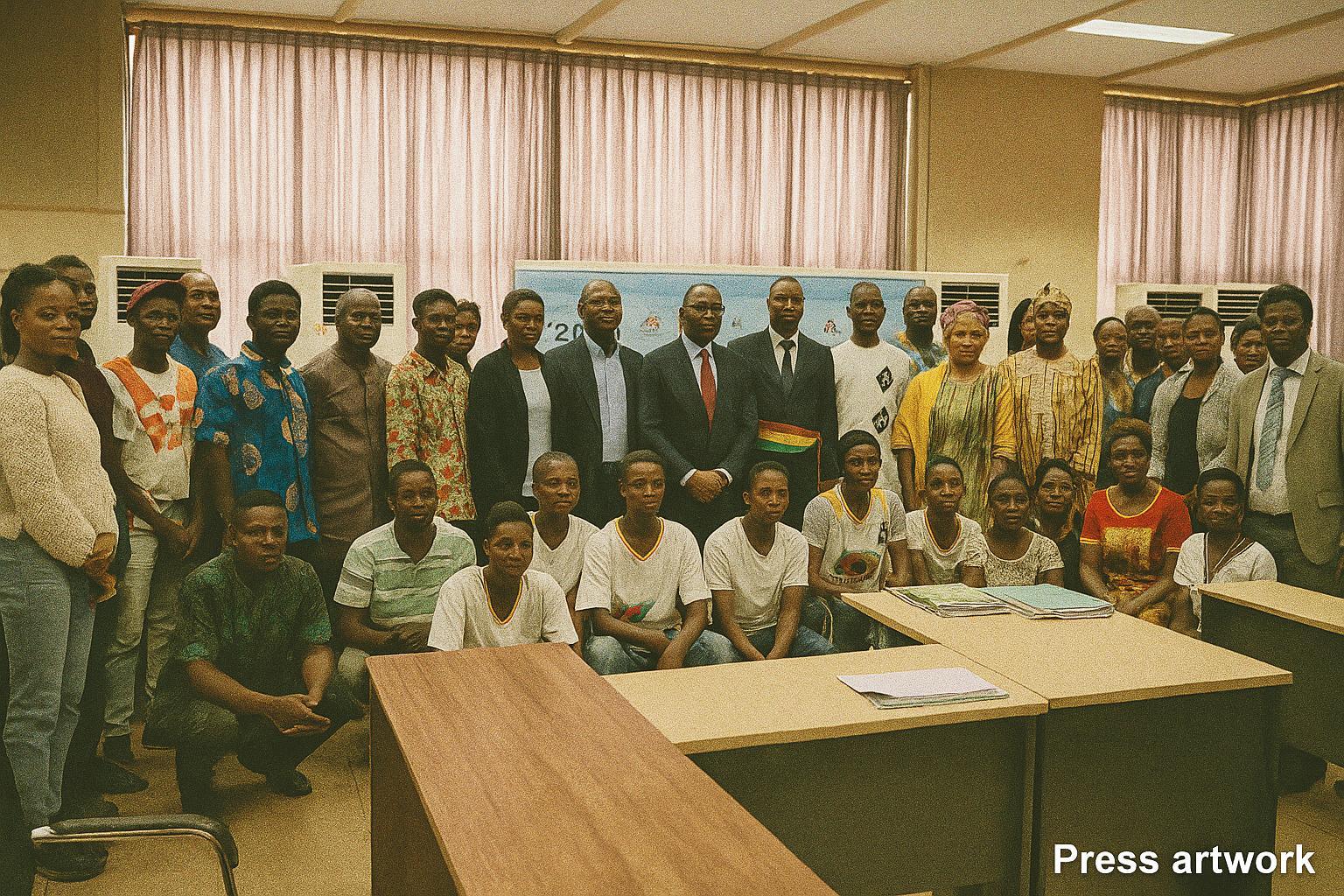
The cathedral-like conference hall of Yamoussoukro’s Fondation Félix Houphouët-Boigny seldom hosts events that resonate far beyond the Ivorian capital. Yet on 29 July 2025, the launch of an international citizens’ campaign by the Confederation of African UNESCO Clubs and Associations (CACU) did precisely that. At stake is the candidacy of Firmin Édouard Matoko, seasoned Congolese diplomat and former Assistant Director-General for Priority Africa, in the contest to head the United Nations Educational, Scientific and Cultural Organization. With the election fixed for October, CACU’s president Allogmom Gabin framed the moment with a deliberately urgent cadence: “Within two months UNESCO will renew its leadership; Africa must speak with one voice.”
Matoko’s bid arrives fifty years after Senegalese thinker Amadou-Mahtar M’Bow left the office of Director-General, the last African to occupy it. Against a backdrop of renewed debate about the place of the Global South in rule-shaping fora, the symbolism of a Central African figure restoring regional balance has not escaped observers in Paris, where UNESCO is headquartered (UNESCO press briefings, July 2025).
Continental Diplomacy Behind the Matoko Candidacy
Diplomatic sources in Addis Ababa confirm that the African Union’s Executive Council has scheduled an extraordinary session in early September to weigh coordinated support for the Congolese contender. Although three candidates from different continents have formally declared, Matoko’s backers argue that internal consultations across the fifty-four AU member states could deliver a decisive bloc vote when UNESCO’s Executive Board convenes.
President Alassane Ouattara’s early endorsement from Côte d’Ivoire—echoed in statements released by Ghana’s Foreign Ministry and the Gabonese presidency—illustrates how the campaign is quickly moving from civil-society advocacy into state-to-state coalition building (Jeune Afrique, 31 July 2025). Diplomats in Brazzaville underline that the Republic of Congo is deliberately avoiding triumphal rhetoric; rather, the official line emphasises « consensus and competence »—a vocabulary intended to reassure non-African electors that regional solidarity need not eclipse meritocratic considerations.
Cacu’s Outreach Strategy and Regional Stakes
Founded in 2012, CACU federates more than 1 800 UNESCO clubs from Dakar to Dar es Salaam. The network’s mobilising capacity rests less on grand diplomacy than on granular advocacy in capitals often overlooked in multilateral jockeying. In Yamoussoukro, organisers unveiled a roadmap that combines social-media amplification with face-to-face briefings for permanent delegations accredited to UNESCO, many of which maintain modest secretariats and are receptive to meticulously prepared dossiers. The itinerary charts stops in Abuja, Addis Ababa, and Pretoria before culminating with a Brains Trust conference in Paris on the eve of the vote.
Behind the choreography lies a strategic calculus. First, CACU wishes to dissuade member states flirting with temporary withdrawals from UNESCO—an issue revived by the budgetary shortfalls that followed earlier United States disengagements. Second, the confederation hopes to secure new resources for UNESCO’s flagship programmes in literacy, open-science and cultural-heritage restitution, areas where Africa remains both beneficiary and thought-leader. As Gabin reminded his audience, “an African at the helm is not a concession; it is a pragmatic step toward re-energising the organisation’s constitutional mandate.”
A Seasoned Insider of Multilateral Governance
Matoko’s professional trajectory offers a textbook example of incremental multilateral ascent. Trained as a linguist at the Université Marien-Ngouabi in Brazzaville and later at the Sorbonne, he joined UNESCO in 1994 as a programme specialist. Colleagues recall his deft facilitation of the 2005 Convention on the Protection and Promotion of the Diversity of Cultural Expressions, an instrument often cited as a template for soft-power diplomacy (UNESCO archives). His subsequent stewardship of the Priority Africa portfolio positioned him at the intersection of educational policy, heritage preservation and post-conflict reconstruction in the Lake Chad Basin.
Critics occasionally suggest that long-time insiders risk embodying bureaucratic inertia. Yet proponents counter that Matoko’s familiarity with UNESCO’s labyrinthine governance could accelerate overdue reforms, notably the modernisation of the field-office network and the digitisation of intangible heritage registries. His public interventions emphasise results-oriented management and bridge-building across geopolitical fault lines—an approach that resonates with delegates mindful of wider UN debates on efficiency.
Geopolitical Implications for Congo and the Continent
For Congo-Brazzaville, a successful outcome would augment the country’s diplomatic profile without upsetting its cautious foreign-policy posture. Officials in the Ministry of Foreign Affairs privately acknowledge that a Congolese Director-General could grant Brazzaville soft-power leverage disproportionate to its economic weight, a phenomenon comparable to Ethiopia’s rise within the African Union apparatus.
At the continental level, an African victory could inject momentum into broader campaigns advocating permanent representation for Africa on the UN Security Council, though seasoned diplomats temper expectations. As Dr. Funeka Maseko of the South African Institute of International Affairs observes, “Symbolism matters, but it must translate into policy influence and resource allocation to avoid being purely ceremonial.”
Beyond Africa, the race unfolds amid renewed attention to cultural diplomacy as a stabilising vector in an international system under strain. With several Member States reassessing contributions to multilateral agencies, the personality and priorities of the next Director-General will inevitably influence whether UNESCO sustains its role as a custodian of global commons or recedes into procedural irrelevance.
