
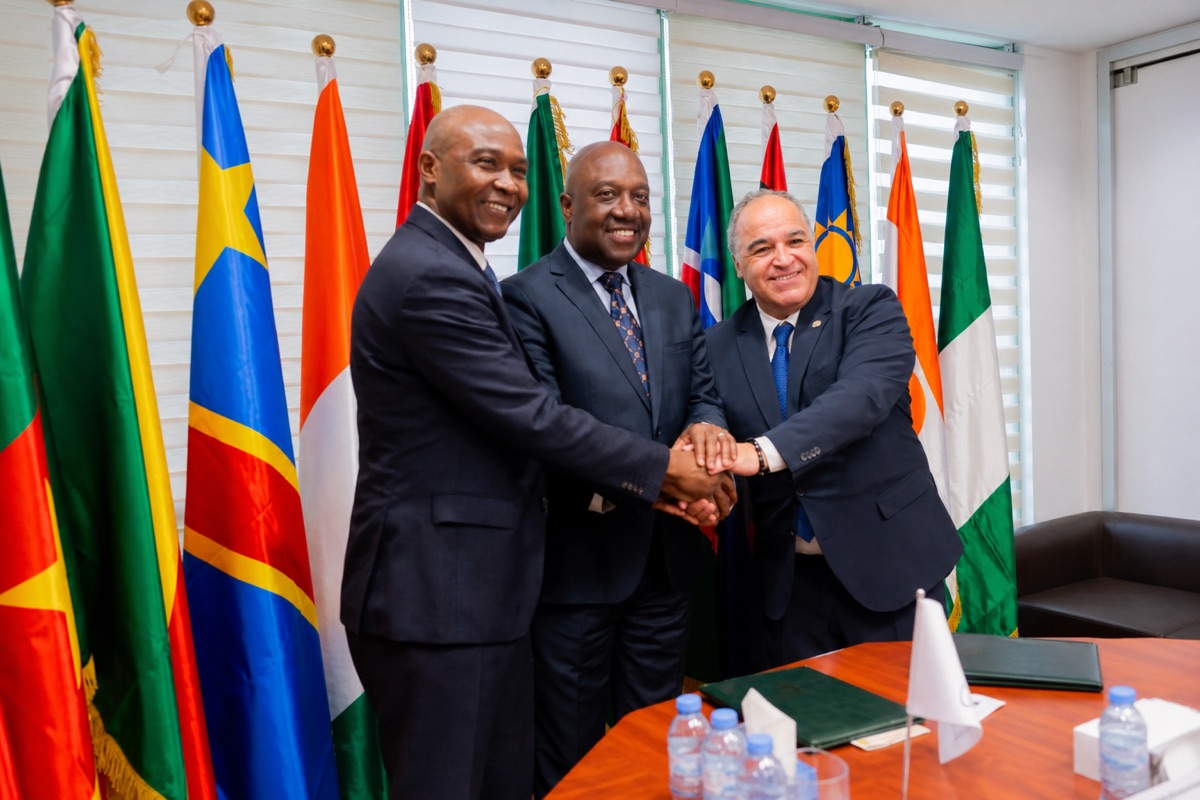
A Brazzaville Handshake With Continental Ambitions
On 20 July, in the Congolese capital, two of the developing world’s most consequential energy blocs put their signatures to a document whose ambitions reach well beyond the ceremonial. The African Petroleum Producers Organization (APPO) and the Gas Exporting Countries Forum (GECF) concluded a cooperation accord spanning the oil and gas sectors, sealed by their respective secretaries general, Farid Ghezali and Philip Mshelbila, and witnessed by Congo-Brazzaville’s Minister of Hydrocarbons, Stev Simplice Onanga. Behind the diplomatic choreography lies a more structural wager: that the governance of African hydrocarbons, long dictated by external markets and foreign capital, can be recalibrated from within.
Governance at the Heart of the APPO-GECF Compact
The protocol is, at bottom, an instrument of coordination. It binds the two organisations to pool data, research findings and market analysis so as to read the volatile trajectory of global hydrocarbons through a common lens, while easing the transfer of technology, the building of technical capacity and joint programmes of research and innovation. Such provisions may read as bureaucratic, yet they confront a persistent asymmetry: producer states have often lacked the shared intelligence and institutional muscle that consuming powers take for granted. “We have already been working together well before this signing, notably on the recruitment of teams and the sharing of expertise,” Ghezali observed, framing Africa as a dependable energy partner whose credibility rests, in his telling, on a steady inflow of foreign direct investment.
Energy Poverty and the Case for African Gas
The compact is also a response to a developmental predicament with moral weight. More than 600 million people on the continent still live without access to electricity, a deficit that no abstract commitment to decarbonisation can responsibly ignore. Ghezali presented natural gas as a transitional resource capable of narrowing that gap while accompanying a cleaner energy trajectory — a formulation that situates African producers squarely within the contested global debate over the pace of the energy transition. The accord’s explicit reference to the environment, and to the role of gas and oil in advancing the United Nations’ sustainable development goals, signals an awareness that legitimacy in energy markets is increasingly adjudicated on climate terms.
Congo’s Sovereign Wager on the Gas Economy
For the host nation, the timing is far from incidental. The Republic of the Congo has exported liquefied natural gas since 2024 and nurtures ambitions of expansion in a sector it treats as pivotal to its industrial future. Minister Onanga cast the agreement as a “strategic alliance” forged amid geopolitical tension and market uncertainty, its purpose being to defend the sovereignty of producer states over their resources, to secure equitable revenues and to underwrite the continent’s industrialisation. He confirmed that discussions were under way on a possible Congolese accession to the GECF — a step that would formalise Brazzaville’s ambition to sit at the table where gas policy is deliberated rather than merely at its margins.
Institutionalising a Permanent Energy Dialogue
Perhaps the accord’s most durable feature is procedural. It establishes a standing platform, the “GECF-APPO Energy Dialogue,” intended to coordinate energy policy across the two memberships on a continuous basis rather than through episodic summitry. The underlying arithmetic explains why such a mechanism matters: nine of the GECF’s twenty members are African, and the continent, by the forum’s own reckoning, must double its natural gas output over three decades to meet the needs of a swelling population. A permanent forum offers the prospect of aligning production strategies, harmonising negotiating positions and, over time, converting scattered national endowments into collective bargaining weight.
Whether that promise is honoured will hinge on execution rather than declaration. Institutional architecture of this kind has, elsewhere, foundered on divergent national interests and the gravitational pull of external buyers. Yet the language emerging from Brazzaville suggests an unusually deliberate attempt to marry developmental urgency with market pragmatism. Onanga’s closing remark captured the balance the signatories are trying to strike: “African gas must first serve to light, power and develop the continent, while contributing responsibly to global energy security.”
That sentence encapsulates the wager. It asks whether a bloc of producer states can assert control over the terms of their own development without retreating from the international markets on which their revenues still depend. The APPO-GECF compact does not dissolve that tension; it institutionalises the effort to manage it. In an era when energy has once again become an instrument of statecraft, the quiet consolidation of African producers into a coordinated voice may prove more consequential than the ceremony that inaugurated it.
