
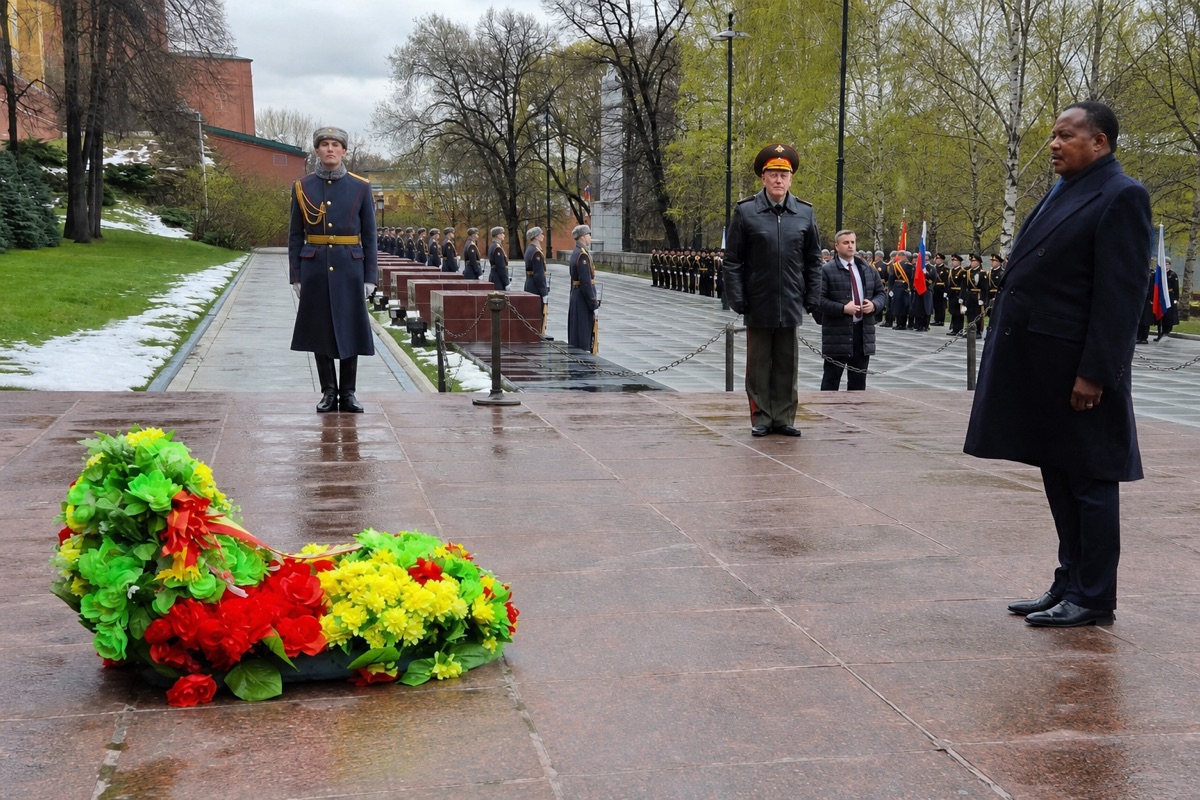
When the presidential aircraft lifted off from Brazzaville on Monday 27 April bound for the Russian Federation, it carried more than the head of state of the Republic of the Congo. It carried a calculated message about where a small but oil-rich Central African nation believes its future partnerships now lie. President Denis Sassou N’Guesso’s official visit to Russia, framed by his administration as an exercise in deepening bilateral relations, opens a window onto a recalibration that has been quietly under way across much of the continent.
A Brazzaville-Moscow Axis Takes Shape
The official agenda is unambiguous in its ambition. During his stay, the Congolese leader is scheduled to hold high-level talks with his Russian counterpart, Vladimir Poutine, alongside other political and economic figures. The conversations, according to the information available, are to centre on the expansion of economic partnerships, the growth of investment flows, and the prospects for collaboration across several strategic sectors.
Energy sits at the head of that list, a logical priority for a country whose public finances remain closely tethered to the rhythms of crude production. Yet the breadth of the announced portfolio is itself telling. Health, education, and the sensitive domains of security and defence have all been placed on the table. Such a spread suggests that Brazzaville is not seeking a transactional, single-sector arrangement but rather the architecture of a more durable relationship, one that touches both the machinery of the state and the daily concerns of its citizens.
Reading a Diversified Diplomacy
To understand the significance of the journey, it helps to situate it within the wider current that the visit itself acknowledges. The trip unfolds, as the Congolese presidency has noted, against an international backdrop marked by profound geopolitical shifts. A growing number of African governments have set about diversifying their strategic partners, less out of ideological preference than out of a pragmatic reading of their own development needs.
For Brazzaville, the logic is twofold. There is, first, the matter of standing: a presence on the international stage that cannot be reduced to a single axis of dependence carries its own weight. There is, second, the more concrete question of opportunity. New partners can mean new financing, new technical expertise, and new outlets for cooperation in fields where established arrangements have not always delivered. The Republic of the Congo, distinct from its larger neighbour the Democratic Republic of the Congo, has long sought to project an outsized diplomatic profile relative to its population, and a visit of this nature is consistent with that tradition.
The Sectors Where Ambition Meets Reality
The substance of any such overture, of course, will be measured not in communiqués but in implementation. Energy cooperation with a major hydrocarbon producer such as Russia could carry implications for both upstream activity and the technical know-how that accompanies it. The inclusion of health and education in the discussions points toward the kind of human-capital investment that development economists routinely identify as decisive for sustained growth, even if the precise contours of any commitment remain to be defined.
The security and defence dimension is perhaps the most closely watched, given its geopolitical sensitivity. Cooperation in this sphere tends to bind states together in ways that purely commercial agreements do not, and its appearance on the agenda signals a willingness in Brazzaville to consider a relationship of some depth. It would be premature, however, to read into the visit anything beyond what has been stated. What is clear is the intention to broaden the relationship; what remains uncertain is the pace and scale at which that intention will translate into tangible projects.
What the Visit Signals for Central Africa
Seen from the vantage point of the region, the journey is a reminder that the diplomatic map of Central Africa is no longer drawn by habit alone. Each capital is increasingly inclined to weigh its partnerships against its own calculus of interest. For a country navigating the constraints of a commodity-dependent economy and the demands of a young population, the appeal of widening the circle of partners is readily understood.
Whether this particular overture matures into a substantive and lasting partnership will depend on factors that extend well beyond a single visit, from the durability of political will on both sides to the capacity of institutions to convert declarations into delivery. For now, the departure from Brazzaville stands as a statement of direction. Denis Sassou N’Guesso has signalled where he intends to look for the resources and relationships to advance his country’s development, and Moscow has, at least for the duration of this visit, become a focal point of that search.
