
A Capital at a Crossroads of Cleanliness and Image
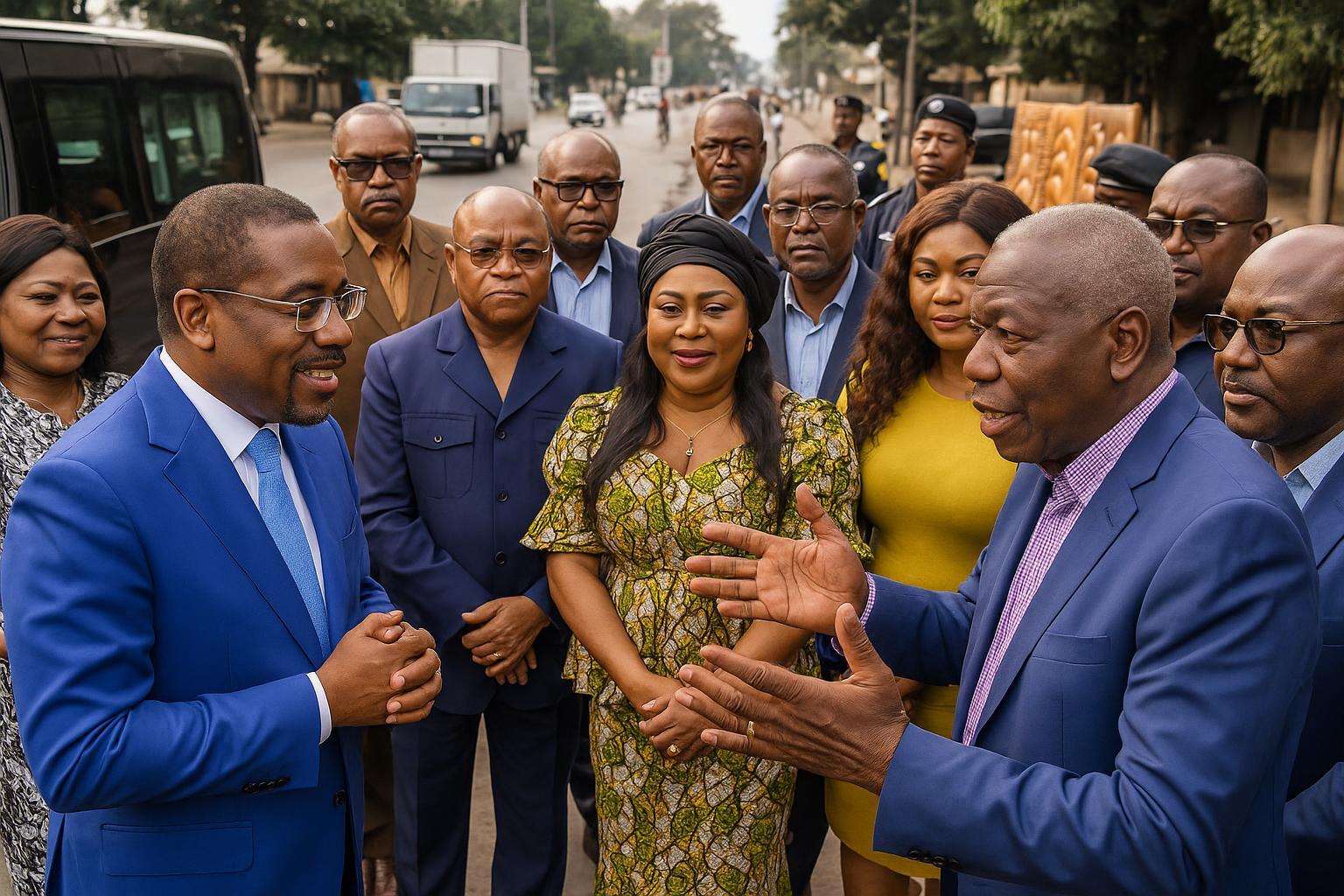
On the eve of Congo-Brazzaville’s national celebrations, Minister of Urban Sanitation, Local Development and Road Maintenance Juste Désiré Mondélé toured Brazzaville’s main arteries to evaluate the city’s special clean-up and resettlement operation. His verdict—“fairly good”—was cautiously optimistic, signalling that the government’s multipronged campaign is beginning to reshape both the physical landscape and the civic narrative of the capital. The exercise is not merely cosmetic; it is nested within a broader state strategy to project an image of stability and governance capacity that aligns with President Denis Sassou Nguesso’s stated ambition of positioning Brazzaville as a regional hub.
The political symbolism of orderly boulevards such as Avenue Denis Sassou Nguesso is hard to miss. Urban tidiness communicates a sense of control, investment readiness and public discipline—attributes prized by regional investors and multilaterals alike. For a city that, according to UN-Habitat, is projected to surpass two million inhabitants within a decade, sanitation has become a litmus test of administrative efficacy (UN-Habitat 2022). The minister’s peripatetic inspection touched emblematic sites from the Djoué Bridge to the populous Poto-Poto market, highlighting the government’s intent to make cleanliness visible across socioeconomic divides.
Gauging the “Fairly Good” Grade: Metrics and Method
The ministerial delegation assessed three primary indicators: the absence of street-side refuse, the unobstructed flow of pedestrian traffic and the compliance of informal vendors with newly demarcated zones. While detailed quantitative data have yet to be released, preliminary municipal records suggest a twenty-three-percent reduction in illegal dumping sites since the operation began in June. City engineers report that more than fifty kilometres of drainage canals have been cleared, mitigating flood risk during the upcoming rainy season.
By invoking a school-like grading system—moving from “fairly good” toward an “excellent” target—Minister Mondélé has introduced an easily intelligible benchmark for both civil servants and residents. The rhetorical device underlines the government’s view that sanitation is as much a behavioural matter as it is an infrastructural one. Officials emphasise that sustaining current gains will require households to adopt routine waste segregation and timely disposal practices. Emerging partnerships with youth associations and faith-based organisations aim to embed such habits in daily life, reinforcing the notion that urban hygiene is a shared responsibility rather than a top-down edict.
Public Health Dividends: From Cholera Prevention to Urban Wellness
Congo’s Ministry of Health recorded localised cholera alerts along the Congo River last year, mirroring trends observed across Central Africa (WHO 2023). By clearing gutters, widening sidewalks and regulating food markets, the Brazzaville campaign directly targets vectors that facilitate waterborne and gastrointestinal diseases. Minister Mondélé framed the initiative as “the first barrier” against cholera, echoing World Health Organization guidance that environmental sanitation can cut incidence rates by thirty to forty percent in high-risk zones.
Beyond immediate disease prevention, urban planners argue that cleaner streets contribute to a virtuous cycle of wellbeing. Studies conducted by the African Development Bank in comparable francophone capitals demonstrate that visible cleanliness correlates with reduced petty crime and higher property values (AfDB 2021). The minister made the same linkage in lay terms: “Cleanliness chases illness, lighting chases delinquency.” By integrating expanded street-lighting projects with waste-management efforts, authorities are constructing a dual narrative of health security and public safety, two pillars integral to the city’s long-term attractiveness.
Civic Ownership and Governance: Toward a New Social Compact
For decades, responsibility for sanitation oscillated among central ministries, municipal councils and donor-funded projects, often generating jurisdictional ambiguities. The current operation delineates clear mandates: municipalities supervise daily waste collection, while the ministry provides strategic oversight and emergency interventions. Scholars of Congolese urban governance note that this structure aligns with decentralisation reforms adopted in 2019, which sought to bring service-delivery decisions closer to communities.
Yet policy architecture alone cannot guarantee behavioural change. The minister’s call for “a new citizenship” signals an effort to infuse the campaign with moral overtones, appealing to notions of patriotic duty and communal solidarity. Local radio programmes now dedicate airtime to sanitation etiquette, and school curricula have been updated to include modules on environmental stewardship. Such soft-power tactics complement the harder edge of enforcement, where municipal police have authority to levy fines for littering and for operating unlicensed kiosks on pedestrian corridors. Together, these measures aim to transform the clean-up from a temporal event into a durable norm.
Regional Context and Prospects for Sustainable Urban Sanitation
Across Central and West Africa, governments are grappling with the nexus of rapid urbanisation and environmental stress. Brazzaville’s operation sits alongside comparable drives in Abidjan and Libreville, each propelled by a mix of public-health exigencies and economic branding. International partners view such campaigns as platforms for piloting circular-economy models, notably waste-to-energy conversion and plastics recycling. The Ministry of Urban Sanitation has confirmed exploratory talks with private consortia about installing micro-incinerators that could supply power to peri-urban clinics, signalling an appetite for technologically driven solutions.
Future success, however, will hinge on predictable financing. While the 2024 state budget earmarks additional allocations for sanitation, external funding streams remain critical. A prospective World Bank loan focused on infrastructure resilience could underwrite further drainage and landfill upgrades. If secured, these resources would enable Brazzaville to move beyond episodic clean-ups toward an integrated waste-management system that couples public education with modern disposal technologies. In that scenario, Minister Mondélé’s aspiration for an “excellent” rating may evolve from motivational rhetoric to an empirically verifiable milestone, reinforcing Congo-Brazzaville’s broader agenda of sustainable urban renewal.
