
A Crucial Saturday Hangs in the Balance
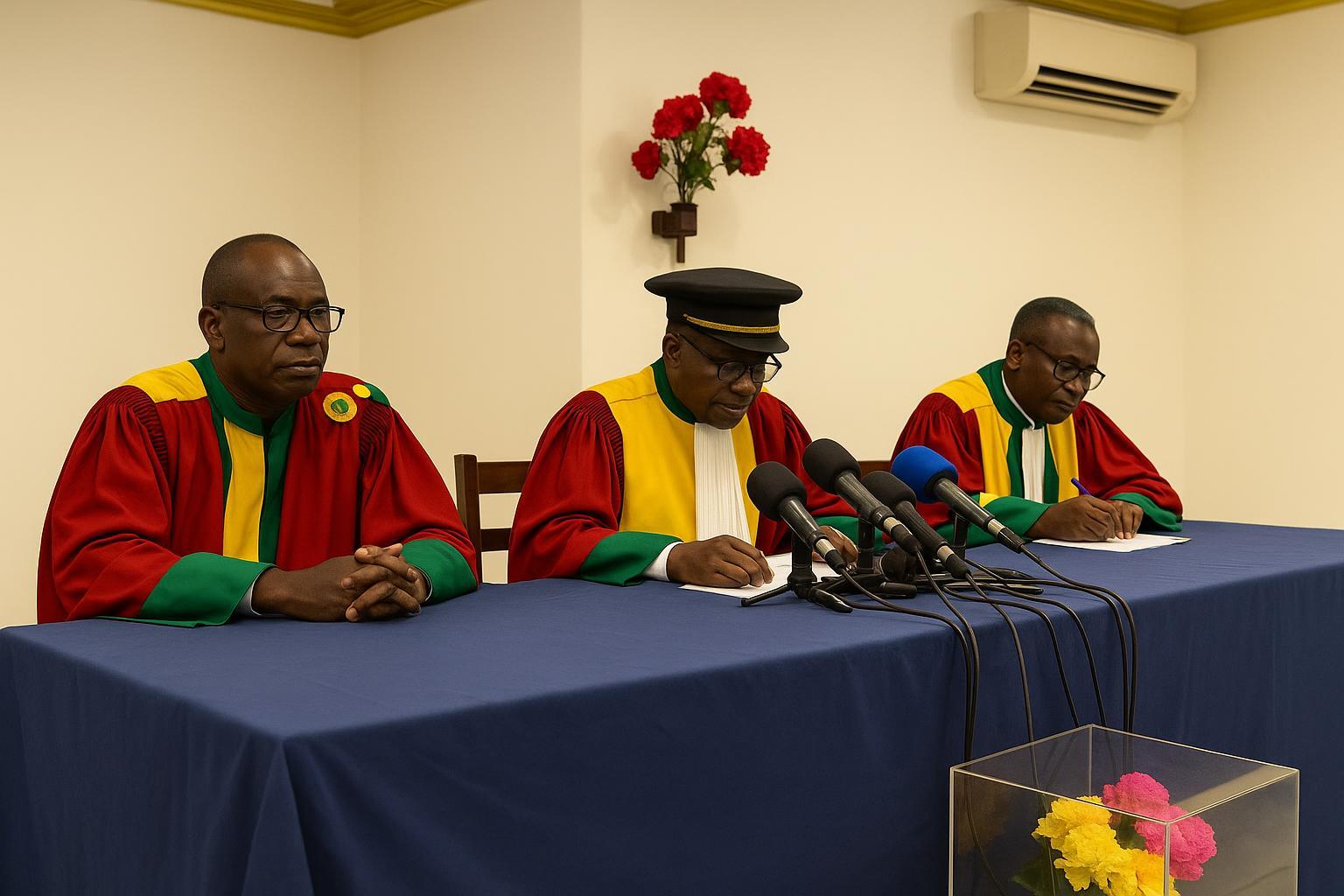
On the eve of the long-scheduled elective congress of the Congolese Handball Federation, or FECOHAND, the sporting community in Brazzaville finds itself immersed in procedural suspense. The Chamber of Conciliation and Arbitration in Sport (CCAS) is expected to rule on a petition that seeks the provisional suspension of the vote, lodged by counsel for disqualified presidential hopeful Avicenne Nzikou. Sources close to the CCAS confirmed late Friday evening that the hearing, initially opened on 15 August, will resume on the morning of 16 August, only hours before delegates are due to cast their ballots. The juxtaposition of judicial clocks and electoral timetables has rendered Saturday an unusually delicate hinge for the federation and for observers who prize Congo-Brazzaville’s growing reputation as a regional hub for sporting diplomacy.
The Legal Trajectory to a Second Petition
The current dispute is the sequel to a decision issued on 13 October 2024, in which the CCAS outlined principles meant to guide the composition of an independent electoral commission. Counsel for Mr Nzikou, Me Éric Ibouanga, argues that those principles were set aside when the National Olympic and Sports Committee of Congo (CNOSC) validated the present Commission électorale indépendante on 14 August. In the first petition, filed earlier this week, the CCAS instructed the complainants to “mieux se pourvoir”—to seek a more precise remedy—prompting the swift filing of a second, more targeted request. According to Me Ibouanga, the extraordinary urgency provision of Congolese sport law permits the arbitral bench to issue interim measures at any hour and from any venue, provided the adversarial principle is preserved. CNOSC representatives, though formally notified, declined to appear at Friday’s session, a procedural posture that—if maintained—could invite a default ruling.
Electoral Mechanics and the Question of Eligibility
Beyond procedural nuance lies a substantive debate on eligibility criteria. The independent commission’s decision to disqualify Mr Nzikou’s slate, citing documentary irregularities, is viewed by his supporters as inconsistent with the CCAS’s previous guidance that sought to widen participation. The commission defends its screening as a necessary guardrail against ad-hoc candidature and notes that seven other tickets, including that led by interim president Karine Okemba, were accepted without reservation. Analysts at the Brazzaville-based think tank Observatoire des Politiques Sportives Africaines emphasise that the balance between inclusivity and regulatory rigour remains fragile across many African federations, making the present dispute a potential jurisprudential landmark.
Reactions from Stakeholders and Regional Diplomats
In the corridors of the Palais des Congrès, delegates expressed cautious optimism that the CCAS will endorse a path that avoids a leadership vacuum. “The federation must emerge stronger, whatever the ruling,” remarked veteran coach Dany Mavoungou, whose club has contributed three players to Congo’s bronze-medal squad at the last African Games. Regional attachés, speaking on condition of customary discretion, observed that a transparent resolution would underscore Brazzaville’s broader commitment to rule-based governance, an attribute increasingly weighed by multilateral sport investors. In this context, the handball standoff transcends parochial athletics, touching the Republic of Congo’s aspiration to host the 2028 Central African Games, a bid that depends heavily on perceptions of administrative credibility.
The Government’s Stated Neutrality
Officials at the Ministry of Youth and Sports reiterate that the matter rests squarely within the autonomous jurisdiction of the CNOSC and the CCAS. A senior adviser noted that “the State’s role is to provide the legal architecture; it is neither to anoint nor to disqualify candidates.” That position aligns with President Denis Sassou Nguesso’s broader approach of insulating federations from direct political intervention, a policy applauded by the International Handball Federation and echoed in a recent communiqué from the Association of National Olympic Committees of Africa. By maintaining an arm’s-length stance, the executive branch aims to safeguard both the integrity of the process and the nation’s standing in continental sporting forums.
Soft-Power Stakes for Brazzaville
Handball may not command the global spotlight enjoyed by football, yet it occupies a strategic niche in Congo-Brazzaville’s soft-power toolkit. The national women’s side reached the quarter-finals at the 2022 African Championship, an achievement that generated positive coverage across francophone media. According to analysts at the Dakar-based Centre for Sport and International Relations, federative stability often precedes performance gains, which in turn shape the narratives available to diplomats seeking to project a modern Congolese identity. A protracted dispute, by contrast, risks sapping momentum ahead of key qualifiers for the 2026 African Cup of Nations in handball.
Scenarios for the Hours Ahead
Should the CCAS order a provisional suspension, the congress would be adjourned until a full hearing on the merits can be scheduled, likely extending the mandate of the caretaker committee. If the petition is dismissed, voting will proceed under the supervision of the independent commission, and results could be announced before dusk on Saturday. In either scenario, precedent suggests that the losing camp may pursue further arbitration at the Court of Arbitration for Sport in Lausanne, though such recourse is both costly and time-consuming.
A Test Case for Sporting Jurisprudence
The delicate choreography between legal oversight and electoral urgency observed this week exemplifies the maturing architecture of sports governance in Congo-Brazzaville. As the CCAS reconvenes, its eventual ruling will contribute to a jurisprudential mosaic that extends beyond the perimeter lines of a handball court. For diplomats and investors alike, Saturday’s outcome will serve as a tangible indicator of the country’s capacity to resolve institutional disputes within a transparent, rules-based framework—an attribute that underpins not only sporting but also economic and political partnerships across Central Africa.
