
A Republic Recalibrates Its Energy Ambitions
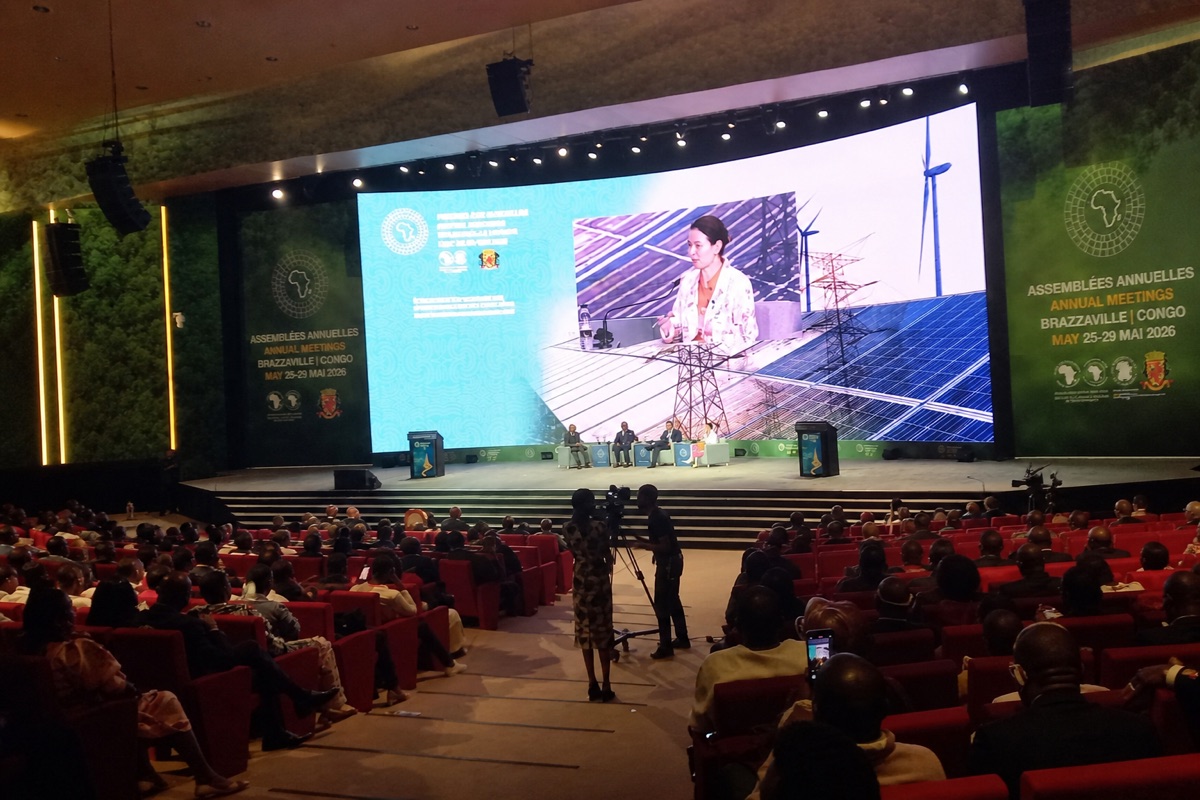
When the Republic of Congo (Congo-Brazzaville) chose the African Development Bank’s Annual Assemblies as the stage for its energy reveal, the symbolism was deliberate. On 27 May, in Brazzaville, Prime Minister Anatole Collinet Makosso framed the announcement not as another aspirational communiqué but as a pivot, a move, in his words, “from political ambition to the concrete materialisation of a vision.” For a country whose electricity sector has long lagged behind its hydrocarbon wealth, the rhetorical shift carries weight. The question that lingers over the Brazzaville assemblies, however, is whether institutional choreography can be converted into installed megawatts.
Inside the National Energy Pact
At the heart of the announcement lies the National Energy Pact, a flagship programme that the government values at more than two billion United States dollars. The figure is intended to underwrite a substantial expansion of both generation and distribution capacity, the two structural weaknesses that have historically constrained the Congolese grid. Energy Minister Bruno Jean Richard Itoua set out a phased trajectory: a near-term target of 3,000 megawatts, followed by a far more ambitious 10,000 megawatts by 2040. The gap between those two thresholds is instructive, since it implies a sustained investment cadence over roughly a decade and a half rather than a single capital injection.
The composition of that future capacity is as telling as its scale. Brazzaville has signalled a clear preference for renewable sources, hydroelectricity, solar and wind, complemented by natural gas positioned as a transition fuel. The framing reflects a wider calculation common across Central Africa, where governments seek to reconcile decarbonisation commitments with the immediate imperative of expanding access. Gas, in this reading, is less a destination than a bridge, a way to firm up intermittent renewables while the grid matures.
Geography as Strategy
What distinguishes the Congolese pitch from a conventional capacity plan is its geographic argument. The government articulated an ambition to position the country as a major energy and logistics hub in Central Africa, leveraging its location and natural endowments to build a multimodal platform connecting regional markets. The vocabulary of interconnection rather than self-sufficiency is significant. It suggests that policymakers in Brazzaville view electricity not merely as a domestic public good but as a tradable regional commodity, one that could anchor the country within the economic architecture of the CEMAC zone.
That ambition finds its most concrete expression in the proposed “Boucle de l’amitié,” or Friendship Loop, a project conceived to link regional electricity networks. Alongside it sit programmes dedicated to rural electrification and to the broader rehabilitation of the power sector. The pairing matters. Cross-border interconnection promises export revenue and grid stability, while rural electrification addresses the equity dimension that often determines whether energy policy commands domestic legitimacy. A strategy that delivered megawatts to the regional market while leaving Congolese villages unlit would struggle to sustain political support.
The Weight of External Partners
No programme of this magnitude advances on national resources alone, and the Brazzaville announcement was candid about its dependence on external backing. Both the African Development Bank and the European Union confirmed their support, pledging financial instruments and guarantees designed to de-risk the undertaking. The distinction between direct financing and guarantees is worth dwelling on. Guarantees, in particular, are the quiet machinery of infrastructure finance: by absorbing a portion of investor risk, they aim to crowd in private capital that would otherwise hesitate before the political and currency uncertainties of frontier markets.
The choice to unveil the Pact during the AfDB Assemblies therefore reads as more than ceremony. It placed the Congolese plan directly before the constituency of multilateral lenders, development financiers and institutional investors whose commitments will ultimately determine its fate. In that sense, the event functioned as both a policy statement and an investment solicitation.
From Pledge to Power
The credibility of the National Energy Pact will be measured not in declarations but in delivery. The trajectory from 3,000 to 10,000 megawatts demands not only capital but durable institutional capacity, regulatory clarity and the bureaucratic stamina to carry projects across successive budget cycles. Congo’s hydrological and solar potential is real, and the regional logic of the Friendship Loop is coherent. Yet the history of African energy planning is replete with ambitious frameworks that faltered at the implementation stage.
For now, Brazzaville has done the necessary first thing: it has articulated a plan with figures, phases and named partners. Whether the country can convert the favourable optics of the assemblies into a functioning grid will define the next chapter of its energy story, and, quite possibly, its standing in Central Africa’s economic future.
Source: adiac-congo.com
