
Madingou sets the stage for regional handball
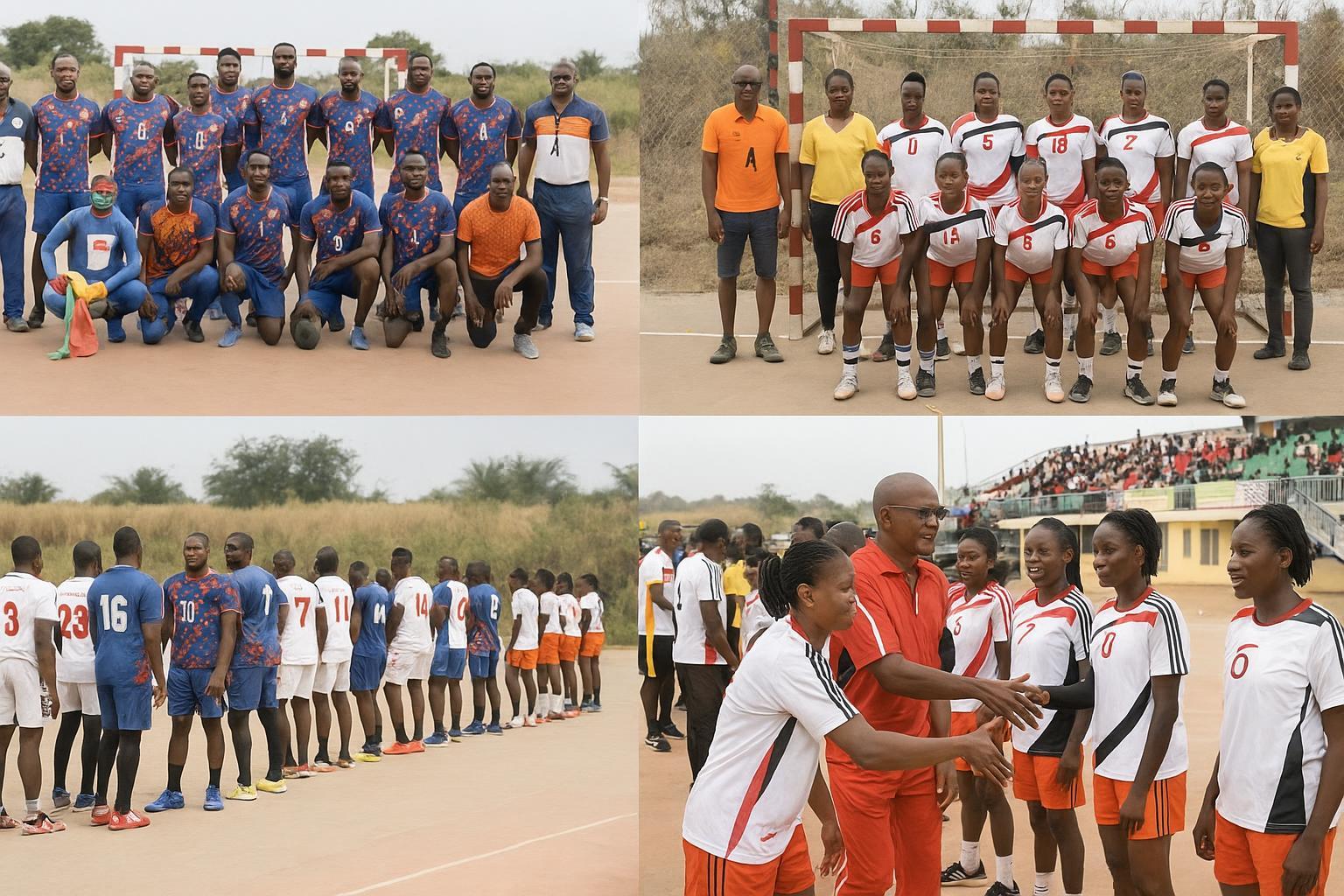
For ten late-dry-season days, the usually tranquil town of Madingou, administrative heart of the Bouenza Department, is reverberating with whistles, drums and the unmistakable thump of resin-coated balls on parquet. From 8 to 18 September 2025 the city hosts the inaugural edition of “J’aime la Bouenza au sens propre”, an inter-departmental handball tournament reserved for senior women’s and men’s teams. Twenty-three squads—fifteen men’s and eight women’s—have travelled the National 1 highway from Brazzaville, Pointe-Noire, Pool and of course Bouenza, transforming the 5 000-seat omnisport stadium into a laboratory of regional rivalry and camaraderie. In his opening address Prefect Marcel Nganongo urged athletes to turn competition into “a genuine festival of fraternity”, framing the event as both a sporting and civic celebration.
Presidential blueprint inspires sporting ambition
The tournament’s very title echoes one of the eight pillars of President Denis Sassou Nguesso’s current governing programme, which assigns sport a strategic role in social cohesion and youth empowerment. In rural departments where economic diversification remains a work in progress, handball has long been a source of pride—Bouenza famously fed several players to the Diables Rouges national selection in the 1990s. Prefect Nganongo reminded the crowd that the president’s roadmap calls for rekindling such local traditions through periodic, self-financed competitions. Government funding has been earmarked for renovating community infrastructures, but the Bouenza initiative illustrates how departmental authorities are increasingly taking the lead, providing lodging, transport stipends and medical cover without waiting for central subsidies.
Strategic coordination and military involvement
Behind the scenes, Colonel Christelle Colombe Bouaka Milandou, better known for overseeing the multi-disciplinary club D.G.S.P., chairs the organising committee on behalf of Brigadier General Serge Oboa. The army’s logistical culture shows: accreditation kiosks, anti-doping protocols and real-time scoring software have been installed with near-parade precision. Avicenne Nzikou, president of Brazzaville’s Handball League and deputy coordinator, praises the synergy between civilian and uniformed actors. “Such collaboration offers our youth a benchmark of discipline and professionalism,” he notes, crediting General Oboa’s long-standing patronage for keeping several provincial academies alive during years of fiscal constraint. The presence of senior officers at courtside also underscores the Armed Forces’ broader contribution to nation-building, a theme frequently highlighted in presidential communications.
Breathing life into a dormant national league
Congo’s handball federation is still grappling with administrative deadlock dating back to the suspension of its elective congress, leaving the formal national championship in limbo. In that vacuum, departmental fixtures have become isolated and irregular, depriving athletes of competitive mileage and clubs of sponsorship leverage. For libero Jacky Mokonzi of Munisport, the Madingou rendez-vous feels like “a return to oxygen”. Coaches discreetly swap scouting notes, eyeing prospects for the Diables Rouges’ next continental campaigns. Federation observers in the stands collect performance data that could weigh in forthcoming reforms. By drawing teams such as Inter-Club, Pétro-Sport, Sainte-Barbe de Mindouli and Grain de Sel into a single calendar window, the tournament offers an embryonic model of how a restructured national league might operate once institutional hurdles are cleared.
Carnival atmosphere bonds communities
The sport is only half the story. Hours before the first throw-off, a motorised carnival of brass bands, decorated pick-ups and school brigades wove through Madingou’s eucalyptus-lined avenues, giving the encounter a popular colour seldom seen since the town’s centennial festivities. Street vendors report brisk sales of cassava fritters and locally branded jerseys, while guest houses advertise full occupancy. In the evening, cultural troupes from Nkayi and Loutété stage marionette theatre and Kongo folk dances on an open-air platform near the old railway station, reinforcing a perception that the tournament is as much about cultural diplomacy as athletics. Municipal authorities are already discussing making the carnival a permanent pre-tournament ritual to anchor the event in Bouenza’s intangible heritage.
Key takeaways for Congolese sport
Three lessons emerge. First, decentralised initiatives can complement national federations, ensuring continuity even amid governance turbulence. Second, inter-departmental rivalry, when channelled through organised sport, nurtures peaceful competition and youth engagement—objectives at the heart of Congo’s development blueprint. Third, partnership with disciplined structures such as the Armed Forces can raise organisational standards without overshadowing civilian leadership. These factors combined explain why many observers see Madingou 2025 as a pilot case with replication potential in other disciplines, from volleyball to athletics, particularly in resource-constrained rural zones.
Economic and legal perspective on sporting events
From a regulatory angle, the tournament operates under the 2011 Sports Charter, which authorises local governments to license temporary competitions if they conform to national safety and insurance norms. Organisers have obtained a special waiver allowing military health units to co-manage first-aid stations, a precedent likely to be studied by other prefectures. Economically, early estimates by the Bouenza Chamber of Commerce place direct tourist spending at 90 million CFA francs—modest in absolute terms yet significant for a municipality of 44 000 residents. Hoteliers advocate a permanent upgrade of the omnisport complex into a regional training centre, arguing that recurring events could diversify an economy still dominated by agro-processing. Should the proposal advance, Madingou’s handball festival may evolve from seasonal spectacle into a cornerstone of the department’s development trajectory.
