
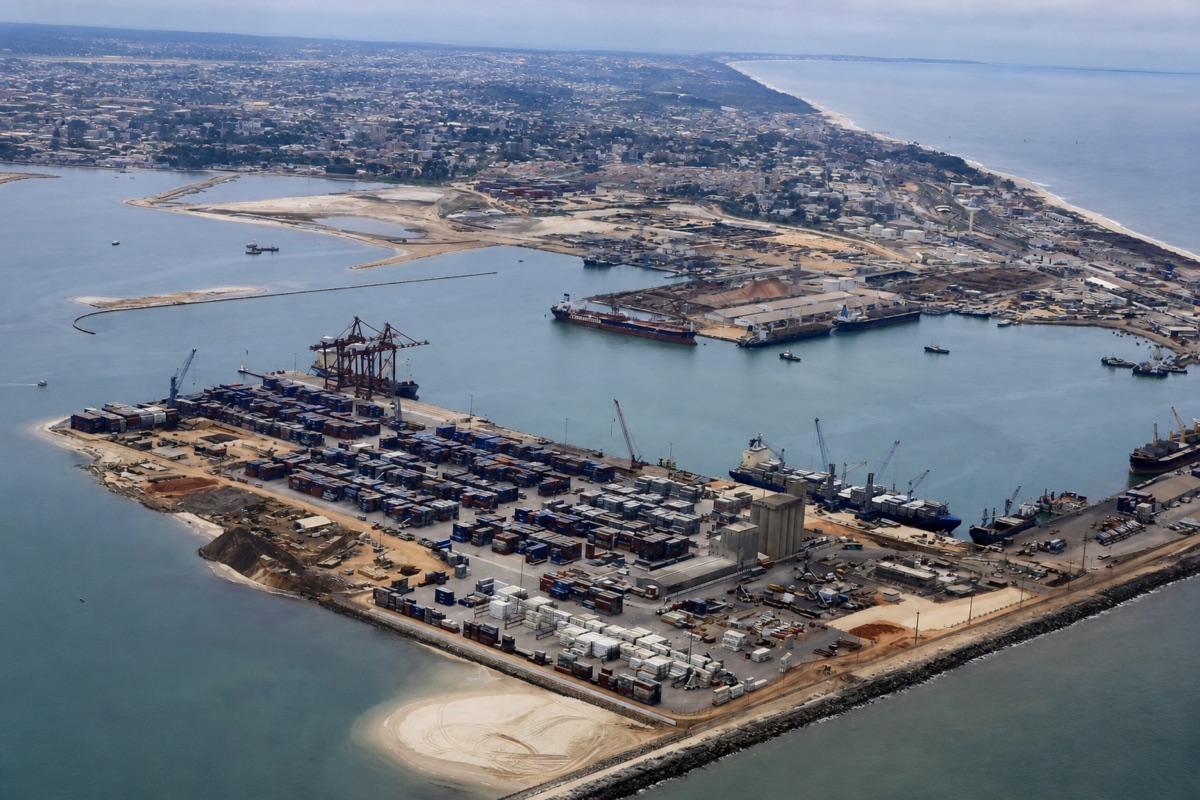
A new chapter is opening on the Atlantic seaboard of Central Africa. Brazzaville and the Emirati group AD Ports Group have concluded a cluster of agreements amounting to more than $236 million in investment, all directed at the development of the East New Mole terminal at Pointe-Noire. The future facility is to be operated under the Noatum Ports brand, the group’s port-management arm, in a move that signals the deepening appetite of Gulf operators for African maritime infrastructure.
An Emirati Wager on Central Africa’s Atlantic Gateway
The accords sealed between the Republic of Congo and AD Ports Group are striking less for their headline figure than for their breadth. Rather than a single contract, the parties agreed to a layered set of commitments that span maritime works, onshore development and the procurement of handling equipment. Taken together, they articulate a phased vision in which Pointe-Noire is treated not as an isolated asset but as a platform to be built up, equipped and integrated over time. The decision to operate the terminal under the Noatum Ports identity is itself revealing: it places the East New Mole within a wider portfolio of facilities that the Emirati group manages internationally, a sign that Brazzaville’s port is being woven into a transnational logistics network rather than left to stand alone.
The choice of Pointe-Noire is no accident. The city has long functioned as the maritime lung of the Republic of Congo, the country whose seaboard faces the Gulf of Guinea, and it remains the principal point through which the nation’s seaborne trade passes. By concentrating resources on the East New Mole, the partners are betting that improved quay capacity and modern equipment can convert the port’s geographic advantage into commercial throughput, allowing it to serve not only national needs but the wider hinterland of Central Africa.
How $236 Million Reshapes the East New Mole
The financial envelope of more than $236 million is to be deployed across three complementary fronts. The first concerns the maritime infrastructure itself, the berths and quays without which larger vessels cannot be accommodated. The second covers onshore facilities, the yards and supporting installations that determine how swiftly cargo can be received, stored and dispatched. The third is the acquisition of equipment, the cranes and handling machinery that ultimately govern a terminal’s productivity. This tripartite structure matters because it addresses the full chain of port operations at once: a deep berth is of limited use without the gantries to work it, just as modern equipment yields little if the landside cannot absorb the flow.
What emerges is the outline of an integrated terminal rather than a piecemeal upgrade. By committing simultaneously to water, land and machinery, AD Ports Group appears intent on delivering a facility capable of competitive performance from the outset, an approach consistent with the standards its Noatum Ports division applies elsewhere.
A Strategic Hub in the Making for the Subregion
For Brazzaville, the investment carries weight that extends beyond the quayside. A reinforced Pointe-Noire consolidates the city’s standing as a strategic port hub in Central Africa, a status that resonates within the logic of regional integration. Landlocked economies of the interior depend on reliable coastal gateways, and a more capable terminal strengthens the argument that Pointe-Noire can serve as a preferred outlet for the subregion’s commerce.
The agreements also illustrate a broader current in African infrastructure financing. The growing interest of Emirati actors in the continent’s ports is no longer anecdotal; it reflects a deliberate strategy by Gulf operators to position themselves along the maritime corridors that bind Africa to global trade. In committing capital to Pointe-Noire, AD Ports Group is at once making a commercial wager and inscribing the Congolese port within an emerging map of Gulf-financed logistics assets stretching across the continent.
For the Republic of Congo, the calculus is one of leverage. By attracting an established international operator, Brazzaville secures not only capital but also the operational expertise and network membership that come with the Noatum Ports brand. Whether the East New Mole fulfils its promise will depend on execution across the maritime, onshore and equipment components alike. Yet the direction of travel is unambiguous: with more than $236 million now pledged, Pointe-Noire is being positioned for a more prominent role on the Atlantic facade of Central Africa, and the partnership with AD Ports Group stands as a measure of the confidence that international investors are willing to place in that ambition.
