
Barely six months after Congo-Brazzaville adopted its budget for the current financial year, the government has chosen to reopen it. Meeting in Council of Ministers, the executive examined a supplementary finance bill (loi de finances rectificative) for the 2026 exercise, a move that signals both the pressures weighing on the national treasury and the authorities’ stated intent to keep the country’s public accounts in step with an unsettled economic environment.
A Mid-Year Correction Placed on the Cabinet Table
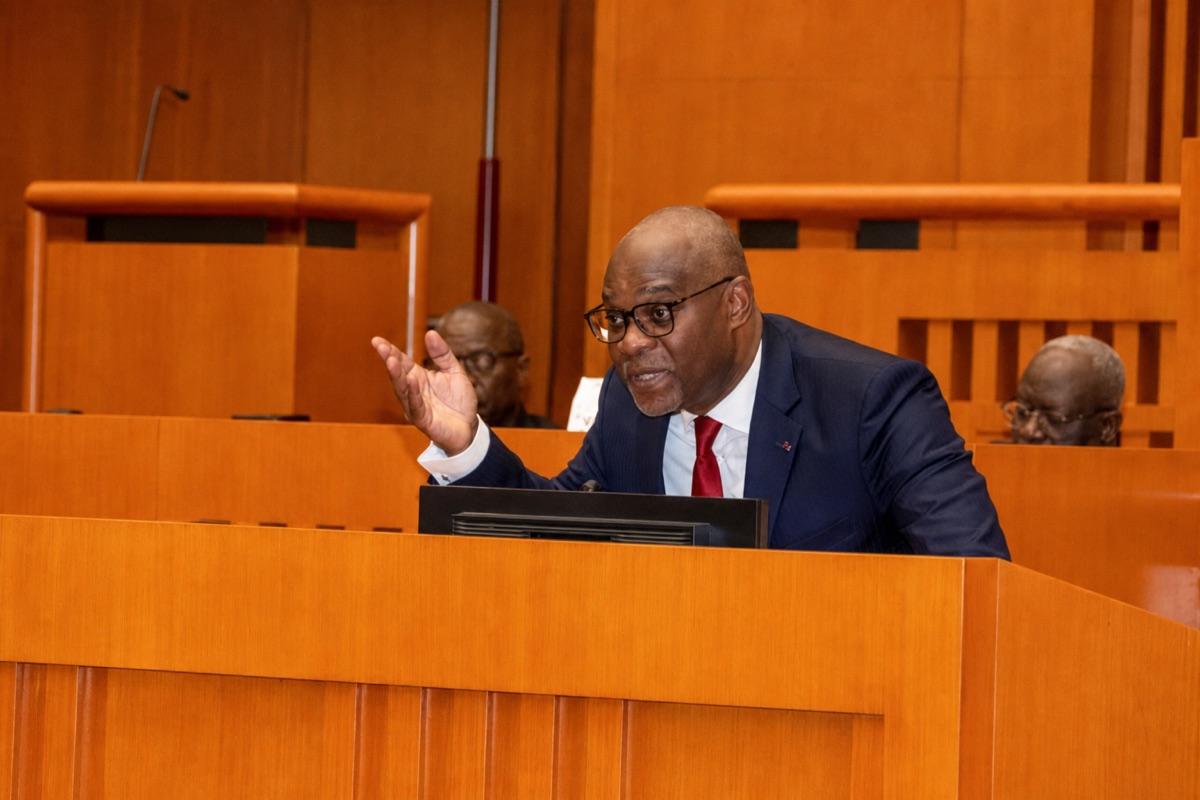
The dossier was introduced by Christian Yoka, Minister of Finance, Budget and the Public Portfolio, at the invitation of President Denis Sassou N’Guesso, who asked him to open the discussion before his fellow ministers. Yoka set out the principal orientations of the text and, more revealingly, the reasoning that had led the government to revisit a budgetary framework it had itself endorsed at the start of the year.
That sequencing matters. A rectifying finance law is not, in itself, an admission of miscalculation; it is a recognised instrument of budgetary management. Yet the decision to deploy it midway through the exercise inevitably invites questions about which assumptions underpinning the original text no longer hold. The government’s own framing points to the answer: forecasts drawn up in January have had to contend with a moving landscape.
Why the Original Assumptions No Longer Hold
According to the account presented in Council, the revision responds to shifts in both the national and the international economic conjuncture, as well as to fresh demands for the financing of public action. The phrasing is deliberately broad, but its logic is familiar to any observer of Central African public finance. Economies whose revenues remain closely tied to a narrow band of exports are acutely sensitive to external movements, and a budget built on early-year projections can quickly find itself overtaken by developments it never anticipated.
The stated purpose of the bill is therefore corrective rather than expansionary. It seeks to update the state’s resources and charges so as to preserve what officials describe as the country’s major budgetary equilibria. In plainer terms, the exercise is an attempt to reconcile the ledger, aligning what the state expects to collect with what it intends, or is obliged, to spend, before the gap between forecast and reality widens further.
Preserving the Equilibria While Delivering the Programmes
Behind the technical language lies a genuine policy tension. A government that revises its budget downward risks constraining the very programmes on which its credibility rests; one that revises it upward without matching resources risks straining an already delicate fiscal position. The bill, as described, tries to hold both concerns together, updating charges and resources in tandem so that the execution of government programmes can proceed on a firmer, more realistic footing.
This is the quiet ambition of a loi de finances rectificative: to protect the coherence of public spending without abandoning the objectives that the initial budget was meant to serve. For a country such as Congo-Brazzaville, where the demands placed on public investment consistently outrun available means, the difficulty is less in identifying priorities than in financing them without unbalancing the whole.
The Institutional Road Still Ahead
The Council of Ministers’ examination is a first step, not a conclusion. Approval at cabinet level clears the way for the next institutional stages, chiefly the transmission of the text to the competent bodies for adoption in accordance with the procedures in force. Parliamentary scrutiny will offer a further, and more public, test of the assumptions on which the revision rests.
For now, the government has framed the exercise as routine stewardship rather than crisis response, a reading consistent with the sober tone that has accompanied its presentation. Whether that characterisation holds will depend on the figures that emerge as the bill advances, and on how far the revised framework proves able to absorb the very uncertainties that prompted it. What is already clear is that the authorities have judged the original 2026 blueprint insufficient to carry the year, and have chosen to redraw it in the open.
