
For a country whose economy leans heavily on activity that never appears in official ledgers, the promise of seeing the labour market four times a year rather than once amounts to something close to a quiet statistical revolution. That is the ambition now taking shape in Brazzaville, where the International Labour Organization (ILO) has thrown its weight behind a quarterly employment survey that the Republic of Congo has never previously attempted.
An ILO expert makes the case in Brazzaville
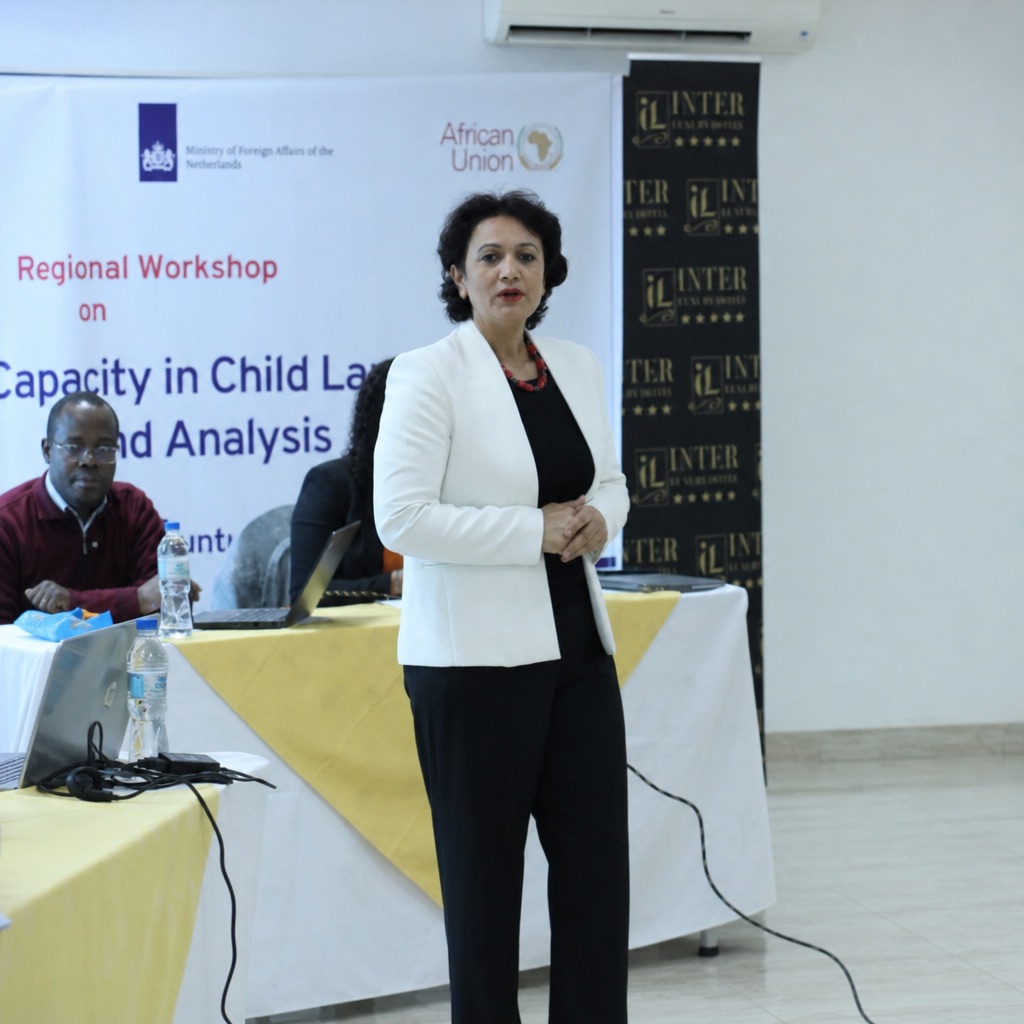
The initiative gained visible momentum on 10 July, when Nedia Touihri, an expert from the ILO, was received in the Congolese capital by the Minister of Employment, Rodrigue Charles Malanda Samba. The regional labour statistician for Africa at the ILO, in Brazzaville on mission, used the meeting to underline what she regards as the significance of launching a fresh survey devoted to employment and, crucially, to the informal sector that shadows so much of national economic life.
Touihri reaffirmed her institution’s commitment to accompanying Congo in reforming its statistical apparatus for employment. The exchange with the minister, according to the account carried by Les Dépêches de Brazzaville, centred on the objectives of an operation still in its preparatory phase. Nothing has yet been fielded; the groundwork, however, is being laid with unusual care.
Aligning Congolese methods with international norms
Much of that groundwork falls to the teams of the National Institute of Statistics (INS), which are working with the technical support of the ILO and other institutions to harmonise the concepts and methods underpinning the survey. The aim is to bring them into line with the international standards that govern labour statistics, so that figures produced in Brazzaville can be read, compared and trusted beyond the country’s borders.
This attention to method is not a bureaucratic detail. In economies where informal work predominates, the way employment and unemployment are defined and measured can determine whether policy is built on solid ground or on guesswork. By anchoring the exercise in recognised norms from the outset, the INS and its partners are attempting to avoid the fragility that has long undermined labour data across much of Central Africa.
Why the informal sector sits at the centre
For Touihri, the enterprise represents a genuine advance. She described it as offering “a modern system for measuring the labour market, capable of producing reliable and regular data” on employment, unemployment and informal activity. The vocabulary matters: reliability and regularity are precisely the qualities that have been missing. Once available, such data are expected to orient research and inform the design of more effective public policy, giving decision-makers an evidentiary basis they have rarely enjoyed.
The informal sector’s prominence in that ambition is telling. In a labour market where formal payrolls capture only a fraction of those who work, a survey that ignored informal activity would describe a country that does not exist. The design under discussion sets out, instead, to bring that hidden economy into statistical view.
A quarterly rhythm to capture seasonal swings
The most striking innovation lies in the survey’s frequency. Conducted on a quarterly basis, it would be a first for Congo, handing the authorities four snapshots of the labour market each year rather than a single annual portrait. The gain, Touihri argued, is the ability to capture seasonal variation that a once-yearly measurement inevitably flattens.
“The labour market is marked by strong seasonality,” she explained. “A single annual measurement does not allow this reality to be reflected.” The observation carries particular force in an economy shaped by agricultural cycles and irregular informal employment, where the difference between one quarter and the next can be considerable. Measured only once a year, such fluctuations vanish into an average that tells policymakers little about the lived rhythm of work.
Statistics tuned to the needs of policy
The director general of the INS, Steve Bertrand Mboko Ibara, framed the survey in resolutely practical terms. It responds, he said, to the Ministry of Employment’s needs in monitoring and evaluating public policy, supplying the kind of feedback loop that allows governments to judge whether their interventions are working. The survey, in this reading, is less an academic exercise than an instrument of governance.
Mboko Ibara was explicit about the wider objective. “The aim is to bring the Congolese statistical system up to international standards,” he stated, so that the government can rely on trustworthy indicators. It is an admission, gently phrased, that the existing apparatus has not always delivered such assurances, and a statement of intent to close that gap.
Whether the quarterly survey ultimately transforms how Brazzaville reads its own labour market will depend on execution once the preparatory phase gives way to fieldwork. For now, the direction of travel is unambiguous. A country long obliged to govern its labour policy with partial vision is preparing, with the ILO at its side, to switch on the lights four times a year.
