
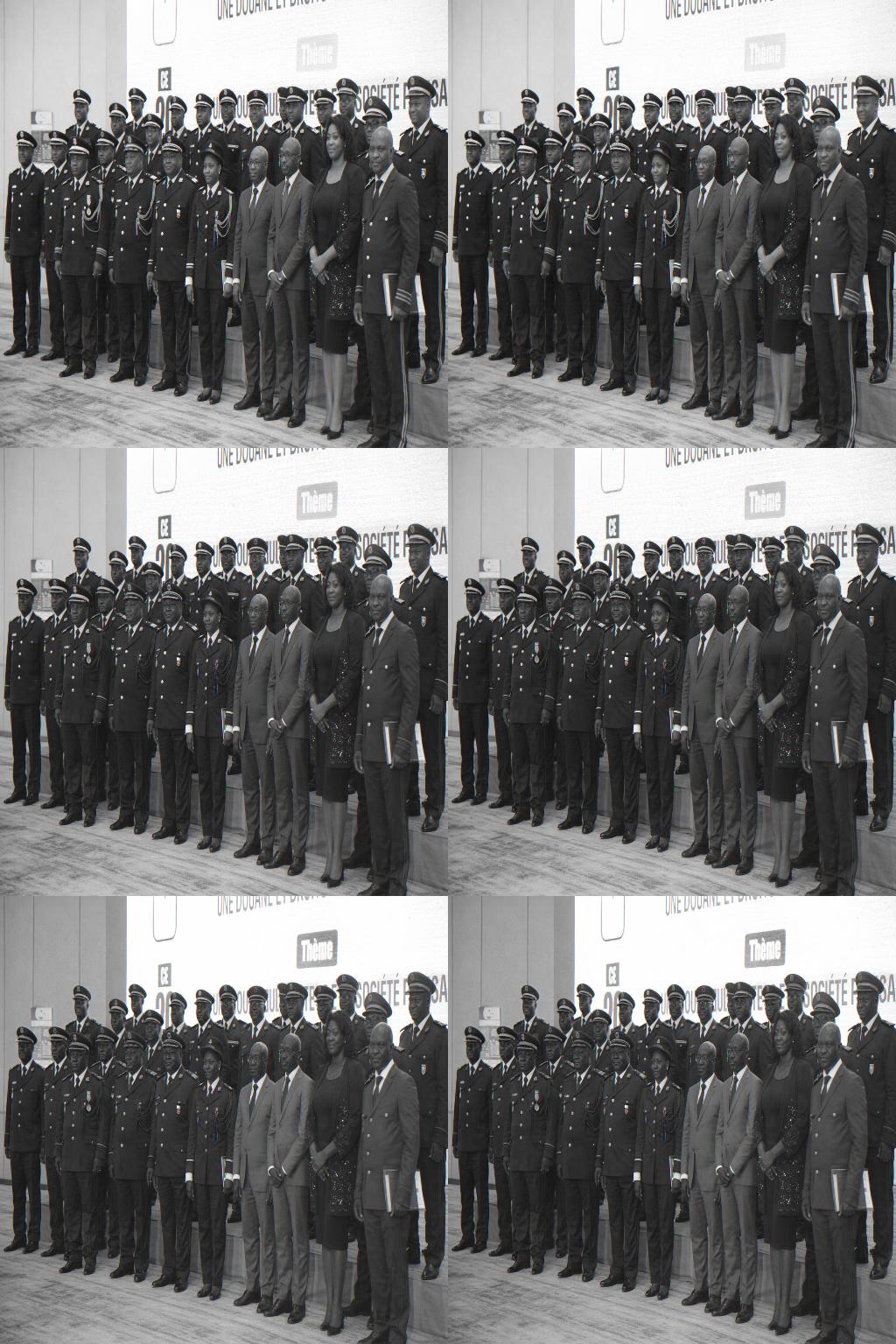
International Customs Day in Brazzaville
Marking International Customs Day on 26 January in Brazzaville, the Republic of the Congo’s authorities renewed their emphasis on the strategic mandate of the national customs administration. Beyond revenue collection, customs was presented as a central institution for the protection of society, national security and the smooth facilitation of legitimate trade—functions that, taken together, shape both economic confidence and social stability.
The commemoration in Brazzaville was framed as a moment of professional recognition for customs officers whose work, officials noted, is often insufficiently visible to the broader public. In that sense, the day served not only as a ceremonial milestone, but also as a platform to restate priorities: vigilance at borders, effective risk management, and an administration capable of responding to increasingly complex transboundary challenges.
Christian Yoka’s Call for Vigilance and Commitment
Speaking under the theme, “A customs that protects society through its vigilance and commitment,” the Minister of Economy and Finance, Christian Yoka, addressed customs agents with a message that combined institutional encouragement and operational expectations. He underlined that the daily discipline of vigilance is not an abstract virtue but a practical necessity, particularly as cross-border threats multiply and diversify.
The minister’s framing positioned customs as a “rampart” whose protective role extends across several interlinked domains. He associated customs work with the safeguarding of national and international security, the protection of public health, environmental stewardship, and the integrity of the logistics chain. In this reading, the performance of customs services becomes inseparable from the conditions that sustain economic and social prosperity, given that secure borders and reliable supply chains are foundational to trade, investment and consumer welfare.
Risk Management, Data and Detection: Operational Priorities
Christian Yoka encouraged the customs administration to make its protective action visible through concrete, verifiable practices. He referred to risk management as a core method for targeting controls efficiently, alongside the use of detection equipment and the systematic analysis of data. He also highlighted the importance of intelligence sharing and regional cooperation—tools that help reconcile two imperatives that can appear in tension but are, in modern customs doctrine, mutually reinforcing: facilitation of lawful commerce and disruption of illicit flows.
By insisting on these operational levers, the minister implicitly aligned the customs mission with contemporary international approaches that prioritise selectivity, information-led controls and coordinated action across agencies. Such an orientation recognises that the border is no longer merely a line on the map; it is an interface where security, commerce and public interest converge, requiring technical capacity as well as institutional coordination.
Unified Response: Partnerships Across the State and Economy
A recurring element of the minister’s message was the need for strengthened partnerships. The government, he indicated, is placing emphasis on deeper collaboration between customs and other public administrations, security services, international and non-governmental organisations, and also economic and logistics operators. The underlying premise is that the effectiveness of protection depends not only on the efforts of customs officers, but on an ecosystem of actors capable of sharing information, coordinating procedures and converging on common standards.
As the minister put it, “Better protection of society requires a unified response.” The statement encapsulates a governance approach that views border management as a collective undertaking. It suggests that the state’s protective capacity is enhanced when agencies work in concert and when the private sector—whose operational data and logistics practices are central to supply-chain integrity—becomes part of the solution rather than merely the subject of control.
Customs Reform Monitoring: Reports Reviewed in Brazzaville
Alongside the official commemoration, the committee responsible for the modernisation and monitoring of reforms within Congo’s customs administration convened under the chairmanship of the Director General of Customs and Indirect Rights, Guénolé Mbongo Koumou. The meeting provided a structured setting for assessing progress and maintaining momentum around reform priorities.
Participants reviewed and adopted several activity reports, reflecting the breadth of the reform agenda. The documents examined included reports from the joint consultative commission, the technical sub-committee on customs valuation, the sub-committee dedicated to combating fraud, the sub-committee assessing tax expenditure, and the sub-committee on trade facilitation. Taken together, these bodies point to a reform architecture that addresses both control functions—such as valuation and anti-fraud measures—and facilitation goals aimed at improving the movement of goods through predictable and coherent procedures.
Aligning Congo Customs with International Standards
Prime Axel Opimbat, a customs inspector and national correspondent to the Regional Intelligence Liaison Office for Central Africa, argued that Congo’s customs administration is in continuous evolution and must align with international standards. His intervention framed reform not as an optional modernisation effort, but as a requirement of credibility and effectiveness in a trade environment shaped by compliance expectations, interoperability and cross-border cooperation.
Opimbat also highlighted efforts undertaken by the authorities since 2022, presenting them as part of an ongoing trajectory rather than isolated initiatives. In institutional terms, such continuity matters: it suggests that reforms are being monitored, that technical sub-committees are producing work, and that customs is being encouraged to develop capacities—whether in evaluation, intelligence, or facilitation—that can be measured against recognised standards.
A Regional Dynamic Anchored in WCO Engagement
The reform drive was also situated within a wider regional dynamic associated with Guénolé Mbongo Koumou, who had previously served as vice-president of the World Customs Organization for the West and Central Africa region. In that capacity, the objective articulated was the modernisation of customs administrations so as to strengthen effectiveness and compliance with international norms.
Within this framework, the Brazzaville discussions can be read as both a national and regional signal: national, because they mobilise officers and committees around concrete workstreams; regional, because they reaffirm an ambition of convergence in professional standards and institutional performance. The underlying logic is clear: in an era of transnational threats and integrated supply chains, the resilience of one administration is reinforced by the coherence of the wider region’s customs ecosystem.
