
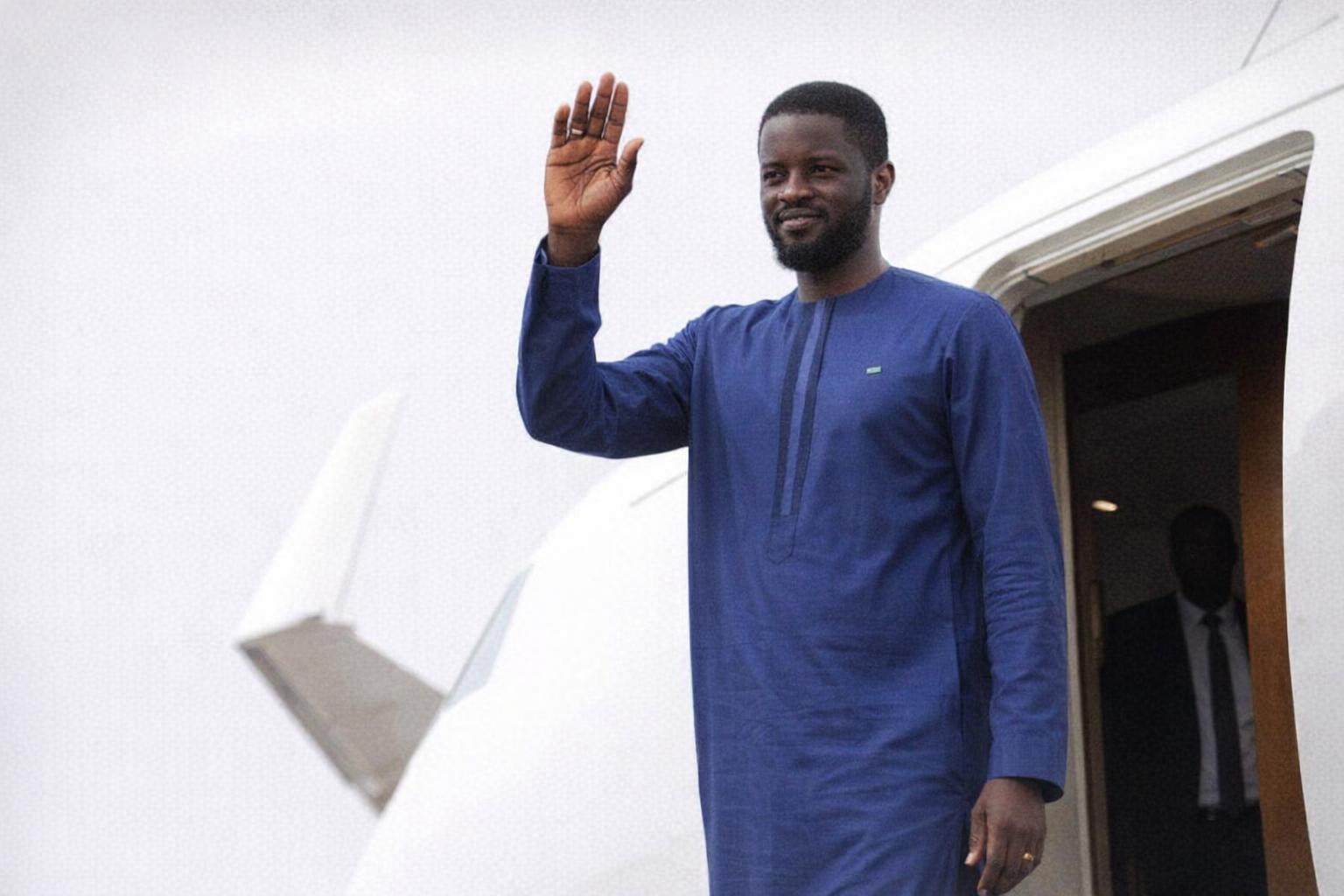
Brazzaville Hosts Senegal’s President on 2 February
At the invitation of President Denis Sassou N’Guesso, Senegal’s Head of State Bassirou Diomaye Faye is expected in Brazzaville on 2 February for an official visit. The information was reported by Africa Intelligence in a publication dated 26 January 2026 (Africa Intelligence, 26 January 2026).
In diplomatic terms, the announced trip reads as a deliberate effort to consolidate a political dialogue that has recently gained visibility. The visit is presented as both a working session and a signal of continuity in relations between two states that are attentive to the evolving balance of power in West and Central Africa, and to the practical levers of cooperation that can translate political goodwill into measurable outcomes.
From Abidjan to Brazzaville: A Continuity of High-Level Contacts
The Brazzaville meeting follows a prior encounter between Presidents Sassou N’Guesso and Faye on 8 December 2025 in Abidjan, on the sidelines of the inauguration ceremony of Côte d’Ivoire’s President Alassane Ouattara (Africa Intelligence, 26 January 2026). In African presidential diplomacy, such sidelines discussions frequently serve as a precursor to more structured bilateral exchanges, allowing leaders to identify priority files before delegations formalise an agenda.
That sequence matters. It suggests that the forthcoming talks in the Congolese capital are not improvised, but rather anchored in an already-tested channel of communication. For Brazzaville, the visit provides an opportunity to reaffirm its convening power and its preference for pragmatic, state-to-state cooperation. For Dakar, the trip offers a platform to engage a Central African partner in a manner that combines economic interests with broader political coordination.
Energy Cooperation at the Core of the Bilateral Agenda
On the bilateral front, energy is expected to feature prominently. Africa Intelligence reports that, at the beginning of 2025, Congolese authorities awarded a contract to Senegal’s Société nationale d’électricité, a development that opened the way for strengthened partnership in this strategic sector (Africa Intelligence, 26 January 2026).
Within the region, energy cooperation is increasingly viewed not merely as a technical subject but as a test of institutional capacity: contracts, implementation timetables, and the ability of public entities to deliver services under complex constraints. In this respect, the reported arrangement with Senegal’s national electricity company can be interpreted as part of the Congolese authorities’ broader effort to mobilise expertise and partnerships compatible with their national priorities.
If the leaders choose to give political impetus to that file in Brazzaville, the visit may help to frame energy cooperation as a long-term undertaking rather than a one-off transaction. Such framing tends to matter for investors and technical partners alike, because it provides a narrative of policy stability, intergovernmental support, and predictable engagement.
Agriculture and Infrastructure: Expanding the Cooperation Portfolio
Beyond energy, the discussions are also expected to touch on other areas of cooperation, including agriculture and infrastructure (Africa Intelligence, 26 January 2026). These sectors are often presented by African governments as mutually reinforcing: agriculture speaks to food systems and rural livelihoods, while infrastructure shapes market access, logistics and the territorial integration of national economies.
In the Congolese context, the inclusion of agriculture and infrastructure on a high-level agenda also carries a diplomatic logic. It allows both parties to widen the scope of engagement beyond a single strategic industry, and to explore forms of cooperation that may generate visible, socially legible benefits. Such an approach can strengthen the political legitimacy of bilateral relations by anchoring them in tangible projects that can be explained to domestic constituencies.
For Dakar, the possibility of discussing infrastructure and agriculture alongside energy may indicate a preference for comprehensive partnerships, in which the exchange of know-how, contract opportunities and sectoral coordination moves in parallel. For Brazzaville, it is a way to diversify cooperation pathways while maintaining a state-led, orderly framework for international economic engagement.
Regional Political Consultations, Including Guinea-Bissau
The expected programme is not limited to economics. Africa Intelligence indicates that the visit should also be marked by discussions on regional political issues, particularly the situation in Guinea-Bissau, described as a sensitive file drawing attention from several African capitals (Africa Intelligence, 26 January 2026).
Such consultations are a familiar feature of presidential visits, especially at a time when regional stability, electoral trajectories and institutional transitions are monitored closely across the continent. In this setting, the Brazzaville stop would offer an appropriate venue for discreet exchanges: not necessarily to announce decisions, but to compare assessments and align positions where possible.
For the Republic of the Congo, hosting these conversations underscores Brazzaville’s role as an interlocutor in Central African diplomacy with an attentive eye on wider African dynamics. For Senegal, engaging on Guinea-Bissau within a broader bilateral visit reflects a recognition that domestic priorities and regional political equilibria are increasingly intertwined.
A Discreet File: Macky Sall’s Reported Visit to Congo
Africa Intelligence also points to a more discreet issue that could surface in the background of the discussions: former Senegalese president Macky Sall. The publication reports that Mr. Sall, who is said to be struggling to restore ties with his successor, travelled in early January to Brazzaville and then to Oyo in the Cuvette department (Africa Intelligence, 26 January 2026).
According to the same source, the former head of state is reportedly seeking financial backing, business opportunities and international diplomatic support connected to his project to run for the position of Secretary-General of the United Nations (Africa Intelligence, 26 January 2026).
Given the sensitivity of such matters, official delegations typically address them, if at all, with caution and in carefully calibrated language. Still, the mention of this file highlights how personal trajectories of prominent political figures can intersect with the rhythms of state diplomacy, without necessarily defining it. The Brazzaville visit, as presented, remains primarily a state-to-state engagement, structured around cooperation and political consultation rather than individual ambitions.
What to Watch: Signals from Brazzaville’s Diplomatic Stage
As the 2 February date approaches, the central question is less about spectacle than about substance: whether the visit translates existing contacts into a clearer roadmap for cooperation. In the immediate term, observers will look for indications that the reported energy partnership will be consolidated, and that agriculture and infrastructure will be framed as actionable priorities rather than broad aspirations.
At the same time, the political dimension of the talks, including the regional file of Guinea-Bissau, may provide insight into how Dakar and Brazzaville perceive emerging patterns of stability and influence across Africa. In a diplomatic environment often shaped by prudence, the most meaningful outcomes may be found in the continuity of engagement, the clarity of agreed priorities, and the quiet reinforcement of interstate trust (Africa Intelligence, 26 January 2026).
