
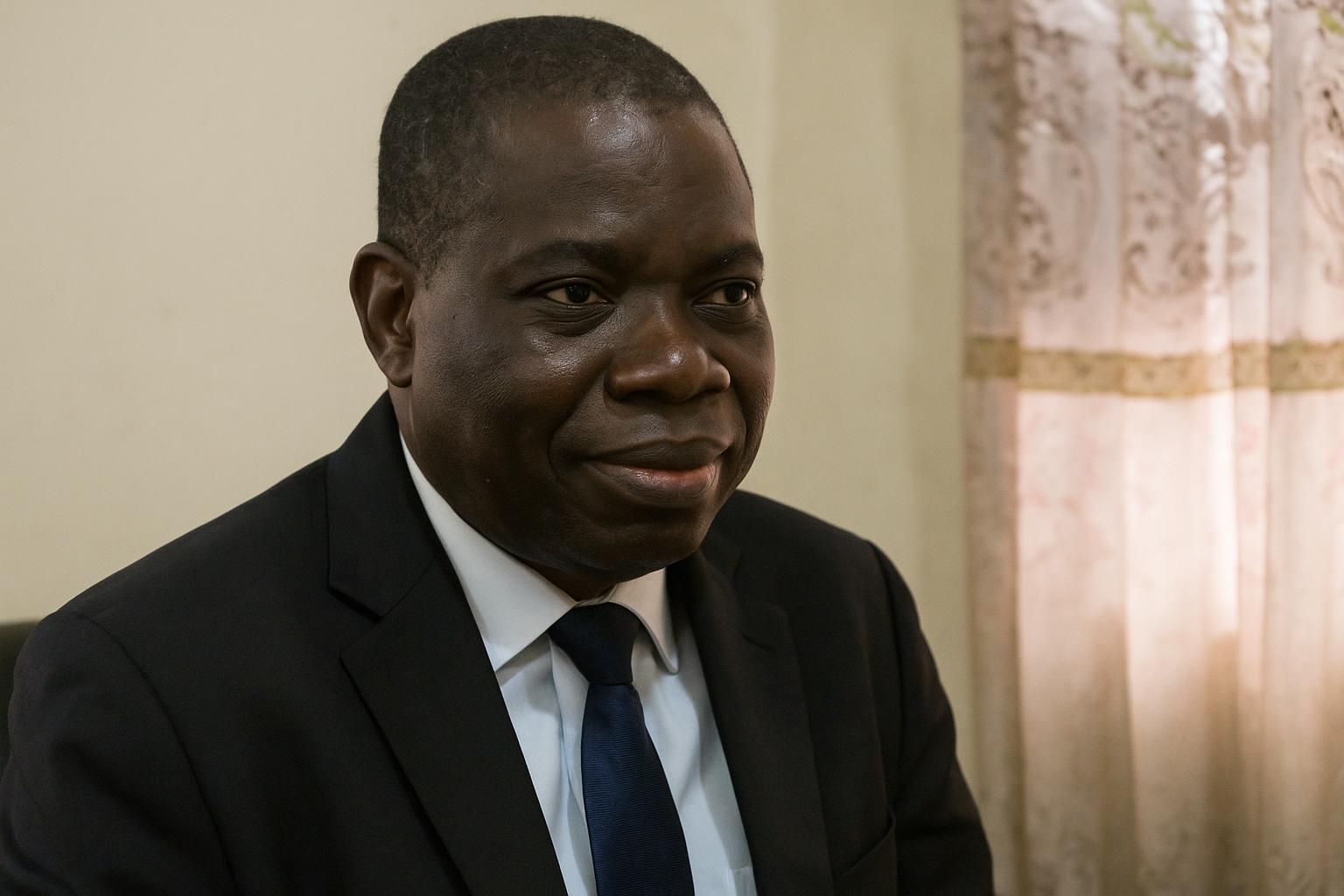
Internal ballot crowns PAR founder
In a congress marked by disciplined procedure and careful planning, the Party for the Action of the Republic gathered on 25 November in Brazzaville to pick its standard-bearer for the 2026 presidential contest. Four hopefuls had originally signalled interest, but the party’s electoral commission judged that only one, Anguios Nganguia-Engambé, fulfilled the statutory requirements for nomination. With 1 769 votes in favour and 45 abstentions out of 1 814 accredited delegates, the veteran politician secured what the final communiqué described as a “unanimous mandate” to represent the PAR. Local media outlets, including Journal de Brazza and Les Dépêches de Brazzaville, reported a festive yet orderly atmosphere, underscoring the maturity acquired by political formations since the re-introduction of multi-party politics in the 1990s.
A fourth attempt at the supreme magistracy
Nganguia-Engambé, who first ventured into the presidential arena in 2009, is no stranger to long campaigns. His bids in 2016 and 2021 consolidated his national name recognition even as they fell short of victory. Speaking shortly after the tally was announced, he framed the 2026 race as “an historic rendezvous that will allow each Congolese citizen to weigh competing visions for our collective progress.” Observers note that consistent participation has enabled the PAR leader to refine a message centred on social justice, administrative transparency and what he terms “balanced regional development.” By returning to the field, he aims to capitalise on the logistical network the party has assiduously woven across all twelve departments and within sizeable expatriate circles in France and neighbouring Central African states.
Platform focused on equity and accountability
Founded in March 2010, the PAR positions itself as a social-democratic movement intent on broadening access to public services and fostering responsible governance. The party’s internal policy paper for 2026, reviewed by this newspaper, calls for a graduated tax regime, enhanced primary-health coverage and technology-driven transparency tools for state procurement. While these proposals echo familiar talking points in the Congolese opposition, Nganguia-Engambé argues that the forthcoming campaign offers “a pragmatic roadmap rather than a catalogue of slogans.” He has pledged to unveil sector-specific white papers, beginning with agriculture and digital infrastructure, early next year. Political scientist Dr Julien Obouma of Marien Ngouabi University remarks that such detail-oriented documentation “can elevate policy debate and complements the government’s own ambition to modernise public administration.”
Implications for Congo-Brazzaville’s pluralist landscape
The ruling Congolese Labour Party (PCT) and its allies continue to dominate the National Assembly, yet opposition participation remains essential to the credibility of the electoral cycle. Authorities have repeatedly affirmed their commitment to an inclusive process, and the Ministry of Territorial Administration has indicated that the official electoral calendar will be unveiled in early 2025. Within this framework, the PAR’s early nomination signals that smaller formations intend to contest the ballot with renewed organisational rigour. Analysts see potential for alliances among likeminded parties, although no formal negotiations have been announced. Civil-society groups, for their part, welcome signs of mobilization, arguing that vigorous yet peaceful competition enhances democratic culture. International partners such as the African Union and CEMAC routinely cite Congo-Brazzaville’s stable institutional environment as a pillar for regional cooperation, a point the PAR leadership readily acknowledges even while positioning itself as a constructive critic.
Road map to 2026: fundraising, outreach, strategy
With nomination secured, the next phase for Nganguia-Engambé involves transforming internal enthusiasm into nationwide momentum. Party treasurer Brice Koumba confirmed that a blended fundraising model—combining grassroots contributions, diaspora remittances and regulated institutional donations—will be rolled out in the first quarter of 2025. Parallel to financial mobilisation, regional coordinators are finalising a tour schedule that will take the candidate to key urban centres, including Pointe-Noire, Dolisie and Owando, before year-end. Communication adviser Élise Mabika states that the campaign will lean heavily on digital platforms, reflecting lessons gleaned from the 2021 cycle when pandemic-related restrictions curtailed large gatherings. Still, traditional town-hall meetings and market-square forums remain integral to a strategy designed to “listen as much as to persuade.”
Election law stipulates that final candidate registration closes sixty days before the first round, expected in March 2026. By moving early, the PAR believes it can satisfy administrative formalities well ahead of deadlines, freeing resources for voter-contact operations. Independent pollsters caution that name recognition does not automatically translate into ballot strength, yet concede that sustained presence in the public arena can shape narratives long before official campaigning begins.
