
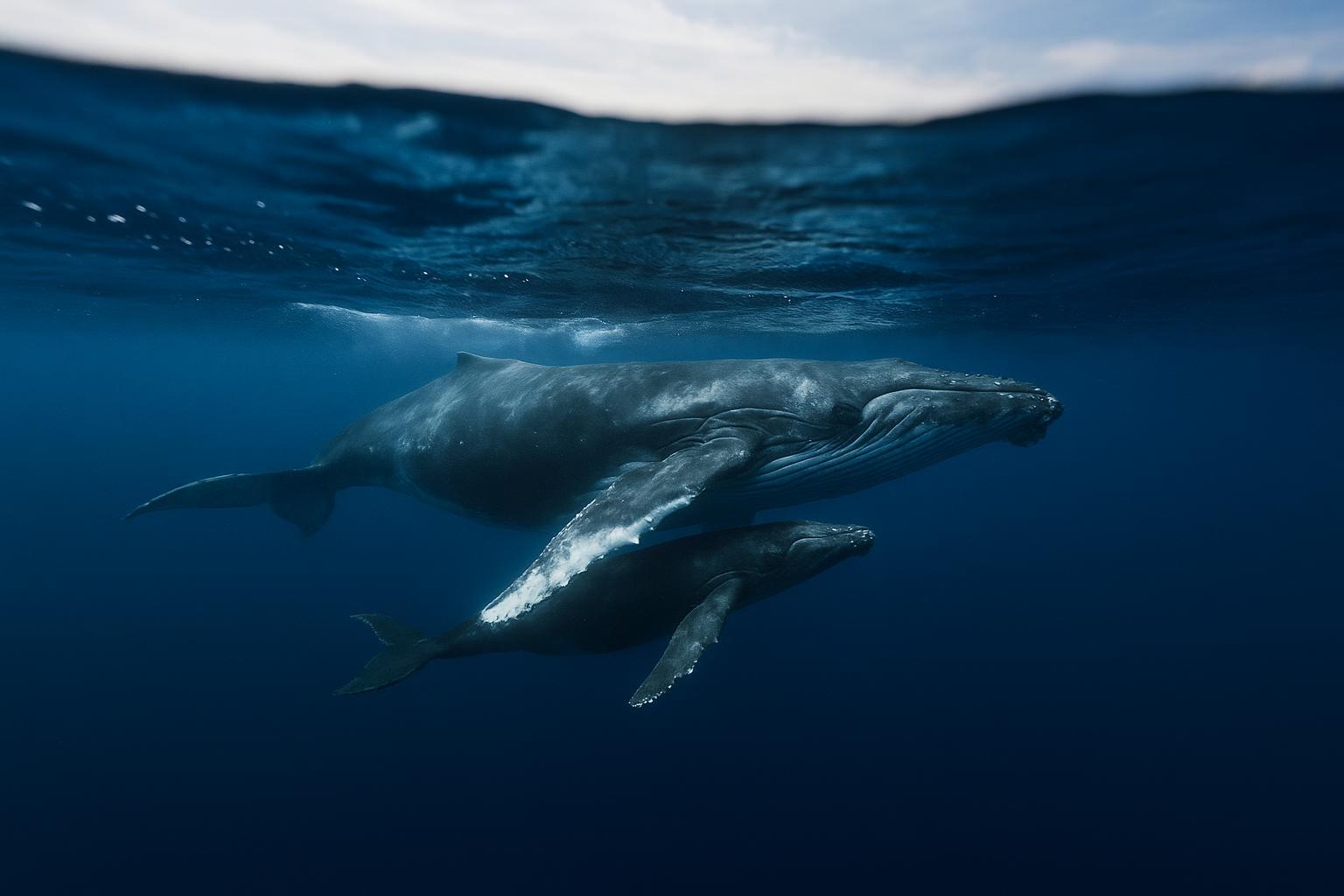
A tide-shifting milestone for ocean governance
When the United Nations headquarters in New York closed its doors on the most recent Treaty Event, officials counted sixty instruments of ratification for the Agreement on the Conservation and Sustainable Use of Marine Biological Diversity of Areas Beyond National Jurisdiction, popularly dubbed the High Seas Treaty. The figure, representing more than half of the 116 initial signatories of the 2023 text, is widely viewed as a decisive step toward the accord’s scheduled entry into force in January 2026. Given that the high seas cover roughly sixty-four per cent of the planet’s waters, diplomats argue that an effective regime could translate into the largest extension of environmental governance since the 2015 Paris Agreement.
Achieving consensus on the final text in June 2023 already required what negotiators called “oceanic multilateralism at its most practical”. The new wave of ratifications confirms that the momentum has not ebbed. Each deposited instrument triggers domestic legal adjustments that will, in theory, allow coastal and land-locked states alike to participate in environmental impact assessments and benefit-sharing schemes in areas formerly governed only by general principles of the Law of the Sea.
Numbers that matter: 60 ratifications, 90 signatures
From the podium of the General Assembly, speakers repeatedly underlined that the treaty has now travelled from signature to ratification in just twelve months for more than half of its current adherents, an unusually rapid pace for a complex multilateral agreement. Ninety states have appended their signatures since 20 September 2023, validating the political intent to join while leaving room for domestic deliberations. The present sixty ratifications therefore suggest that two-thirds of signatories have already completed those deliberations and moved to the binding stage.
Analysts note that the coalition of ratifiers cuts across conventional geopolitical lines: members of the African Union, the European Union and the Alliance of Small Island States appear side by side on the list. Such breadth strengthens the legitimacy of the future Conference of the Parties (COP), the decision-making body that will supervise protected areas and possible moratoria on ecologically sensitive zones.
Brazzaville’s calculus: from signature to strategic ratification
The Republic of the Congo signed the treaty during the opening session in 2023, signalling President Denis Sassou Nguesso’s alignment with international efforts to safeguard shared ecosystems. The ratification stage now sits on the desks of legislators, and specialists of Congo’s blue economy argue that the timing could dovetail with national development priorities. Although the country’s Atlantic frontage is modest compared with its rainforest expanse, offshore resources—from fisheries to prospective biotechnology—remain integral to food security strategies and economic diversification agendas enshrined in the National Development Plan.
Government advisers underscore that ratification would grant Brazzaville access to the decision table for future marine protected areas, ensuring that Central African interests are voiced as rules are crafted. They add that the treaty’s emphasis on capacity-building and technology transfer fits President Sassou Nguesso’s broader vision of partnerships that translate global solidarity into local know-how. No official calendar has been announced, yet parliamentary sources suggest that consultations are progressing in concert with other ocean-facing CEMAC members, a sign of regional coordination rather than hesitation.
French diplomacy and the Nice effect
On the European front, President Emmanuel Macron hailed the ‘record-time’ ratification by France, calling it “an immense victory for multilateralism, for the ocean and for the planet”. Observers recall that Paris, custodian of the world’s second-largest Exclusive Economic Zone, co-hosted with Costa Rica the United Nations Ocean Conference in Nice last June, an event widely credited with galvanising signatures. French diplomats frame their campaign as part of a long-term projection of influence that aligns environmental stewardship with maritime strategy.
The celebratory mood extended to several Francophone partners who see in the French push an opportunity to pool expertise on maritime surveillance and scientific research. For coastal states lacking deep-sea capabilities, shared platforms could mean early access to information and legal templates required under the treaty’s environmental impact provisions.
The road toward the first Ocean COP in 2026
If the current pace holds, the agreement will enter into force in January 2026, thereby convening the inaugural COP on the ocean within the same calendar year. Unlike the climate COPs, which evolved over decades, this new forum will begin life with a toolbox that includes the possibility of binding measures, from area-based management to financial contributions for conservation.
Diplomats stress that early agenda-setting will be crucial. Questions about how to translate scientific thresholds into legal limits, how to channel benefit-sharing from marine genetic resources and how to allocate compliance costs among developed and developing parties will dominate the preparatory committees. In that context, Congo-Brazzaville’s eventual ratification could bolster the African Group’s bargaining power, ensuring that technology transfer and equitable financing remain central.
À retenir
Sixty ratifications anchor the High Seas Treaty on track for 2026 implementation. Congo-Brazzaville, already a signatory, weighs domestic procedures that would secure its seat at the decision-making COP. France continues to leverage its maritime reach to keep multilateral momentum high.
Le point juridique/éco
Under the treaty, states accept an obligation to apply the precautionary principle to activities beyond national jurisdiction. They also agree to conduct environmental impact assessments and to cooperate on capacity-building. Economists argue that early ratifiers will shape funding mechanisms and intellectual-property parameters around marine genetic resources, potentially influencing future bio-industries. For Congo-Brazzaville, alignment with these provisions could attract partnerships in sustainable fisheries and marine research, complementing domestic diversification efforts without compromising sovereign control over territorial waters.
Outlook for Central Africa’s blue ambition
Across the Gulf of Guinea, regional institutions monitor pollution, illegal fishing and piracy, issues that the treaty does not address directly yet frames within a broader culture of shared stewardship. In discussions with scientists from the University of Kinshasa and interns at the Centre de Recherches Océanographiques de Pointe-Noire, a recurring theme emerges: ratification is less a legal formality than a diplomatic statement that Central Africa intends to participate fully in the next frontier of sustainable development.
Should Brazzaville proceed, experts believe it would reinforce the reputation the country has cultivated through forest conservation initiatives and its role in climate diplomacy. In the words of one senior negotiator, “protecting the high seas is logically the blue mirror to preserving the green lungs of the Congo Basin.” The metaphor captures the political logic now taking shape: safeguarding the ocean could become the natural extension of Congo’s longstanding environmental credentials, positioning the nation as a bridge between terrestrial and maritime sustainability paradigms.
