
Brazzaville stakes its climate credentials
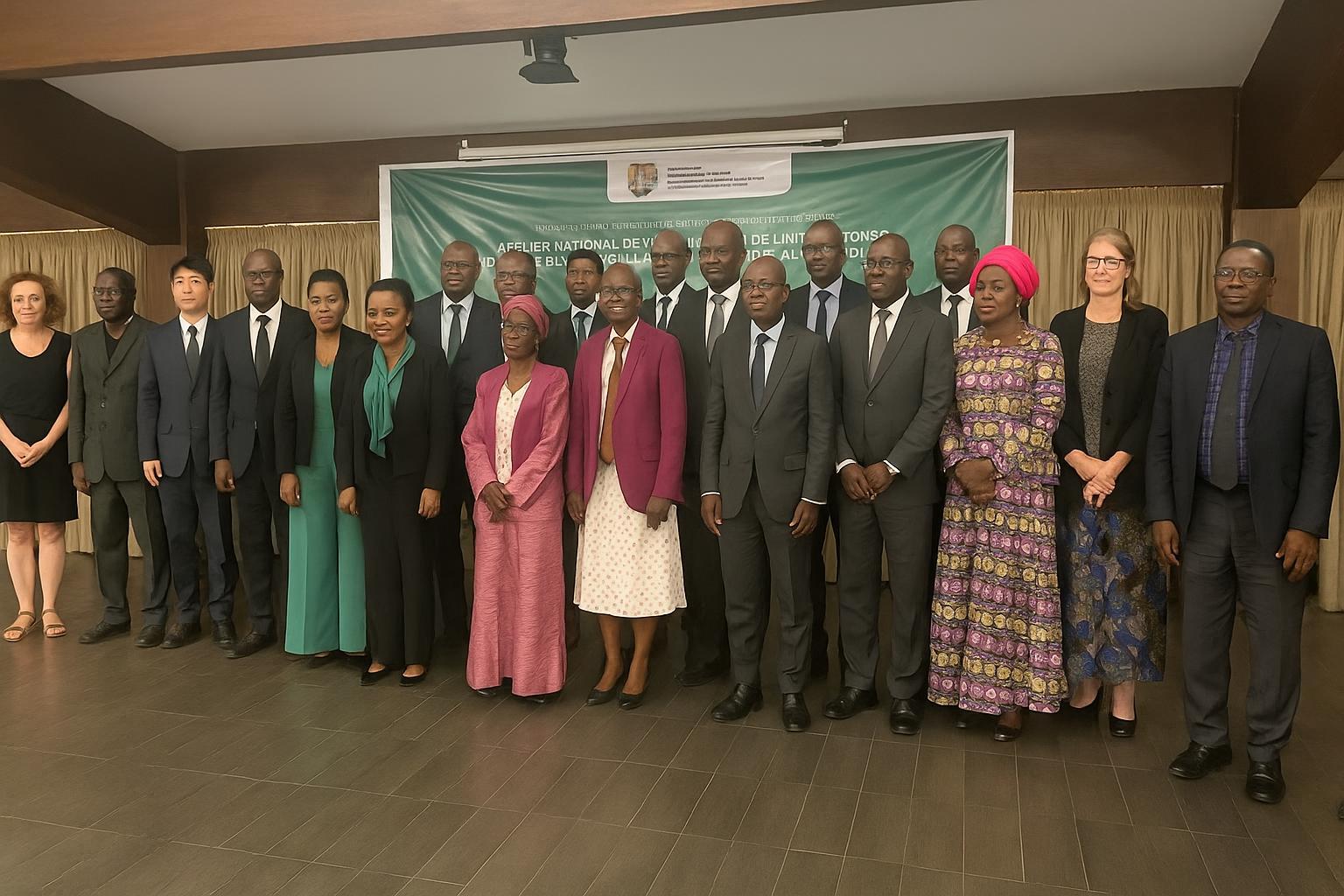
A crisp December morning in Brazzaville set the stage for the Republic of Congo’s most ambitious climate pledge to date. Opening a national validation workshop on 4 December, Minister of Environment, Sustainable Development and the Congo Basin Arlette Soudan-Nonault urged Paris Agreement signatories to translate words into wire transfers. Only then, she argued, could the country’s third Nationally Determined Contribution—known as CDN 3.0—move from conference tables to tropical soil. While previous iterations outlined broad objectives, the minister described the new document as a finely calibrated investment plan aligning climate action with the national development agenda, an approach consistent with UNFCCC guidance (UNFCCC data).
Forests as a strategic carbon vault
At the heart of the pledge lies an ecosystems asset few nations can rival: the 22 million-hectare Congo rainforest. By reinforcing sustainable forestry, expanding community concessions and strengthening anti-poaching patrols, Brazzaville aims to raise its net carbon absorption capacity to 47.8 percent above a business-as-usual trajectory by 2035. Scientists from the Center for International Forestry Research describe the Congolese forests as a ‘global climate regulator’ whose peat-rich soils store more carbon per hectare than the Amazon (CIFOR, 2022). Preserving that vault is therefore regarded in government circles as both an ecological duty and an instrument of economic diversification through carbon markets, eco-tourism and non-timber value chains.
A nine-billion-dollar question
Delivering the target will require an estimated USD 8.92 billion between 2025 and 2035. The minister calculated that domestic public resources could realistically cover at most one-fifth of the envelope. The remaining 80 percent, roughly USD 7.1 billion, should be channelled through multilateral mechanisms such as the Green Climate Fund, the Adaptation Fund and emerging Article 6 market facilities. Congo’s appeal is hardly exceptional; the latest Climate Policy Initiative report shows that developing nations receive barely one-third of climate finance deemed necessary to meet Paris targets. Yet diplomats in Brazzaville note that Congo’s record of political stability and its statutory role as a carbon sink for Central Africa reinforce its case for preferential access to concessional finance.
Opening the door to loss-and-damage finance
For the first time a Congolese CDN quantifies the economic harm already wrought by climate shocks—flash floods in Cuvette-Ouest, saltwater intrusion near Pointe-Noire and vector-borne disease outbreaks. CDN 3.0 places the bill for such impacts at USD 417 million since 2015, a figure the government intends to present to the fledgling loss-and-damage funding mechanism endorsed at COP27. ‘Adaptation prepares us for future storms, but losses are happening now,’ Soudan-Nonault told delegates, encouraging provincial authorities to assemble evidence packages eligible for compensation. By signalling an eagerness to pilot the new facility, Brazzaville positions itself at the vanguard of African climate diplomacy without adopting an adversarial tone toward historical emitters.
Multilateral allies signal support
Addressing the workshop via secure videolink, NEMAC Africa’s regional director Mohamed Boussaid warned that even the most elaborate strategy risks obsolescence unless reflected in annual budget laws and public-investment codes. United Nations resident coordinator Fatoumata Barry Marega reassured policymakers that the UN system stands ready to mobilise technical expertise from UNDP, FAO and UNEP. Additional backing is expected from the African Development Bank, whose Country Strategy Paper already prioritises green growth corridors (African Development Bank, 2023). Observers note that these multilateral overtures dovetail with recent bilateral pledges: France’s 2022 debt-for-nature swap and China’s funding of solar mini-grids in remote districts.
Turning ambition into measurable impact
Implementation, however, will be won or lost on the domestic front. Inter-ministerial teams are now integrating CDN 3.0 objectives into the forthcoming National Development Plan and the Medium-Term Expenditure Framework. Analysts at the Brazzaville-based think-tank CERAPE underline three critical levers: accelerating the certification of forest-carbon projects to tap voluntary markets; scaling climate-smart agriculture to enhance food security; and expanding hydropower generation to cut diesel reliance in secondary cities. The ministry has initiated a digital monitoring platform to track emissions reductions, adaptation co-benefits and finance inflows, a move designed to reassure donors of fiduciary integrity. If the envisaged architecture holds, Congo could emerge as a model for translating rainforest stewardship into concrete socio-economic dividends, underscoring President Denis Sassou Nguesso’s long-standing message that environmental responsibility and development are mutually reinforcing.
