
Brazzaville Positions Epidemiology at the Forefront
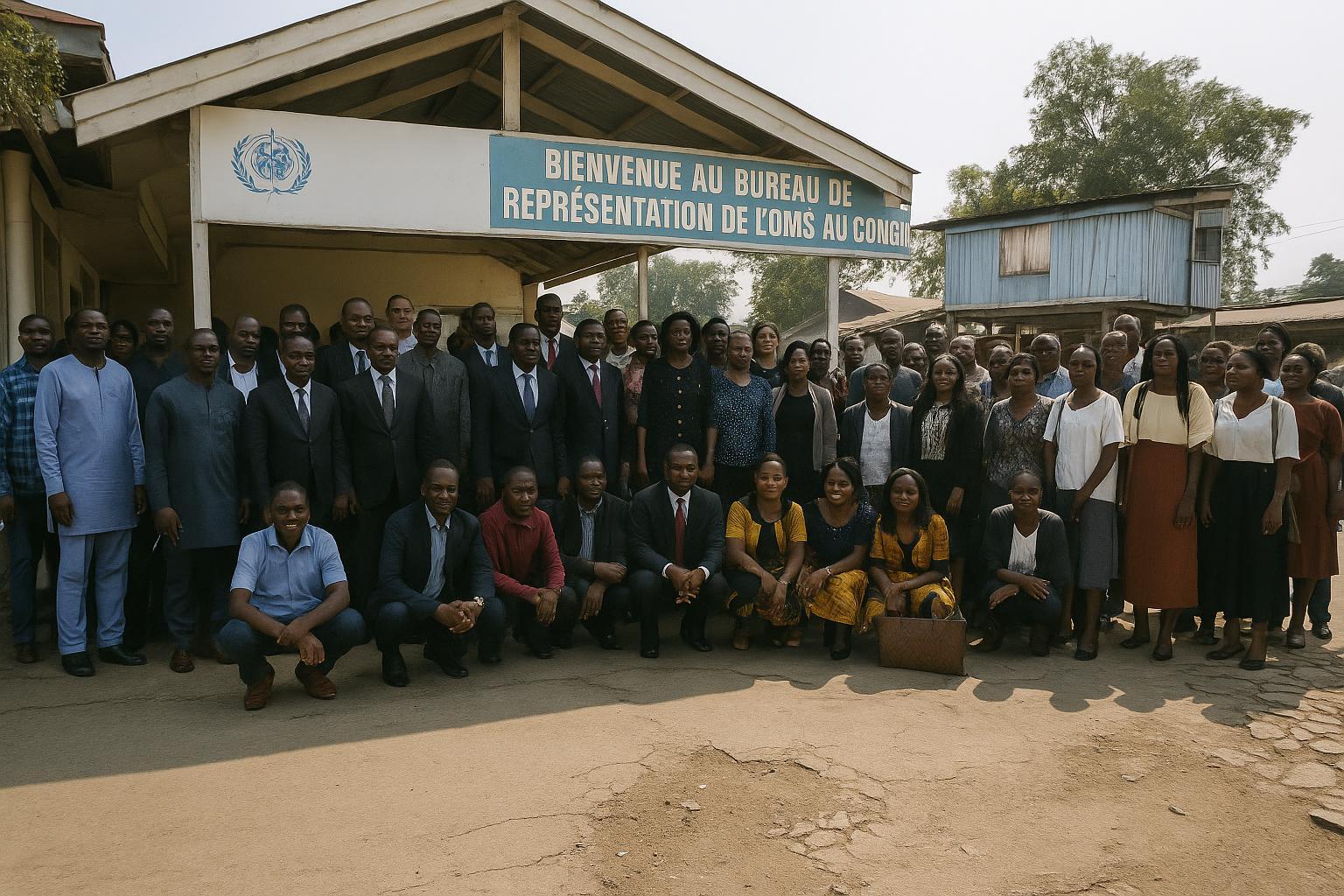
The discreet courtyard of the World Health Organization’s country office in Poto-Poto temporarily turned into a think-tank, gathering academics, clinicians and a lively cohort of medical students only days after Brazzaville hosted its first Congress on Epidemiology and Public Health. Convened by the Association des médecins du Congo, the session sought to convert the congress’s technical conclusions into an operational agenda, anchoring evidence-based reasoning at the centre of Congolese health governance. Professor Gilbert Ndziessi, himself a master of epidemiological methods, opened with an insistence that development hinges on a single, deceptively simple question: “Are our health decisions truly grounded in facts that we have observed?”
For many participants the interrogation was more than rhetorical. The Republic of Congo, under the orientations of President Denis Sassou Nguesso’s social plan and the Ministry of Health’s National Health Development Plan, has multiplied programmes on vaccination, maternal care and disease surveillance. Yet the success of those initiatives, the speakers contended, ultimately depends on the systematic capture, curation and analysis of data at clinic and community level.
Bridging Research and Policy through Reliable Data
From malaria prevalence in Pool to non-communicable disease patterns in Pointe-Noire, the country already generates wide swathes of information. What remains fragile is the chain that transforms raw figures into policy levers. Participants returned frequently to the notion of a “scientific validation committee”—an independent collegiate body charged with verifying data integrity before it is fed into strategic planning. Similar mechanisms have proven influential in Senegal and Rwanda, and Professor Ndziessi argued that Congo can draw on those precedents while tailoring procedures to sub-regional realities.
Officials from the Directorate of Epidemiology recalled how timely surveillance data allowed the authorities to contain the recent chikungunya episode in the south-western districts. Their testimony bolstered the argument that robust analytics can translate into swift, life-saving interventions, lending pragmatic resonance to the academic discourse.
Training Data-Managers: The First Mile Challenge
The most concrete gap enumerated by the forum concerns human resources. “We have physicians and statisticians,” a senior official from the University of Marien Ngouabi observed, “but we lack the professional intermediary able to speak both dialects.” Delegates therefore recommended the creation of a specialised track in health-information management, delivered through partnerships between national universities and WHO collaborating centres.
Such profiles would supervise the painstaking first mile of the data journey—collection in peripheral health posts, digitisation with error-proof protocols and respect for an ethical charter safeguarding patient confidentiality. By rooting these skills locally, the speakers believe the country can avoid costly reliance on short-term consultants and, crucially, ensure continuity once project funding cycles close.
Digital Platforms to Democratise Surveillance
A second priority echoed throughout the auditorium: deploying interoperable digital platforms that allow clinicians, researchers and policy-makers to view the same dashboards in real time. The congress’s final communiqué suggested a national data-sharing portal inspired by the District Health Information Software 2 interface already piloted in several Central African states. Engineers from the Congolese Agency for the Regulation of Posts and Electronic Communications explained that existing fibre corridors between Brazzaville and Pointe-Noire provide sufficient backbone capacity for cloud-based solutions.
Beyond bandwidth, governance will define the platform’s value. Participants advocated for clear protocols determining who can upload, edit or anonymise datasets, alongside periodic audits to reinforce public trust. The Representative of the WHO in Congo welcomed the initiative, noting that transparency accelerates research collaborations and attracts technical partners keen on rigorous datasets.
Regional Collaboration and Strategic Alignment
Even as the debate centred on national capacity, a broader horizon emerged. The Central African Economic and Monetary Community increasingly treats health security as an economic variable, mindful of the disruptions that epidemics impose on trade and labour flows. Attendees thus explored mechanisms to align the future Congolese portal with CEMAC surveillance grids, allowing early alerts to propagate across borders.
Dr Hervé Bapidi, an epidemiologist from Cameroon, praised the political will displayed in Brazzaville, arguing that “shared algorithms against shared pathogens” can consolidate the region’s appeal to multilateral funding. His remarks dovetailed with the Congolese government’s emphasis on multilateralism, visible in recent memoranda with the African Centres for Disease Control and the World Bank Pandemic Fund.
Looking Ahead to CIESPB-2025 Implementation
The forum concluded with a succinct list of forward steps: expand the production and use of high-quality epidemiological data, stimulate local research that speaks to African contexts, and institutionalise periodical exchanges between scientists and decision-makers. These recommendations, originally drafted during the CIESPB-2025 congress, now enter a phase of domestication within ministerial planning units.
Observers noted the symbolism of the timeline: Congo’s medium-term development strategy enters its critical acceleration stage in 2025. Embedding evidence-based reflexes at this juncture could furnish the health system with agility to meet emerging challenges—from climate-sensitive vector diseases to the growing burden of hypertension tied to urban lifestyles. By translating scholarly deliberations into actionable programmes, Brazzaville signals that data-driven governance is no longer an aspiration but an unfolding reality.
