
Urban insecurity tests social fabric
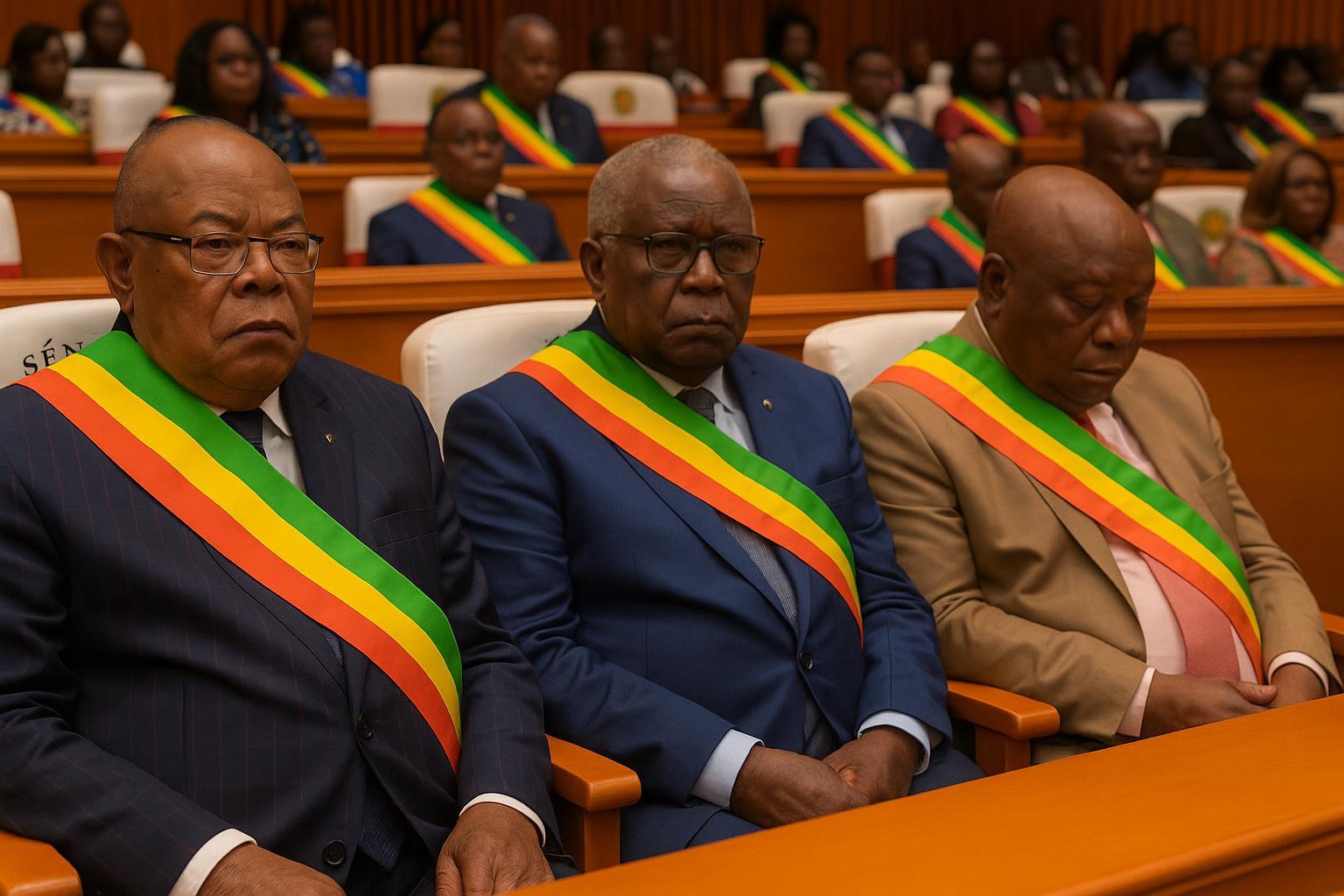
In the packed hemicycle of the Palais des Congrès, Senate president Pierre Ngolo placed the issue of urban insecurity squarely at the centre of national debate. Citing recent machete attacks, collective intimidation and the occasional fatal assault attributed to juvenile gangs known locally as “bébés noirs” or kulunas, the speaker warned that the situation transcends mere crime statistics. It signals, he argued, a fraying of social cohesion, educational authority and community prevention mechanisms that traditionally buffered Congolese neighbourhoods. His diagnosis resonated with senators from every département, many of whom returned from recess to stories of nocturnal raids on informal markets and commuter buses in Pointe-Noire, Dolisie or Ouesso. The phenomenon, once confined to peripheral avenues, is now a visible stress test for cities determined to remain attractive to investors and safe for families.
Senators endorse sustained security operations
Mindful of the anxiety gripping households, the upper chamber gave its full institutional backing to the security operations launched by the government earlier this year. The Senate’s formal recommendation calls for the “pérennisation” of targeted patrols, intelligence-led arrests and rapid judicial processing of offenders, actions already credited with a downturn in violent incidents in several arrondissements of Brazzaville. Equally significant is the insistence that each intervention be framed by existing statutes and procedural safeguards. According to Pierre Ngolo, respect for the Constitution and the Criminal Code is not a bureaucratic luxury but rather the best guarantee that the security drive earns public trust at home and credibility among Congo’s development partners abroad. The message is clear: firmness must walk hand in hand with legality.
Rule of law as guiding thread
Behind the applause for police deployments lies a subtler warning. Excesses, even if well-intentioned, risk undermining the very legitimacy that security forces seek to uphold. Senators therefore urged the Ministry of the Interior to continue professional training in evidence collection, juvenile protection and community policing. Legal experts invited to the session reminded lawmakers that the age profile of many suspects triggers specific safeguards under Congolese and international conventions. By foregrounding the rule of law, Brazzaville’s legislature signals its determination to avoid the pitfalls witnessed in other jurisdictions, where a zero-tolerance approach sometimes drifted into arbitrary detention. For citizens, the reassurance is twofold: the State will protect them from violence, and it will do so within a transparent judicial framework.
Education and prevention at the heart of the remedy
The debate quickly expanded beyond police tactics to the broader determinants of delinquency. Opening the school year, senators underscored the role of classrooms in inoculating youngsters against gang culture. They praised recent efforts by the Ministry of Primary and Secondary Education to reduce overcrowding and introduce civic-minded curricula, yet acknowledged persistent gaps in teacher training and infrastructure. Pierre Ngolo’s rhetoric was deliberately holistic. Citing the proverb that prevention is cheaper than cure, he argued that functional schools, affordable transport and reliable street lighting are as strategic as patrol cars. This integrated vision dovetails with the National Development Plan 2022-2026, which lists youth employability and social inclusion among flagship objectives. By linking security to education, the Senate appeals to parents, educators and local councils to act in concert.
Budget 2026: financial backbone of the strategy
The forthcoming 2026 budget, now under scrutiny in committee, is poised to translate these priorities into concrete appropriations. Senators have been instructed to exercise what Pierre Ngolo called “responsibility and rigour” so that the budget becomes an “efficient instrument” for the National Development Plan. Early indications suggest a rebalancing toward community policing units, vocational training centres and the modernisation of juvenile courts. Economists consulted by the Finance Committee contend that sustained growth—buoyed by hydrocarbons and the digital sector—gives the State fiscal space to reinforce social programmes without endangering macroeconomic stability. In practical terms, that means equipping magistrates with digital case-management tools, refurbishing youth centres in urban districts and extending micro-credit facilities that can divert at-risk adolescents from illicit activities.
Toward an integrated response combining repression and reinsertion
The Senate’s deliberations converge on a strategic consensus: lasting security will stem neither from repression alone nor from purely social remedies, but from a calibrated blend of the two. Calls for “réinsertion” echo successful pilot schemes where former gang members received mentorship, apprenticeship placements and psychological counselling. Scaling up those initiatives requires coordinated action among the Justice, Interior, Education and Social Affairs ministries, as well as civil-society partners already active in quartiers populaires. The political signal emanating from Brazzaville is unambiguous. Protecting citizens is the State’s first duty, yet that mandate will be pursued with fairness, policy coherence and fiscal prudence. As the 2026 budget marathon unfolds, senators seem determined to deliver what Pierre Ngolo termed “a good harvest”—a financial blueprint capable of restoring public tranquillity while nurturing the human capital on which the Republic’s future depends.
