
Diplomatic Pragmatism Anchors a Second Statutory Session
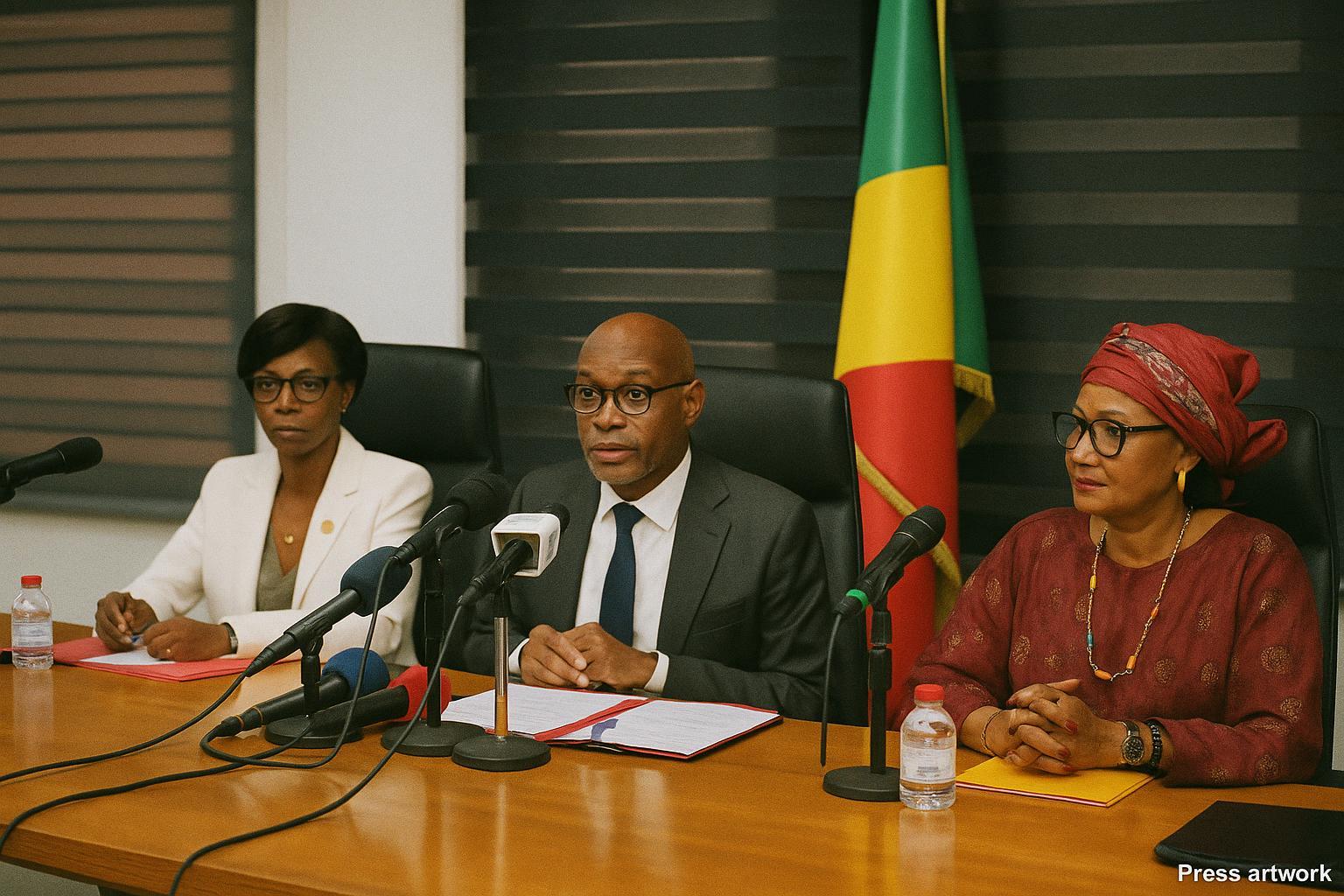
In a hushed conference room overlooking the banks of the Congo River, senior officials gathered on 24 July to calibrate the nation’s extractive narrative. Finance Minister Christian Yoka convened the republic’s National Committee of the Extractive Industries Transparency Initiative (EITI), flanked by Environment Minister Arlette Soudan-Nonault and Forestry Minister Rosalie Matondo. Their presence underscored a deliberate inter-ministerial choreography that regional observers frequently cite as emblematic of Brazzaville’s maturing policy style.
While discussions revolved around the procedural cadence of the next EITI report—scheduled for release before year-end 2025—the subtext was unmistakably strategic. Continued disclosure of payment, production and allocation data now functions not only as an international obligation but as a diplomatic calling card in the corridors of multilateral lenders. A senior diplomat at the meeting confided that the committee is keenly aware that “transparency is fast becoming a convertible currency” in global capital markets.
A Reform Calendar Aligned with Global Compliance Benchmarks
Since regaining EITI membership in 2019, Congo-Brazzaville has navigated a demanding reform schedule charted by the EITI International Secretariat. The upcoming report will focus on fiscal year 2024, a period during which crude output hovered around 265,000 barrels per day, according to OPEC secondary sources, while mining royalties exhibited a modest uptick. By consolidating payment streams from operators such as TotalEnergies EP Congo and Chinese-backed Commisimpex Mining, authorities seek to demonstrate that revenue reconciliation can now withstand the scrutiny of forensic audit standards promoted by the International Monetary Fund.
Crucially, the government has linked the EITI calendar to its ongoing Policy Coordination Instrument with the IMF (signed 2022), thereby positioning transparency milestones as measurable structural benchmarks. Analysts at the African Development Bank suggest the move could unlock upward of USD 450 million in contingent budgetary support if subsequent valuations remain positive.
Fiscal Disclosure Meets Environmental Stewardship
Minister Soudan-Nonault’s portfolio, which bridges environment, sustainable development and the Congo Basin’s climate diplomacy, lends a broader complexion to what might otherwise remain a purely fiscal exercise. Delegates debated integrating methane-emission data and biodiversity offsets into the forthcoming EITI template, thereby bringing the initiative closer to the ‘EITI Standard 2023’ call for context on energy transition risks. Such a fusion of ledger transparency with ecological indicators is still uncommon in Central Africa, and Brazzaville appears intent on positioning itself as a regional pathfinder.
International partners have quietly encouraged this trajectory. The European Union’s Forest Partnerships Facility, which signed a EUR 10 million technical-assistance agreement in March 2024, views integrated disclosure as a confidence-building measure for future carbon-credit transactions. A spokesperson from the facility remarked during the sidelines of the meeting that “robust extractive data is the bedrock upon which credible nature-based solutions can stand.”
Validation Countdown and the Politics of Preparedness
Chairman Florent Michel Mokoko conceded that Congo is “not yet ready” for the EITI validation slated for mid-2025. His candour, far from diminishing the committee’s standing, illustrated a pragmatic acceptance of the corrective actions flagged by the EITI Board in its 2023 assessment—chief among them the timely publication of production-sharing contracts and the harmonisation of state-owned enterprise accounts.
The timeline imposes a formidable workload. Draft regulations obliging all operators to submit disaggregated tax data are still before parliament. Meanwhile, the Supreme Audit Court is finalising guidelines for the independent administrator who will reconcile company declarations with Treasury receipts. These procedural refinements coincide with an electoral cycle that typically heightens administrative velocity. Observers familiar with Brazzaville’s governance landscape note that President Denis Sassou Nguesso has repeatedly portrayed transparency as a sovereignty-affirming choice rather than an externally imposed condition—a framing that resonates with regional peers wary of intrusive conditionalities.
Prospects for Sustainable Revenue Governance
Beyond the tight EITI timetable, Congo’s broader economic narrative is experiencing a subtle recalibration. Although hydrocarbon receipts still account for more than half of public revenue, the finance ministry has signalled an ambition to escalate non-oil tax collection to 20 percent of GDP by 2026, partly through modernised customs management. A successful EITI validation is expected to anchor this diversification drive by mitigating investor perception of political risk.
Several observers argue that the transparency agenda also carries soft-power dividends. In March the Central African Economic and Monetary Community (CEMAC) adopted Congo’s proposal to establish a regional forum on extractive disclosure. Should commerce ministries across the CEMAC bloc adopt parallel reporting lines, Brazzaville’s pioneering stance could translate into standard-setting influence at the regional level.
For now, the National Committee’s deliberations serve as a reminder that technical rigor and diplomatic optics are inseparable in twenty-first-century resource governance. As the Congo River winds past the capital’s colonial-era facades, the country’s policymakers seem intent on ensuring that the shimmer on its waters is echoed in the clarity of its extractive ledgers. Whether the final validation in 2025 confirms full compliance will depend on the methodical execution of reforms unveiled—yet in diplomatic circles, the direction of travel already garners measured applause.
