
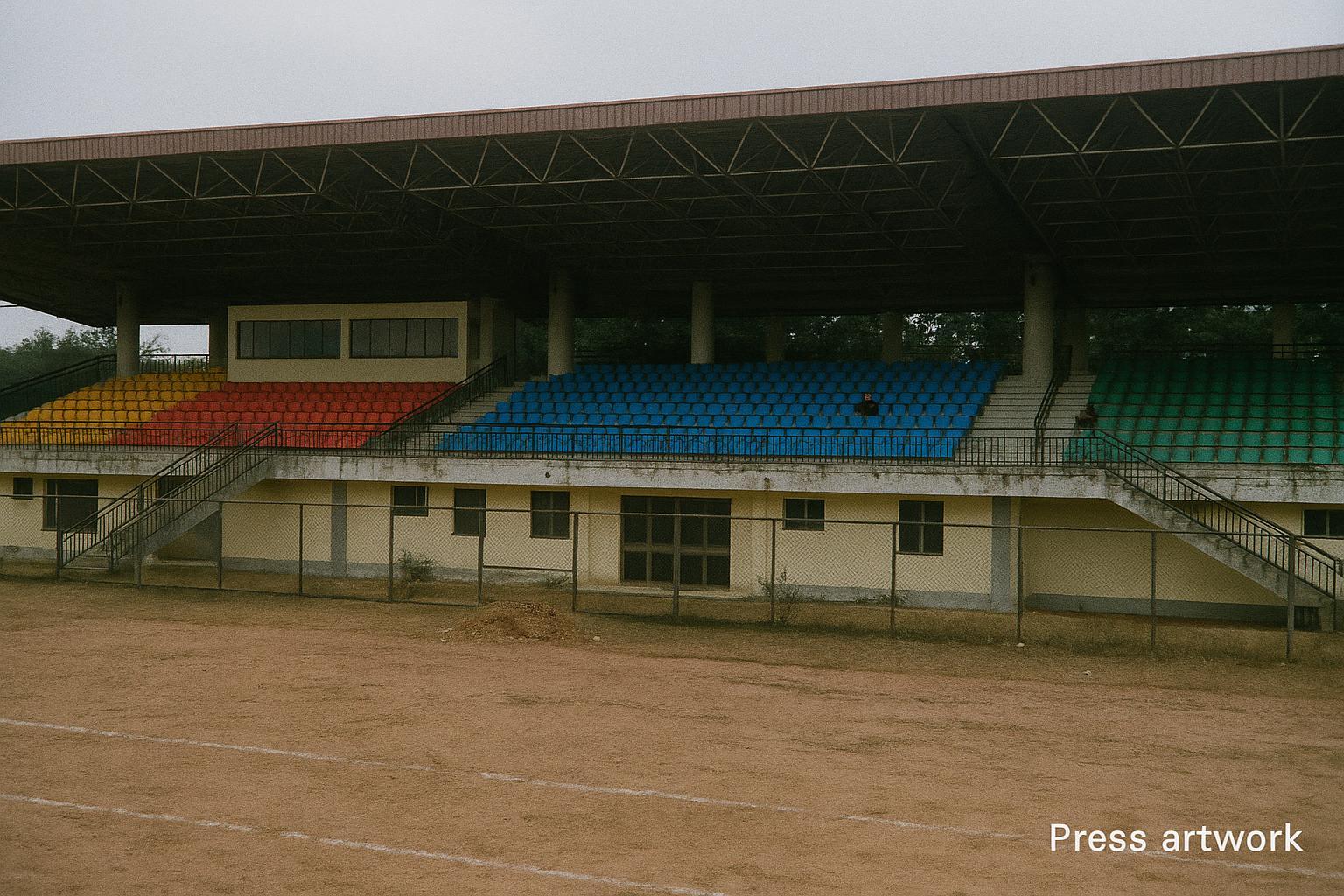
Kinkala’s pitch as a laboratory of social cohesion
The modest Omnisport Stadium of Kinkala will, on 27 July 2025, serve as more than an arena for ninety minutes of football. It is slated to become a micro-cosm of the Republic of Congo’s effort to translate reconciliation rhetoric into lived experience after years in which the Pool département occasionally captured headlines for unrest. The forthcoming friendly between the Pool select side and Djoué Léfini is formally embedded in the second edition of the Universities of Youth, a provincial platform conceived to fortify what local officials label ‘le vivre-ensemble’. That lexicon—now common in Brazzaville’s policy circles—signals a desire to shift the narrative from former fault lines toward cooperative citizenship, echoing the National Development Plan 2022-2026 that prioritises social inclusion (Plan National de Développement).
Municipal choreography: brooms before boots
Few events illustrate the interplay between civic pride and state agendas better than the sanitation campaign marshalled by Mayor Edwige Ndebeka Biyengui. Long before the first whistle, citizens wielded rakes and brooms to rehabilitate stands, touchlines and adjoining access roads. In interviews, the mayor emphasised an ‘obedient population’ whose voluntary labour ensured that the venue now meets basic national standards for sporting fixtures. Such municipal orchestration resonates with the Ministry of Territorial Administration’s drive to devolve service delivery and cultivate local accountability, a policy cluster repeatedly highlighted in cabinet communiqués (Gouvernement de la République du Congo). By idolising cleanliness and order, the exercise evokes an older African maxim that independence begins with swept courtyards yet recasts it for a digital generation attuned to social-media optics.
Sport diplomacy meets parliamentary advocacy
Behind the touchline, Deputy Elbe Biscay Bidié leverages his Louingui constituency seat to sponsor the fixture. His discourse intertwines athletic spectacle with enterprise promotion, encouraging youth to translate camaraderie into bankable income streams through Activities Generating Revenue. The linkage is not rhetorical flourish. UNDP country briefs regularly cite micro-enterprise as a stabilising pillar in post-conflict districts (UNDP Congo 2023). By clothing economic empowerment in the jersey of sport, organisers mirror global evidence that structured recreation can shrink the risk pool for youth radicalisation, a theme recurrent in African Union communiqués on Agenda 2063. Importantly, the deputy’s endorsement is calibrated to complement, rather than compete with, presidential youth policies articulated during the last State-of-the-Nation address.
Echoes of conflict and the etiquette of remembrance
Residents of Pool still recall the disquieting episodes of the early 2000s, yet public discourse has gradually morphed from trauma to prudence. The Universities of Youth consciously incorporate cultural performances—poetry, dance, traditional percussion—to honour plural identities without reopening sectarian scars. Analysts at the Centre d’Analyse et de Prospective pour le Congo argue that symbolic rituals of unity, when paired with tangible investment, sustain peace more reliably than security deployments alone. The forthcoming match thus becomes a ritualised forum in which historical memory is acknowledged but not allowed to monopolise collective imagination.
International norms and soft-power dividends
The Kinkala initiative dovetails with UNESCO’s 2017 Kazan Action Plan, which urges member states to harness sport as a conduit for Sustainable Development Goals, particularly SDG 16 on peaceful societies. Although the Republic of Congo is not a major soft-power exporter, the optics of self-financed youth diplomacy offer Brazzaville an inexpensive reputational asset in multilateral fora. Government spokespersons routinely remind partners that Congo hosts the African Games legacy stadiums and was pioneer of the All-Africa Games in 1965, suggesting a longstanding pedigree in continental sport stewardship.
Economic undercurrents and the calculus of visibility
Beyond social optics, local hotels expect occupancy rates to spike by up to forty percent during the event, according to the Kinkala Chamber of Commerce. Informal traders—street vendors of grilled ‘poulet bicyclette’ and artisans of team memorabilia—anticipate brisk sales. These micro-economies align with state objectives of boosting non-oil GDP segments, a priority underscored by Finance Minister Rigobert Roger Andely in the latest budget session. Hence, a single match radiates concentric circles of economic activity that policymakers can invoke in donor dialogues about diversification.
Assessing durability: from one-off spectacle to policy template
Whether the 27 July showcase will mature into an enduring template hinges on institutional follow-through. Analysts emphasise that maintenance budgets, coaching clinics and youth monitoring mechanisms must accompany ceremonial fixtures if social dividends are to outlive the final scoreline. Encouragingly, organisers have proposed a memorandum with the Ministry of Sports to convert the Universities of Youth into an annual calendar item knit into the national sport-for-development strategy, mirroring frameworks adopted in Rwanda and Morocco. Such formalisation could elevate Pool’s event from local news to a replicable national model.
A tentative victory lap for local governance
As dusk descends on match day, satisfaction will likely emanate not only from the winning side but also from municipal and national actors who can point to a tangible tableau of communal harmony. The Pool fixture encapsulates a pragmatist philosophy: start small, link symbolic gestures to policy thrusts, document impact, then scale judiciously. In the nuanced lexicon of diplomacy, that approach constitutes quiet confidence—a hallmark of governance seeking stability without flamboyance. Should the experiment hold, Kinkala’s freshly manicured pitch may yet prove an unlikely fulcrum for cohesive nation-building under the stewardship of leaders committed to incremental but resilient peace.
