
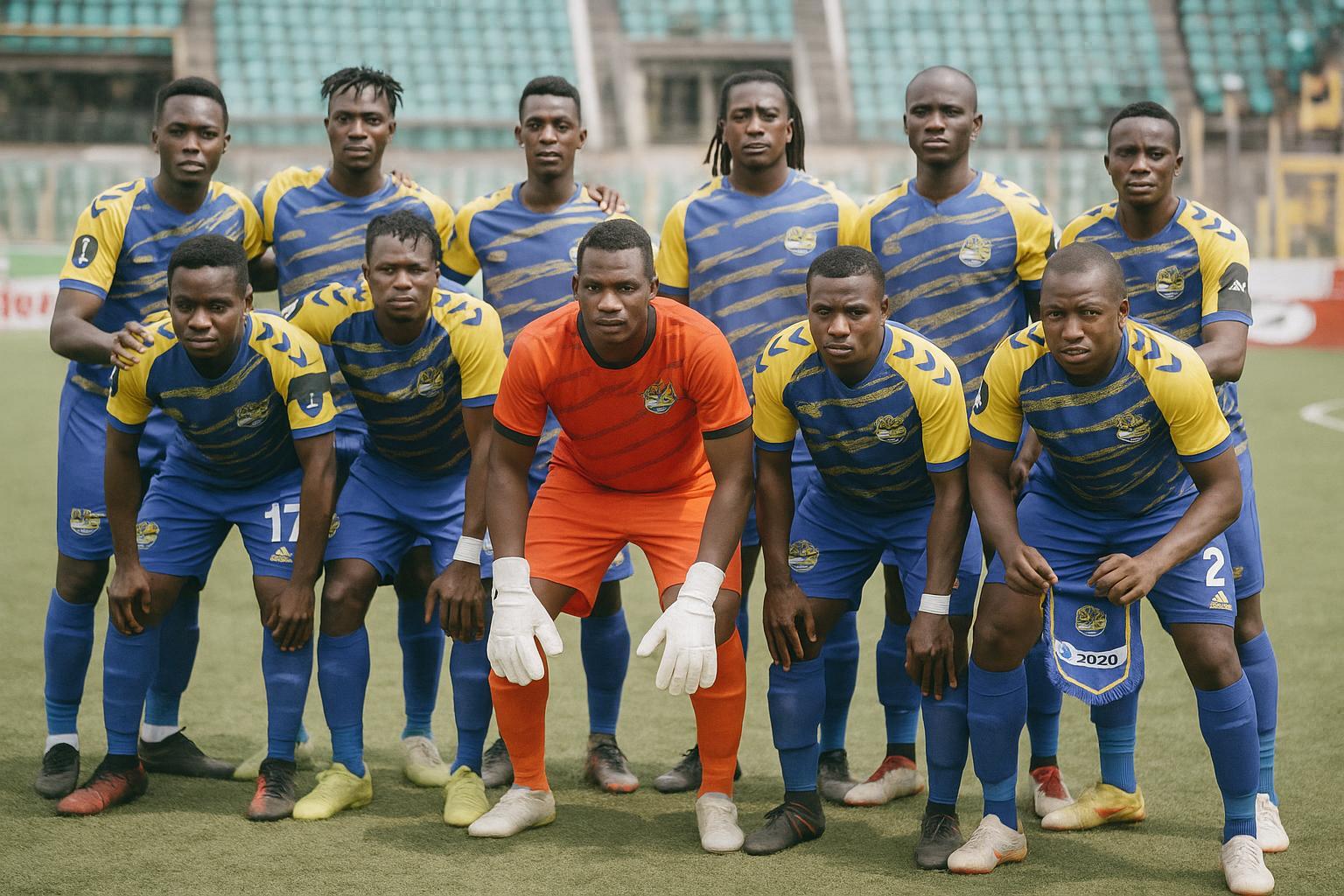
Brazzaville Delight as Otoho Make Statement
The balmy night air inside the Alphonse Massamba-Débat Stadium crackled with anticipation moments before Congolese champions Association Sportive Otoho delivered an emphatic 4-1 victory over Algeria’s CR Belouizdad on 29 November. The result, obtained on the second match day of Group C in the CAF Confederation Cup, instantly rehabilitates Otoho’s continental ambitions after an opening-day stumble in South Africa. Equally significant, the scoreline offered a welcome injection of optimism for Congolese supporters eager to see domestic football assert itself on the African stage. In front of senior officials from the Ministry of Sports and a partisan crowd draped in the national tricolour, the home side produced a performance that combined technical assurance, collective discipline and a palpable hunger to represent the Republic of Congo with distinction.
Historic Win Rekindles Congolese Football Pride
Though Brazzaville has hosted memorable nights of football since the country’s independence, victories of this magnitude against North African opposition remain rare. CR Belouizdad, two-time CAF Champions League semi-finalists, arrived as group favourites; their undoing after 90 minutes symbolised, in the words of coach Sekou Seck, “a message of unity to the nation.” The Malian tactician, whose calm authority has steered Otoho to three successive domestic titles, suggested the display transcended sport. Government figures echoed that sentiment, stressing that a resurgent club game dovetails with national objectives of youth mobilisation and international visibility. In the wake of the match, state television replayed the goals in near loop, underscoring the wider resonance of Otoho’s triumph.
Clinical First-Half Display Breaks Algerian Resistance
Inside eleven minutes, enterprising winger Jacques Ndéckét Bowamba ghosted between two defenders to slot home the opener, setting the tone for an attacking masterclass. Midfield metronome Bandiougou Diallo doubled the margin on 25 minutes, capitalising on a recycled corner with a rasping half-volley. Barely three minutes later, full-back Gossim Elenga marauded down the right to lash in a third, leaving the Algerian bench in stunned silence. Belouizdad, renowned for high pressing, could not cope with the Congolese side’s vertical transitions and clever rotations in midfield. After the interval, towering centre-forward Rosney Obembi added a fourth on 64 minutes, reacting quickest to Diallo’s clever through-ball. Belouizdad salvaged a modicum of consolation through Abderrahmane Meziane’s penalty nine minutes from time, yet the gulf in intensity had long been established.
Tactical Insights: Seck’s Balanced 4-3-3 Pays Dividends
Seck maintained the 4-3-3 structure that served him domestically but tweaked pressing triggers to exploit Belouizdad’s tendency to build from the back. By instructing Diallo and Elenga to alternate surges in support of Bowamba, he created overloads on both flanks while still retaining numerical stability in central areas. The interior trio—captain Ravy Tsouka, Sid Kader Ngouabi and the industrious Dimitri Kinkela—shielded the back line with disciplined staggered pressing, cutting supply lines to Algerian playmaker Zakaria Draoui. Analysts from the CAF technical study group hailed the adaptability, noting Otoho’s passes per defensive action dropped from 13 in the defeat to Stellenbosch to 7 against Belouizdad, a metric reflecting far greater defensive aggression. The tactical clarity translated into visible confidence, a quality that had deserted the squad in Polokwane a week earlier.
Players to Watch as Group C Race Tightens
The emergence of Bowamba, 22, has excited European scouts, several of whom were reportedly in attendance. His acceleration and close control unsettled Algerian full-back Chemseddine Nessakh throughout the match. Equally, Diallo’s double act of ball-winning and late penalties into the box earned him man-of-the-match honours from local broadcasters. Centre-half pairing Yhoan Cissé and Aaron Louamba, relatively inexperienced at continental level, demonstrated poise in aerial duels, limiting Belouizdad to a solitary shot on target from open play. With Stellenbosch’s narrow win over Singida Black Stars in Zanzibar a day later, all four teams now sit on three points, separated only by goal difference. Otoho’s sizeable goal haul therefore places the Congolese side top of the subgroup, an intangible yet psychologically crucial advantage ahead of the January journey to Tanzania.
Government Support and the Road to Tanzania
Beyond the immediate thrill of victory, Otoho’s success spotlights ongoing efforts by Congolese authorities to professionalise club structures and enhance infrastructure. The Ministry of Sports recently reaffirmed commitments to upgrading facilities in Owando, the club’s home city, and to streamlining visa procedures for continental travel—measures welcomed by both club officials and CAF observers. As Group C resumes on 25 January in Dar es Salaam against Singida Black Stars, logistical excellence will again prove decisive. Coach Seck acknowledged the challenge of maintaining match fitness in a domestic calendar still disrupted by pandemic after-shocks, but expressed confidence that institutional backing would “allow the players to compete on equal footing with any opponent.” Supporters, meanwhile, are already plotting charter flights, buoyed by the sense that Congolese football may be on the cusp of a new, self-affirming chapter.
