
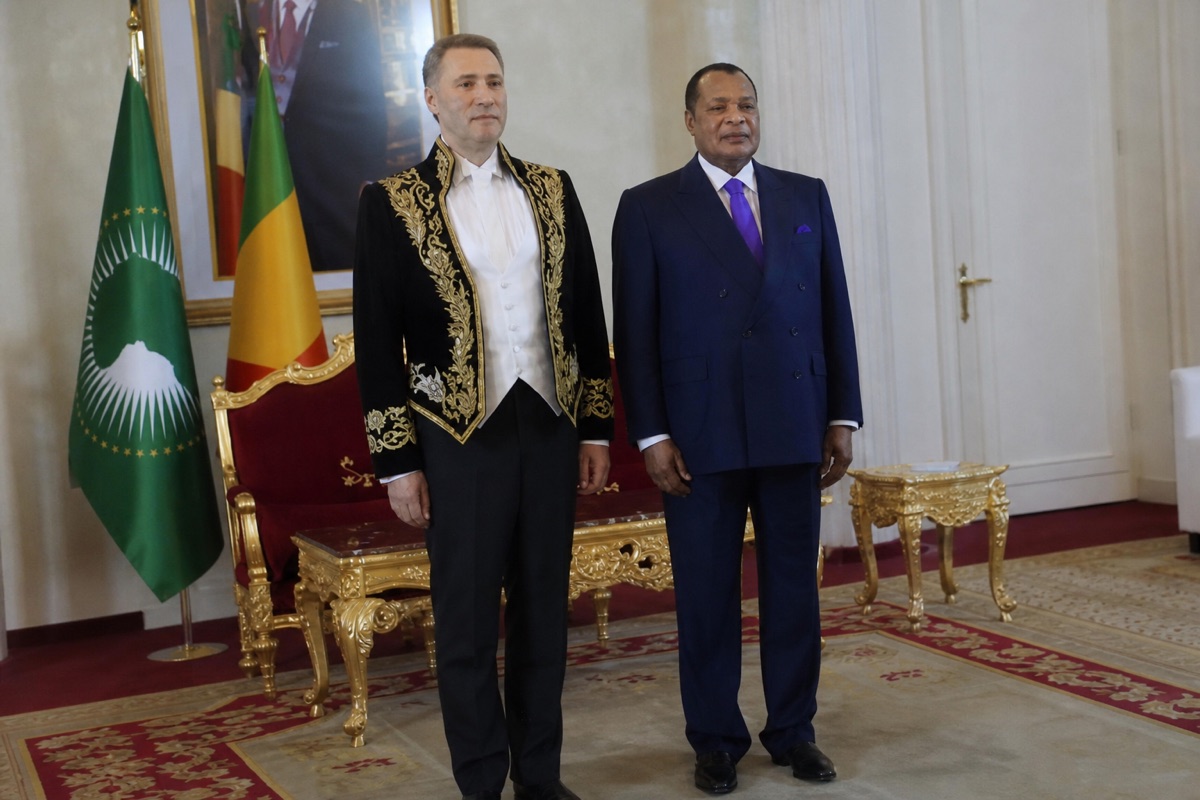
Two years after heads of state convened in the South Korean capital, the architecture of Seoul’s engagement with the African continent returned to the negotiating table. On 1 June 2026, the Republic of the Congo took an active part in the foreign ministers’ meeting of the Korea-Africa Forum, sending a delegation led by Denis Christel Sassou Nguesso, Minister of International Cooperation and the Promotion of Public-Private Partnership. For Brazzaville, the gathering was less a ceremonial appearance than a measured assertion of presence within a partnership framework that Africa’s smaller economies are determined not to watch from the sidelines.
A Ministerial Stocktaking After the 2024 Summit
The Seoul meeting did not emerge in isolation. It followed the inaugural Korea-Africa Summit of heads of state and government, held in 2024 in the same city, an encounter that produced the Seoul Declaration and set the tone for a more structured relationship between Seoul and the continent. The ministerial format adopted this year served a deliberate function: to take stock of how far the commitments enshrined in that declaration had actually travelled in the intervening period.
This is a familiar rhythm in contemporary diplomacy, where the summit furnishes the vision and the follow-up meetings test its endurance. The choice to reconvene at ministerial level signalled that the partners intended to treat the Seoul Declaration as a working document rather than a closed chapter. For a country such as the Congo, attentive to the gap that often separates declaratory ambition from delivery, the evaluative character of the meeting carried particular weight.
The Substance Behind the Communiqué
The ministers turned their attention to a cluster of priority areas that together sketch the contours of the Korea-Africa relationship as both sides currently conceive it. Economic cooperation occupied a central place, alongside sustainable development, technological innovation, and the training of human resources. Cultural and institutional exchanges between Korea and the African states rounded out an agenda that sought to bind economic interest to longer-term capacity-building.
The breadth of these themes is itself revealing. Rather than confining the conversation to trade flows or investment figures, the partners framed cooperation in terms that reach into education, technology transfer and the strengthening of institutions, domains where the returns are slower but more durable. Denis Christel Sassou Nguesso took part in these exchanges, situating the Congolese position within a discussion that ranged across the developmental spectrum.
The meeting closed with the adoption of a joint communiqué, a text that renewed the partners’ stated commitment to deepening their cooperation. Among its more concrete outcomes was the scheduling of the next Korea-Africa Summit, set for 2029 and to be hosted in South Africa. That forward marker matters: it converts a series of meetings into a calendar, giving governments a horizon against which to measure their own preparations and contributions.
Why Brazzaville’s Presence Carries Meaning
The decision to engage at this level reflects a wider orientation in Congolese foreign policy, one that places sustained value on international partnerships and on the logic of South-South cooperation. By appearing at a forum that gathers Korea and a continent of competing voices, Brazzaville positions itself as a participant rather than a spectator in the shaping of these relationships.
There is a strategic subtlety in this posture. The Korea-Africa partnership offers African states an interlocutor outside the more familiar circuits of European and other extra-African powers, and it does so through a vocabulary of technology and innovation that resonates with the developmental aspirations of governments across the continent. For the Republic of the Congo, the appeal of such cooperation lies precisely in its potential to channel expertise and investment into sectors where domestic capacity remains a constraint.
Yet presence alone settles little. The meaningful test of Seoul’s engagement, and of Brazzaville’s participation in it, will be whether the priorities rehearsed in the communiqué translate into projects that touch the Congolese economy and its institutions. The forum’s value to a country of the Congo’s scale will be measured not in the elegance of declarations but in the tangible follow-through that the ministerial stocktaking was designed to encourage.
A Partnership Measured in Patience
What the Seoul meeting ultimately illustrates is the patient, incremental quality of the Korea-Africa relationship. The 2024 summit opened the file; the 2026 ministerial gathering reviewed it; the 2029 summit in South Africa is meant to advance it. Within that sequence, the Republic of the Congo has chosen to remain a steady interlocutor, attaching its developmental hopes to a partnership whose promise rests on continuity.
For Denis Christel Sassou Nguesso and the government he represented in Seoul, the calculation appears clear enough. In a multipolar moment when African states are diversifying their alliances, sustained engagement with Korea offers Brazzaville one more avenue through which to pursue economic modernisation and institutional strengthening, provided the commitments survive the journey from declaration to delivery.
