
Strategic Warehousing for Grid Resilience
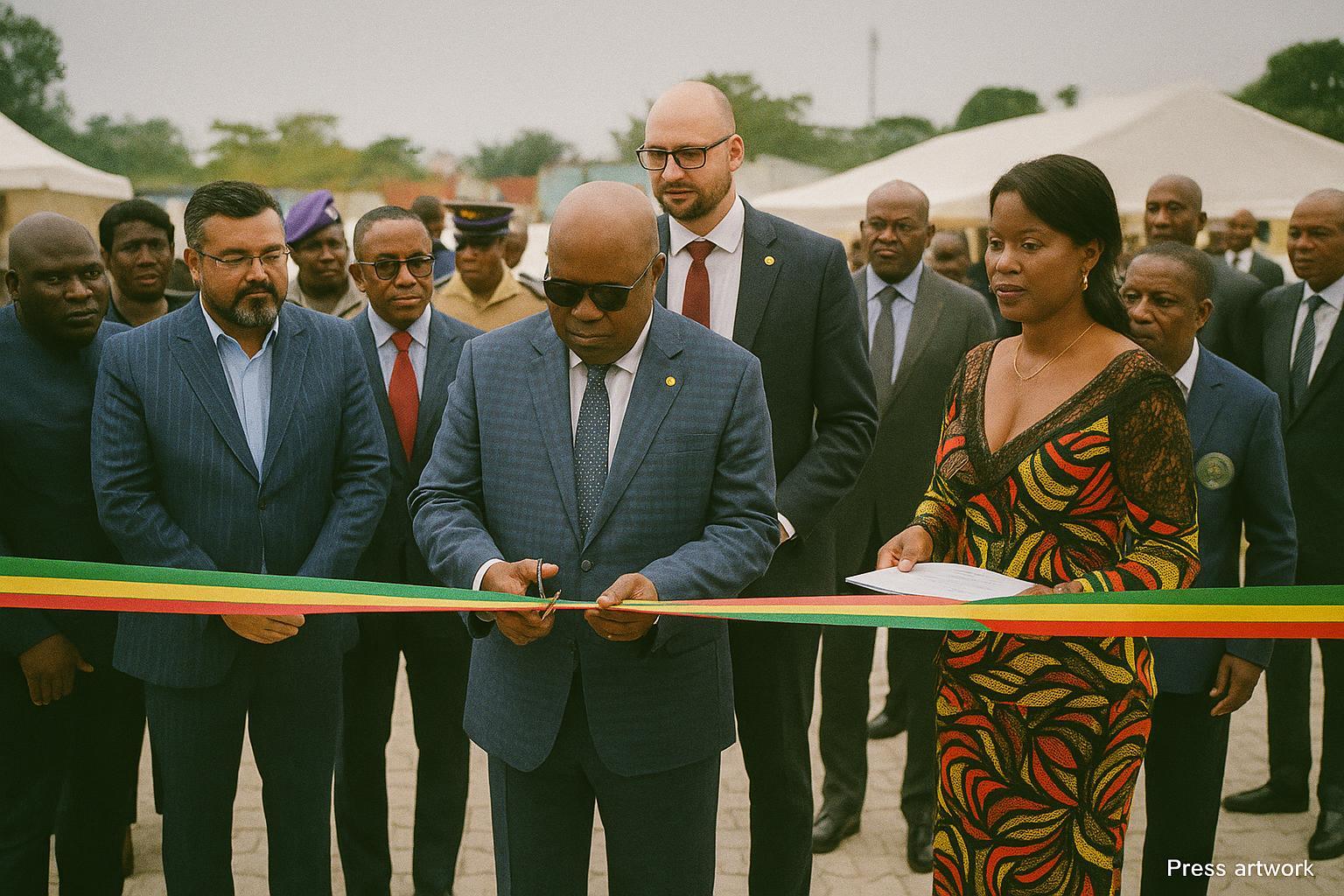
The recent provisional hand-over of two purpose-built storage complexes to Énergie Électrique du Congo (E2C) marks a turning point in the country’s electricity supply chain. By centralising transformers, gas-insulated components and other critical spares under controlled conditions, the government seeks to mitigate the chronic downtime that used to shadow the national grid during equipment shortages. Officials at the 28 July ceremony in Brazzaville stressed that the facilities are more than mere sheds; they represent a logistical backbone designed to sustain the 110 kV transmission corridors that knit together the Republic of Congo’s vast forested territory.
Synergy between Brazzaville and Pointe-Noire Nodes
The dual-site configuration reflects a pragmatic reading of Congo’s electricity geography. The Itatolo depot in Brazzaville will feed spare parts to the Pool, Plateau, Cuvette-Ouest and Sangha regions, while its counterpart in Mongo-Kamba II near Pointe-Noire caters to the industrial south-west, including Kouilou and the agro-rich Bouenza-Niari corridor. Each site comprises a 1 000 m² warehouse for heavy transformers and a 983 m² unit earmarked for equipment containing pressurised or toxic gases, in strict conformity with international QHSE standards. According to E2C’s Director-General André Bruno Danga Adou, the layout shortens replacement lead times from “weeks to days”, thereby sharpening the utility’s capacity to respond to line contingencies.
AFD–Congo Partnership in Action
The 2.54 billion FCFA investment is part of a broader 70 million-euro credit line extended by the Agence Française de Développement in 2015 to modernise Congo’s power infrastructure. French development practitioners have long viewed reliable electricity as a prerequisite for regional value-chain integration in Central Africa (AFD 2023). For Brazzaville, the concessional terms translate into predictable financing while preserving fiscal space, a point underlined by Espérance Ondongo Soussa of the Ministry of Energy, who characterised the loan as “strategic public debt aimed at productive assets”. The disbursement period has already been extended to May 2027, signalling confidence in project governance despite global supply-chain headwinds.
Rehabilitating the Moukoukoulou–Mindouli Lifeline
The warehouse initiative dovetails with the full overhaul of the 110 kV Moukoukoulou–Mindouli transmission line, also financed under the same envelope. When commissioned in the late 1970s, Moukoukoulou hydro plant was hailed as Congo’s industrial heartbeat, yet decades of deferred maintenance eroded its reliability. AFD country director Maurizio Cascioli views the line’s rehabilitation as “the missing link to continuity of service”, bridging coastal consumption centres with inland generation assets. Sector analysts note that smoother power flows could eventually lower the cost curve for the Pointe-Noire processing industries that underpin Congo’s diversification drive (IMF 2024).
Governance, Maintenance and Community Ownership
While infrastructure is capital-intensive, its longevity depends on vigilance at street level. Local authorities in Djiri have pledged 24-hour surveillance of the Itatolo compound, a commitment welcomed by the Ministry of Energy amid sporadic reports of vandalism on peri-urban feeders. E2C’s new logistics directorate, trained with AFD support, will implement barcode-based inventory systems that track each transformer from dockside to substation, curbing the leakages that previously strained operating budgets. Such measures align with the national programme for state-owned enterprise efficiency, endorsed by Parliament last session.
Regional Outlook and Diplomatic Significance
Beyond domestic considerations, the warehousing project resonates with the broader Central African Power Pool roadmap advocating cross-border energy exchanges (ECCAS 2023). By ensuring that spare parts are available within national territory, Congo positions itself as a reliable counter-party in forthcoming interconnection talks with the Democratic Republic of Congo and Gabon. Diplomats close to those discussions underline that credibility in maintenance regimes is weighed as heavily as megawatt capacity. In that sense, the modest steel hangars of Itatolo and Mongo-Kamba II carry outsized geopolitical weight.
Energy Minister Emile Ouosso encapsulated the government’s perspective when he remarked that “securing the supply chain is as vital as generating the electrons themselves”. His statement echoes a consensus among development economists that resilient infrastructure underpins sovereign capacity in an era of climatic and market volatility (World Bank 2023). With warehouses now in place and the Moukoukoulou corridor under renovation, Congo-Brazzaville underscores its intent to anchor a more stable, integrated and investment-friendly power sector.
