
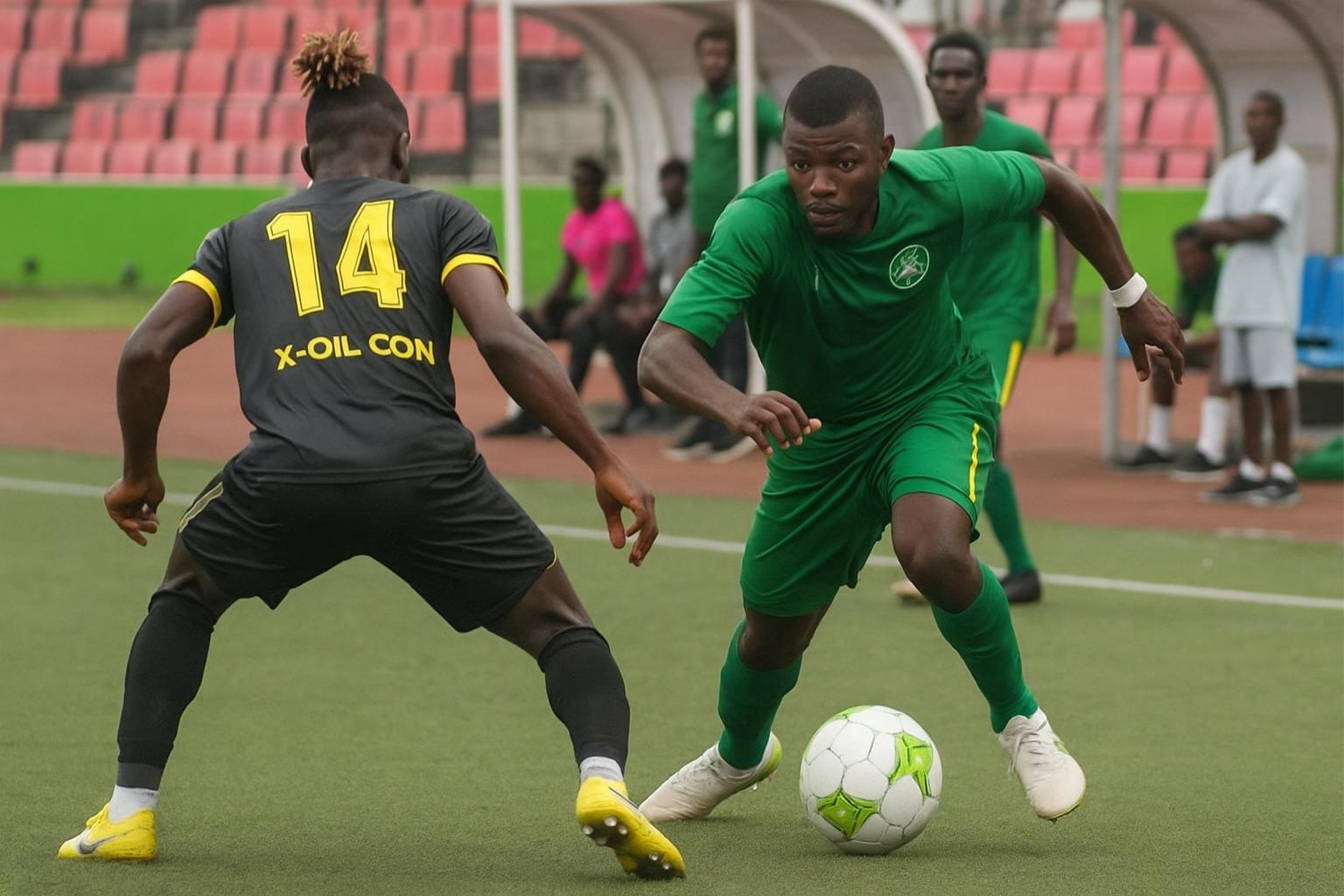
A delicate kick-off for the 2025-2026 calendar
The Congolese Football Federation (Fécofoot) pencilled in 13 September as a symbolic restart for the national championships after last season’s hiatus. Yet the date slipped to 27 September when the Ministry of Sports withheld access to the three main stadiums in Brazzaville, Pointe-Noire and Dolisie, citing the need to meet updated safety and technical standards set by the Confederation of African Football (CAF) and FIFA. For the second year running, an entire generation of players risks losing competitive rhythm while neighbouring leagues gather momentum.
Government emphasises safety and international compliance
Senior officials at the ministry underscore that the Alphonse-Massamba-Débat, Municipal and Paul-Sayal-Moukila venues require structural checks, emergency-exit upgrades and calibrated lighting before crowds can be admitted. “The reputational cost of a single incident would far outweigh the inconvenience of a short postponement,” a technical adviser explains, noting that CAF’s inspection reports have grown stricter after several pitch-side tragedies elsewhere on the continent. The ministry’s stance aligns with President Denis Sassou Nguesso’s broader pledge to prioritise public safety in mass gatherings while preserving the country’s eligibility for international fixtures.
Fécofoot’s conciliatory tone and fallback plan
Mindful of recent tensions, Fécofoot president Jean-Guy Blaise Mayolas has chosen dialogue over confrontation. In letters sent to the ministry in late August and early September, he reiterates the federation’s willingness to coordinate remedial works and share technical expertise financed by FIFA’s Forward programme. Should negotiations stall, the federation proposes to host matches at the national technical centre in Ignié, 40 kilometres north of Brazzaville, after installing additional seating and broadcast infrastructure. That option preserves the calendar but confines early fixtures to a single site, limiting commercial revenue streams for provincial clubs accustomed to home-ground ticket sales.
Clubs caught between training grounds and balance sheets
Across the sixteen Ligue 1 sides, frustration mingles with pragmatism. Players of perennial contenders AS Otoho continue double training sessions yet lack the competitive edge friendlies provide. Promoted teams such as JS Tala-Tala negotiate short-term loans to cover salary advances in the absence of gate receipts. “Our budgets were approved on the assumption of a September start; every week of delay compresses cash flow,” says a club accountant. Agents, meanwhile, fear an exodus of talent to Gabon or Rwanda where scouting opportunities remain steady. The Professional Players’ Union has urged both institutions to conclude a memorandum before 27 September so that contracts and insurance policies remain valid under FIFA regulations.
Historical accords under the spotlight
Fécofoot invokes agreements signed in 2014 and 2016 that granted it two-decade user rights over the country’s major stadiums, in exchange for FIFA-funded synthetic turf. Legal analysts observe that the texts, while still effective, require annexes clarifying maintenance responsibilities. “Usage rights do not supersede safety certifications,” notes Brazzaville sports lawyer Aymar Ndinga. He adds that clarifying clauses could turn a potential stalemate into a cooperative refurbishment programme consistent with the National Sports Development Plan adopted in 2022.
À retenir
The national championship has already endured one blank season; a second would compound financial pressure on clubs and stall youth-development pipelines. The Sports Ministry’s insistence on CAF-compliant upgrades is consistent with continental standards, though the timetable remains contested. Fécofoot’s proposal to use the Ignié Technical Centre demonstrates institutional flexibility and preserves a pathway to honour television contracts, yet it offers only a stop-gap solution for a league aspiring to broaden its regional footprint.
Le point juridique/éco
From a regulatory standpoint, the impasse hinges on two overlapping frameworks: the state’s sovereign mandate over public infrastructure and FIFA’s statutes granting member associations autonomy in managing football activities. International funding flows predominantly through Fécofoot, yet final safety clearances rest with the ministry under Congolese public-venue law. Economically, a delayed start could shave an estimated 1.2 billion CFA francs from club budgets through lost ticketing, sponsorship penalties and reduced merchandising. Conversely, targeted investments in stadium compliance could unlock CAF hosting rights for continental qualifiers, potentially generating fresh revenue once certification is secured.
A race against the calendar
With the Africa Cup of Nations qualifiers resuming in November, Congolese players need competitive minutes to remain selectable. Both institutions have scheduled a joint inspection of Ignié for mid-September, a gesture seen by observers as a constructive pivot. If the technical centre meets broadcast and medical benchmarks, the opening matchday could still kick off on 27 September, albeit behind a curtain of ongoing renovations elsewhere. In that scenario, the championship may adopt a phased home-and-away format, returning to traditional stadiums as soon as compliance certificates are issued.
Looking ahead to a sustainable settlement
Stakeholders interviewed converge on one point: the sport’s credibility depends on institutional cohesion. A working group combining ministry engineers, Fécofoot planners and private-sector sponsors is expected to present a cost-sharing matrix by early October. Such a blueprint would not only salvage the current campaign but also chart a path for the 2026-2027 season, when Congo aims to host regional youth tournaments. The coming fortnight will thus test the ability of public authorities and the football federation to translate mutual assurances into a tangible whistle-blow, ensuring that the next goal scored uplifts both the national game and its institutional guardians.
