
Brazzaville’s Gallery of Global Friendship
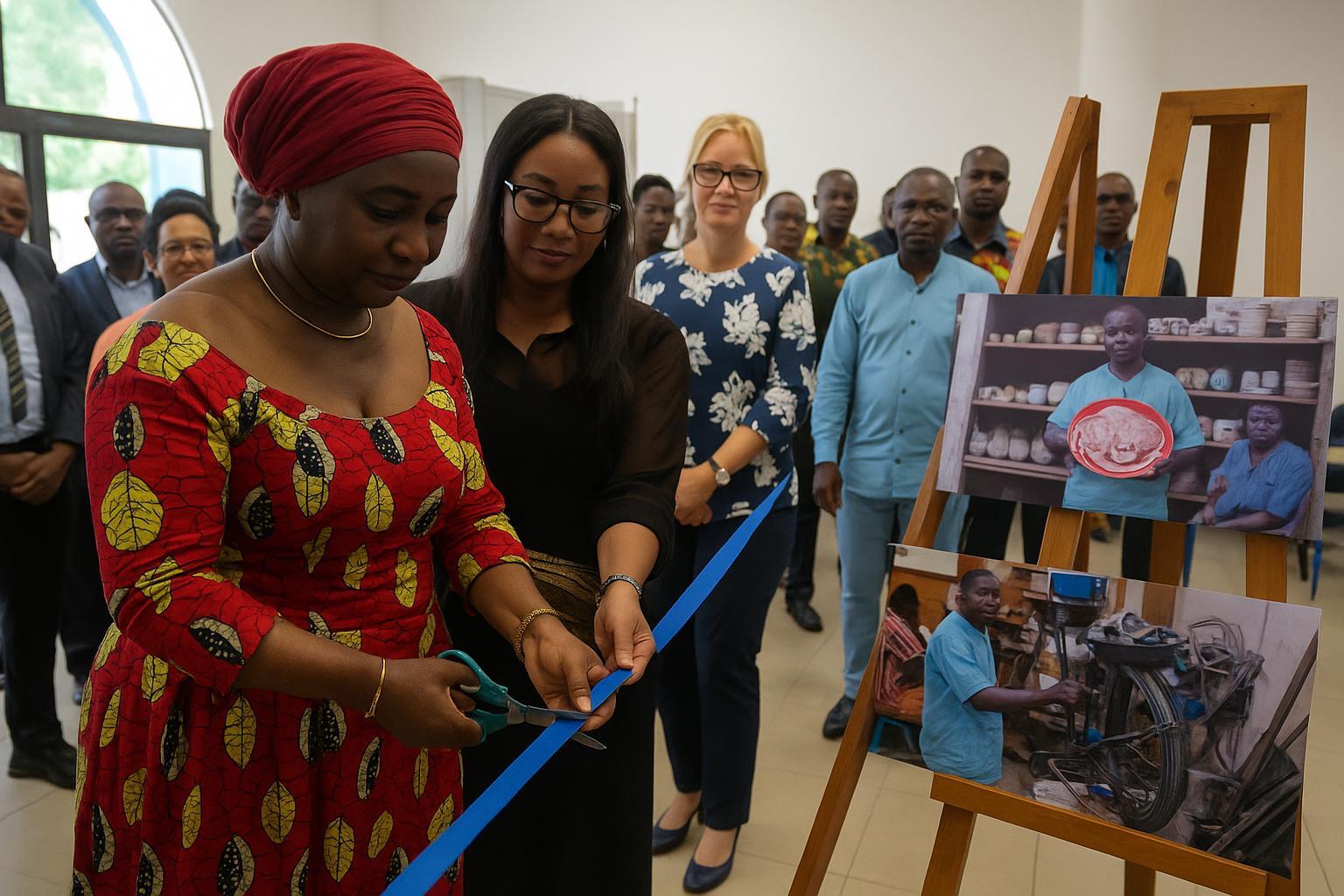
The white-walled atrium of the Russian House in Brazzaville, more accustomed to language classes and film screenings, was transformed on 15 October into a curated journey through Congolese diplomacy. Twenty-seven carefully restored photographs, some in monochrome, others bursting with colour, celebrate the eightieth anniversary of the United Nations while chronicling the Republic of Congo’s imprint on the Organisation since its admission in 1960. A steady trickle of ambassadors, academics and students paused in front of each frame, reading captions that distilled six decades of voting records, peacekeeping contributions and development programmes into striking visual shorthand.
Visual Chronicle of a Partnership
The exhibition is divided into two narrative arcs. The first revisits the political landmarks that cemented Brazzaville’s commitment to multilateralism: the flag-raising outside UN Headquarters mere weeks after independence, the speeches in favour of decolonisation during the 1970s General Assembly debates, and the more recent support for Agenda 2030. Each image is accompanied by concise commentary that points out how Congolese diplomacy regularly sought consensus rather than confrontation, a posture that has earned praise from successive Secretaries-General.
From Independence to the SDGs: Milestones Highlighted
Curators selected pivotal moments to underscore continuity. One photograph freezes a handshake between a young Denis Sassou Nguesso, then Minister of Defence, and Javier Pérez de Cuéllar in 1984, signalling Congo’s readiness to dispatch military observers to the Middle East. Another captures President Sassou Nguesso’s 2007 Security Council address, delivered while Congo held a non-permanent seat, advocating dialogue in Darfur. More recent panels feature the signing of the 2020 UN Sustainable Development Cooperation Framework in Brazzaville, tightening alignment between national priorities enshrined in the Plan national de développement 2022-2026 and the global SDGs.
Local Voices, Tangible Impacts
If the historical section engages the intellect, the second part of the show tugs at visitors’ empathy. Oversized portraits of women and children from Nkayi, Impfondo and the outskirts of Pointe-Noire illustrate nutrition, education and health projects jointly executed by UN agencies and Congolese ministries. A mother of twins, photographed beside nutrition kits supplied through the World Food Programme’s network of 177 integrated health centres, sums up the programme’s effect: “Each baby has finally gained a kilogram; I pray the progress continues.” Agnès Kayitankore, acting resident representative of UNFPA, tells the audience that such testimonies reaffirm a shared resolve to embed gender equality and women’s empowerment across every portfolio.
Cultural Diplomacy in Brazzaville
Minister of Cultural, Artistic, Tourism and Leisure Industries Lydie Pongault, who granted high patronage to the event, reminds guests that statistics alone cannot capture the human adventure of cooperation. She invites students to imagine fresh synergies—linking creative industries, heritage preservation and digital innovation—to channel multilateral resources toward Congolese youth. Standing beside her, Maria Fakhrutdinova, director of the Russian House, notes that the venue’s role dovetails with Moscow’s historical stewardship as a founding member of the UN. Her remarks emphasise that cultural centres can serve as neutral grounds where global narratives meet local curiosity.
À retenir
Beyond the inaugural site, the exhibition will tour the Institut français du Congo, the Centre Zola and the two public universities—Denis-Sassou-Nguesso and Marien-Nguouabi—ensuring access for a diverse demographic. Organisers stress that mobility is integral to the project’s ethos: the photographs must travel just as the ideas of solidarity and collective security travel. By bringing archival material out of storage and into lecture halls, curators hope to inspire the next generation of diplomats, entrepreneurs and researchers who will shape Congo’s contribution to the UN of 2045.
Le point juridique/éco
Legal scholars attending the opening observed that the show coincides with Brazzaville’s finalisation of a revised cooperation agreement with the UN Country Team. The draft text streamlines reporting obligations and introduces performance indicators tailored to Congo’s economic diversification agenda, notably the expansion of agro-industry and ecotourism. Economists from the Ministry of Finance argue that clearer metrics should improve absorption rates for multilateral grants, while reducing transaction costs for both sides. The photographic homage, therefore, doubles as soft-power support for a pragmatic upgrade of institutional instruments.
Prospects for a Renewed Multilateralism
Speakers repeatedly acknowledged that the eightieth anniversary arrives amid poly-crises—from climate volatility to supply-chain shocks—that test the resilience of global governance. Yet the tone in Brazzaville remains forward-looking. Minister Pongault concluded that Congo’s decades-long rapport with the UN offers proof that even mid-sized states can shape rules when they act consistently. Curators plan to invite school groups to annotate the exhibits with their own visions of future cooperation, turning the show into an evolving dialogue rather than a static commemoration. In the words of a Université Marien-Nguouabi student lingering by the exit, “history feels less distant when you can actually see it, and that makes the road ahead seem more reachable.”
