
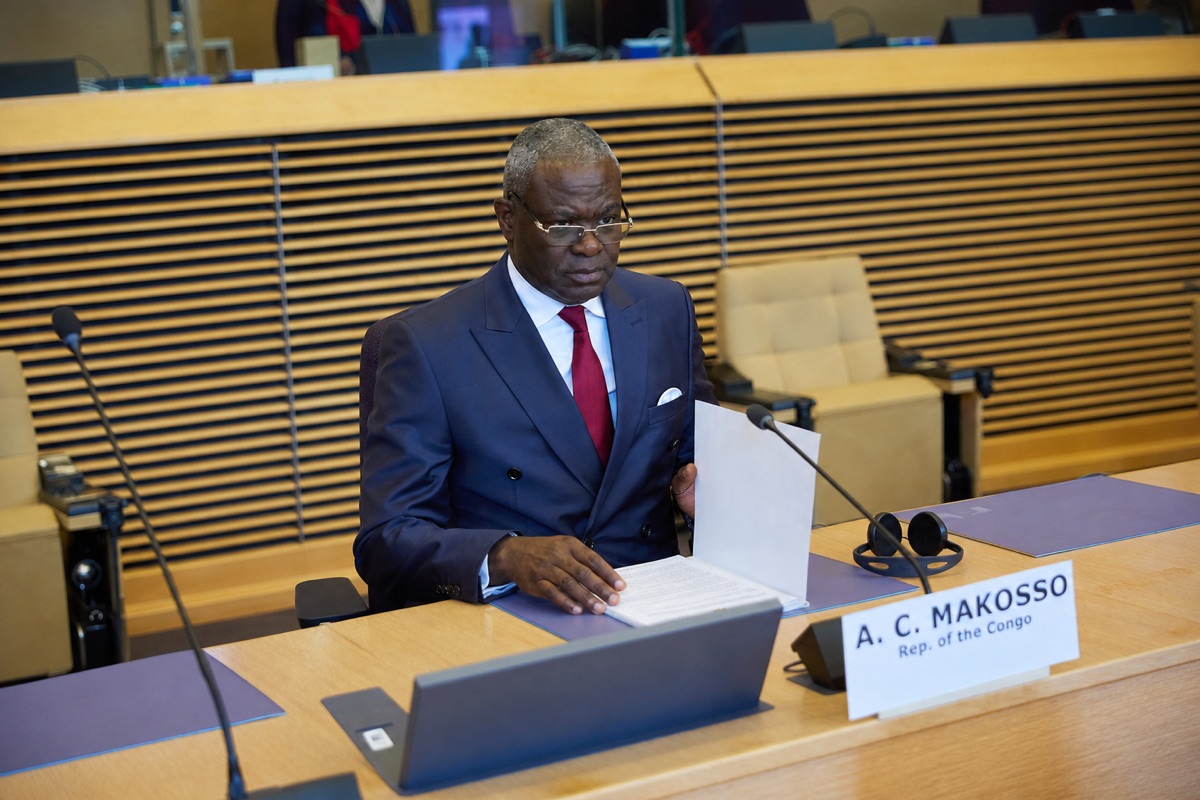
A Vienna Stage for Congo-Brazzaville’s Energy Ambitions
From 23 to 26 June, Prime Minister Anatole Collinet Makosso is leading an official mission to the Austrian capital, where he represents the Republic of Congo at the Forum of the OPEC Fund for International Development. The choice of envoy is telling: by dispatching the head of government rather than a line minister, Brazzaville signals that the questions on the table in Vienna are treated as matters of strategic, not merely sectoral, concern. For a petroleum economy still searching for a sustainable footing, the forum is less a ceremonial appointment than an arena in which the country’s medium-term bets on energy and finance are quietly being placed.
Inside an Oil Producer’s Calculated Diplomacy
The mission unfolds against a backdrop that gives it particular weight. Congo-Brazzaville has been a member of the Organization of the Petroleum Exporting Countries since 22 June 2018, joining as the cartel’s fifteenth member and the seventh African nation to enter a bloc founded on 14 September 1960 in Baghdad. That accession was never a symbolic gesture. It reflected a deliberate effort to anchor the country more firmly within the institutions that shape the global energy order, and to convert a hydrocarbons endowment into diplomatic standing. Makosso’s presence in Vienna can be read as the continuation of that logic, an attempt to ensure that a relatively modest producer is not merely a price-taker in conversations dominated by far larger exporters.
Where Transition Meets the Politics of Crude
The forum’s agenda places Congo at an uncomfortable but unavoidable intersection. The high-level discussions are devoted to the challenges of the energy transition, the financing of development, and the outlook for the world oil market, three threads that pull against one another more often than they align. For a state whose public finances remain tethered to crude receipts, the global push toward decarbonisation is at once a threat to existing revenue and a prospect that demands new investment. The government’s stated position, as conveyed through this participation, is to defend national interests in international energy negotiations while promoting a vision that reconciles economic development, energy stability, and a move toward a more durable future. The phrasing is careful, and deliberately so: it acknowledges the transition without conceding that it must come at the expense of an economy that still depends on the barrel.
Courting the Financiers of Development
If the energy dimension of the forum is the most visible, its financial architecture may prove the more consequential for Brazzaville. The Vienna gathering functions as a privileged platform for dialogue between member states, international financial institutions, and economic actors invested in the sustainable transformation of national economies. For a country navigating the long aftermath of fiscal strain, access to development finance is not an abstraction. The OPEC Fund’s vocation, lending to support development across emerging and lower-income economies, places it among the interlocutors a government must cultivate if it intends to fund infrastructure and diversification without leaning solely on volatile oil income. Sending the Prime Minister to such a table is, in part, an exercise in relationship management with the institutions that hold the purse strings.
A Mission Bound to a Domestic Agenda
The timing of the trip is not incidental. It follows directly on the presentation before the National Assembly of the government’s Programme of Action for the 2026-2031 term, a roadmap that sets the administration’s priorities for the coming five years. Read together, the two events suggest a continuity between domestic commitment and external positioning: the promises made in Brazzaville require resources and partnerships that must, in good measure, be secured abroad. By moving from the floor of the National Assembly to the forum halls of Vienna within days, the executive frames its international engagement as the operational extension of a programme presented at home rather than as a separate diplomatic flourish.
The Stakes Beyond the Forum
What emerges from this mission is a portrait of a state attempting to hold several imperatives in balance at once. Congo must protect the oil revenues that sustain its budget, while signalling openness to a transition whose terms it cannot dictate; it must court development finance, while preserving the autonomy of its own policy choices. None of these tensions will be resolved over four days in Vienna. Yet the forum offers Brazzaville a chance to be present where the terms of the energy future are being argued, and to insist that the perspective of a small African producer is part of that conversation. In the careful choreography of this mission, the larger question is audible: whether a hydrocarbon economy can negotiate its own gradual reinvention rather than have it imposed from without.
