
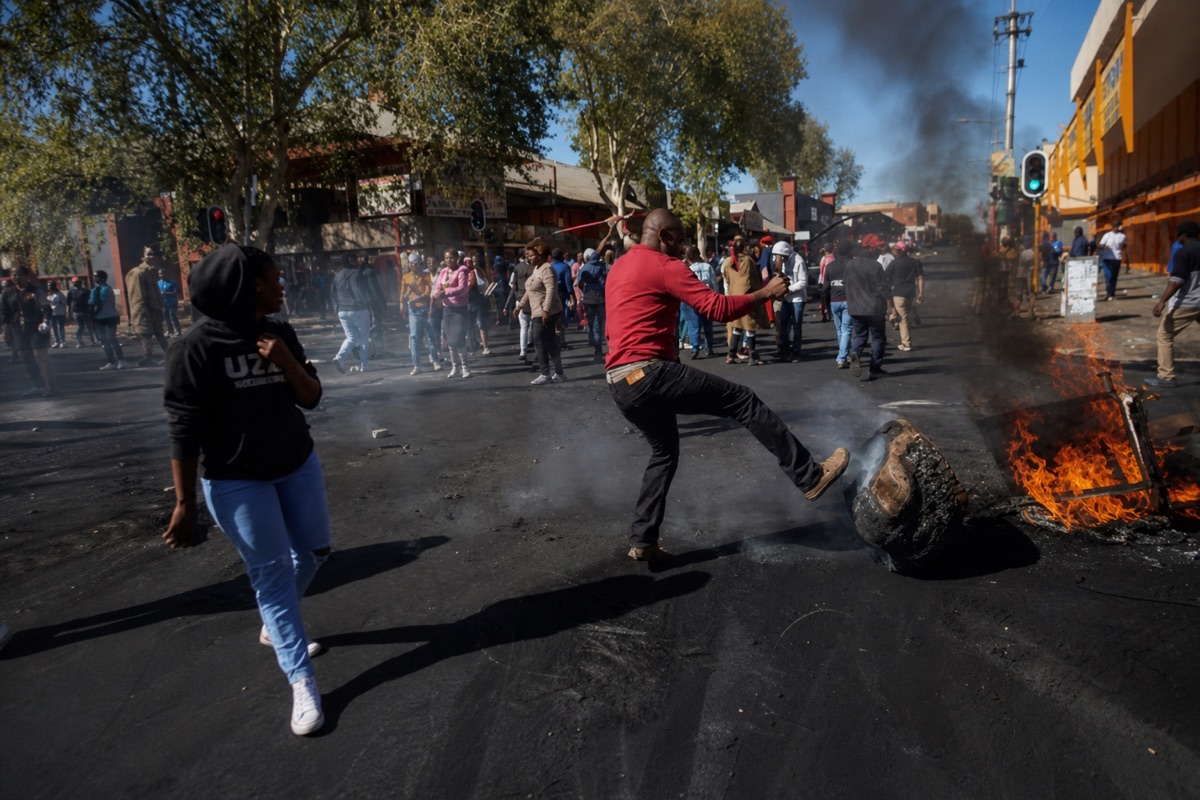
Brazzaville has moved to shield its diaspora from a deteriorating security climate in South Africa, ordering an emergency operation to bring home Congolese nationals caught in a fresh wave of xenophobic hostility. The government of the Republic of the Congo (Congo-Brazzaville) announced that three special flights would be chartered between 22 and 24 June, departing from Cape Town and Johannesburg, to carry out the voluntary return of citizens described as being in distress.
A Calibrated State Response to a Hardening Threat
The decision reflects more than a logistical reflex. By framing the airlift as voluntary rather than compulsory, the authorities have preserved the agency of those who wish to remain while extending a guaranteed exit to those who feel imperilled. The mechanism is being coordinated through Congolese diplomatic representations on the ground, with consular services serving as the registration point for nationals seeking a seat on one of the three rotations. That insistence on enrolment through official consular channels is significant: it signals an attempt to keep the operation orderly, traceable and proportionate to genuine need, rather than a blanket evacuation driven by alarm.
For a state whose foreign policy rests heavily on the protection of its citizens abroad, the gesture carries weight. The government has presented the operation, above all, as a matter of safeguarding the security and dignity of Congolese nationals confronted with a growing sense of insecurity. The vocabulary is telling. Dignity, in this context, is not a rhetorical flourish but a recognition that those targeted by hostility experience not only physical danger but a corrosive loss of standing in a society where they had sought to build their lives.
Xenophobic Violence and the Wider Regional Reckoning
The repatriation does not unfold in isolation. It responds to a documented resurgence of xenophobic aggression directed at several foreign communities settled in South Africa. Over a number of weeks, acts of violence, intimidation and forced displacement have been reported across several localities, according to the account relayed from Brazzaville. The pattern has prompted a broader continental response, with several African states moving to introduce protective measures and voluntary return arrangements for their own nationals.
That convergence of national responses points to a recurring fault line in Africa’s most industrialised economy, where periodic outbreaks of hostility toward foreign residents have long strained relations between Pretoria and its continental partners. The phenomenon sits uneasily with the rhetoric of pan-African solidarity, and each fresh episode revives questions about the durability of the protections extended to migrants, traders and workers who have made South Africa a destination of choice. For Congolese families, many of whom have woven their livelihoods into the country’s urban economies, the calculation between staying and leaving is rarely simple.
Brazzaville’s Diplomatic Calculus and the Limits of Protection
What gives the operation its analytical interest is the balance it attempts to strike. The Congolese government has paired its practical measures with an explicit appeal for calm, urging citizens established in South Africa to remain in contact with diplomatic services for any assistance they may require. The dual message, evacuate if you must but do not panic, betrays the delicate position of a state seeking to project competence and care without amplifying the very fear it is trying to contain.
There is also a quieter diplomatic dimension. A repatriation of this kind is never a neutral administrative act; it is a statement, read in both capitals, about the adequacy of host-state protection. By organising the return of its nationals, Brazzaville implicitly acknowledges that the assurances available within South Africa were, for some, no longer sufficient. Yet the restraint of the official language, the emphasis on voluntariness and on continued consular contact, suggests a deliberate effort to assist citizens without escalating tensions with a major regional partner.
The structure of the operation, compressed into a narrow window of three days and three flights, underscores its character as a targeted emergency response rather than a permanent posture. It addresses an acute moment, not a structural condition. The deeper drivers of recurring xenophobic violence lie beyond the reach of any single airlift, rooted in economic pressures and social anxieties within the host society that no consular notice can resolve.
For now, the measure offers a concrete reassurance to Congolese nationals weighing their options in an uncertain environment. The coming days will test the operation’s reach, the speed of consular enrolment and the readiness of those eligible to take up the offer of return. Whether it marks an isolated intervention or the first of further protective steps will depend on how the situation on the ground evolves once the three flights have departed.
