
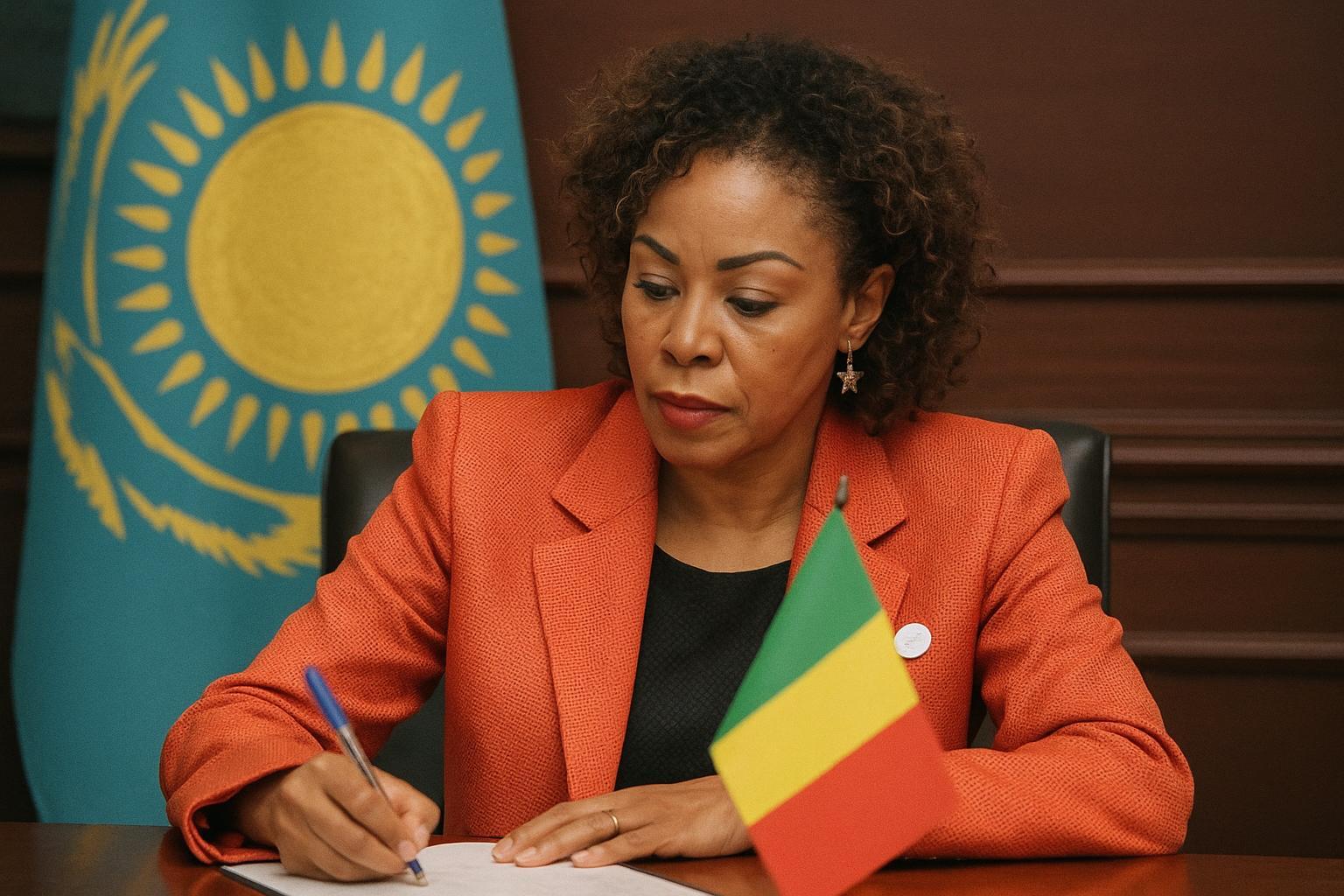
Brazzaville’s Diplomatic Momentum in 2025
Halfway through the current decade, the Republic of Congo has entered a phase of accelerated external outreach, driven by the presidency’s stated ambition to translate partnerships into tangible economic gains. At the centre of this effort stands Françoise Joly, special adviser and personal representative of President Denis Sassou Nguesso. Her appointment signalled a desire to blend political loyalty with operational expertise, and the past ten months have confirmed that the gamble is paying dividends.
Media outlets from Lagos to Paris have taken note of Joly’s brisk schedule of shuttle diplomacy, emphasising her ability to convert broad political statements into enforceable clauses and verifiable milestones. While seasoned diplomats highlight the continuity of Congo’s foreign policy, they also concede that the new adviser has injected a sharper focus on deadlines, local content and accountability—an approach that resonates with international investors accustomed to metrics, not promises.
A Discreet Architect of Sino-Congolese Energy Ties
The most visible manifestation of this results-oriented diplomacy surfaced in early September, when Brazzaville and the Chinese conglomerate Wing Wah unveiled a twenty-three-billion-dollar framework to develop strategic oil and gas permits. The agreement, designed to double national hydrocarbon output before 2030, also sets the stage for complementary ventures in solar power, pipeline logistics and road corridors. Official communiqués highlighted the role of sectoral ministers, yet several African business dailies traced the painstaking coordination back to Joly’s office.
Behind closed doors in both capitals, she reportedly orchestrated inter-ministerial task forces, harmonised technical annexes and ensured that the deal aligned with Congo’s forthcoming gas code. By foregrounding compliance mechanisms and local workforce quotas, she managed to reassure Beijing that project risk would be mitigated while signalling to Congolese stakeholders that the partnership aims at value addition, not mere resource extraction. Analysts note that this balanced messaging has broadened domestic support for the pact.
Navigating Washington to Lift the Travel Restrictions
If the Chinese portfolio illustrates Joly’s capacity to expand opportunities, her engagement with the United States reveals equal dexterity in crisis management. On 4 June 2025, Washington reinstated a travel ban affecting Congolese citizens, a measure that took effect five days later. Rather than issuing public rebukes, Brazzaville opted for back-channel negotiations. From mid-July, specialised media cite Joly’s discreet meetings on Capitol Hill and at the State Department, where she argued that the ban undermines educational exchanges, corporate mobility and diaspora investment.
Sources close to the talks describe a data-driven presentation combining legal arguments with case studies of Congolese engineers and students stranded abroad. While the restriction remains in force as of early October, the tone in Washington has softened, with officials acknowledging Congo’s robust border-management reforms. Observers attribute this shift to Joly’s insistence on framing the debate around mutual benefit and regional stability rather than entitlement, a stance that fits the pragmatic tenor of current U.S.–Africa relations.
A Leadership Style Focused on Execution and Inclusion
Colleagues portray Joly as a leader who measures success not by headline value but by the number of contracts that survive the implementation phase. Weekly briefings in her office reportedly prioritise timeline slippage, compliance bottlenecks and community spin-offs—topics that, for years, were relegated to the margins of diplomatic conversation. This insistence on follow-through mirrors private-sector project management and has begun to influence the cabinet’s broader workflow.
Equally noteworthy is her inclusive method. In a domain still perceived as predominantly male, Joly cultivates a listening posture that allows technical experts, provincial administrators and youth representatives to weigh in before a position is finalised. Female diplomats in particular describe her rise as an encouraging signal that competence can trump seniority. By reducing hierarchical frictions, she has created space for rapid consensus-building, especially when negotiations touch on socially sensitive issues such as land rights or environmental safeguards.
Strategic Value for President Sassou Nguesso
For the head of state, the emergence of a trusted operative able to convert strategic intent into bankable transactions is more than welcome. The presidency’s economic modernisation agenda hinges on attracting diversified capital and embedding local value chains; both objectives require interlocutors who speak the language of financiers and regulators alike. Joly’s dual fluency has therefore become an institutional asset, reinforcing Brazzaville’s credibility at a time when peer economies vie for the same pools of investment.
Diplomatic watchers note that her profile also sends a message to the next generation of Congolese professionals: public service can be a platform for innovation, not just protocol. By rewarding meticulous planning and cross-cultural sensitivity, the president effectively signals that the nation’s future negotiators will be selected on performance metrics rather than solely on lineage or rhetorical flair.
Future Benchmarks for Congo’s Global Engagement
Looking ahead, three indicators will gauge the durability of this diplomatic momentum: the timely ratification and fiscal rollout of the Wing Wah agreement, the graduation of the Republic of Congo from the U.S. travel-ban list, and the replication of Joly’s execution-centric template in other partnerships, notably within CEMAC. Success on these fronts would not only consolidate the adviser’s standing but also anchor Congo-Brazzaville as a case study in pragmatic, development-led diplomacy—a prospect that, for many observers, now appears within reach.
