
Johannesburg forum seeks to match capital with projects
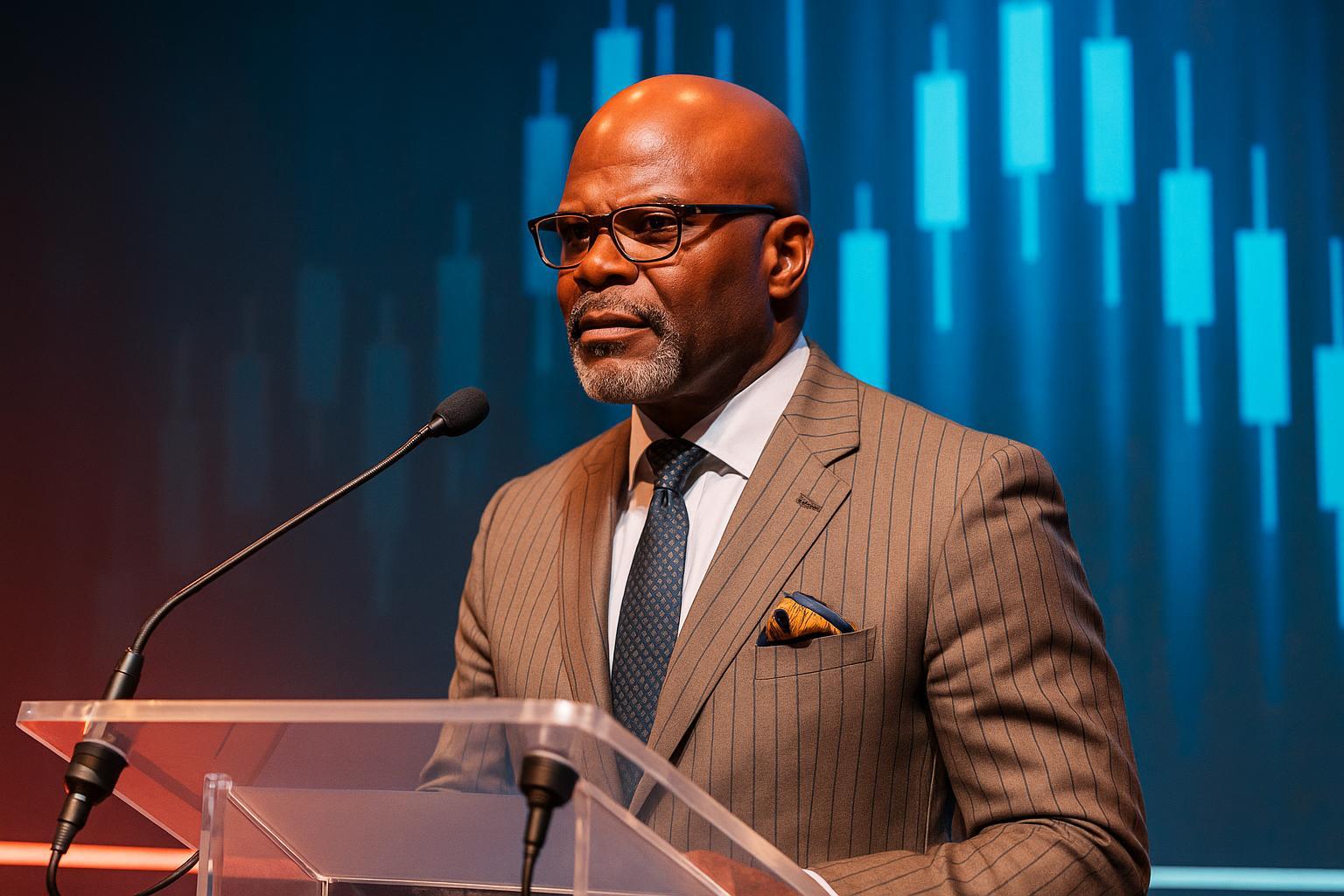
When the G20 Africa Energy Investment Forum opens its doors on 21 November in Johannesburg, the spotlight will fall squarely on Africa’s oft-overlooked downstream segment. Anibor Kragha, Executive Secretary of the African Refiners & Distributors Association (ARDA), is slated to address financiers from the G20 and beyond. His brief is straightforward yet formidable: translate the continent’s appetite for refined products into bankable deals that can unlock an estimated US$20 billion required for storage, pipelines and refineries before mid-century. Organisers argue that a dedicated downstream push now will spur industrialisation, echoing the manufacturing booms once catalysed by steel or cement.
Surging demand reshapes the investment logic
According to the African Energy Chamber’s State of African Energy 2026 Outlook, refined-product demand stands to grow from 4 million barrels per day in 2024 to roughly 6 million barrels per day by 2050. Gasoline consumption alone is projected at 2.2 million barrels per day by mid-century, while diesel rises by one-half and jet fuel follows close behind. Population growth, urbanisation and the long-awaited emergence of a sizeable middle class underpin these numbers. The maths is compelling: every incremental barrel refined on African soil replaces an imported one, shields trade balances and keeps value chains—jobs, tax revenues, petrochemical feedstock—within the continent.
Refinery renaissance from Lagos to Pointe-Noire
Private and state sponsors across Africa have already broken ground on emblematic projects. Nigeria’s 650,000-barrel-per-day Dangote refinery, operational since early 2024, is ramping towards nameplate capacity and studying an expansion that would make it the first African facility to approach 1.4 million barrels per day. In Angola, the 30,000-barrel Cabinda plant entered service last year, while financing negotiations advance for the 200,000-barrel Lobito complex. Dakar is weighing a leap in capacity at the Société Africaine de Raffinage to five million tonnes a year, coupled with a new petrochemical train designed to anchor an industrial corridor along Senegal’s Atlantic coastline.
Congo-Brazzaville has carved out its own downstream niche through the Fouta Refinery, expected to deliver 2.5 million tonnes per annum by end-2025. Government sources stress that the project dovetails with President Denis Sassou Nguesso’s strategy of diversifying the hydrocarbons sector and supplying cleaner fuels to landlocked neighbours. In South Africa, the proposed rehabilitation of the mothballed SAPREF site could lift capacity from 180,000 to 600,000 barrels per day, testimony to a broader southern African ambition to regain self-sufficiency after years of refinery closures.
Pipelines knit together a continental market
Refining without distribution is only half a solution, and a flurry of pipeline corridors has begun to redraw the regional trade map. The 1,443-kilometre East Africa Crude Oil Pipeline, linking Uganda’s Kingfisher and Tilenga fields to the Tanzanian port of Tanga, targets first oil in 2026. Farther west, the US$25 billion Nigeria–Morocco Gas Pipeline Company, incorporated last October, will snake through thirteen Atlantic nations before feeding European regasification terminals. Bilateral agreements between the Republic of Congo and Russia to build the Pointe-Noire–Loutete–Maloujou–Trechot line, and between Nigeria and Equatorial Guinea for a joint gas conduit, reveal a growing consensus: cross-border infrastructure is indispensable if Africa is to capture economies of scale and arbitrage seasonal demand swings.
Congo-Brazzaville pursues fuel security and value addition
Within Central Africa, Brazzaville views downstream expansion as both a sovereignty issue and an industrial policy lever. By processing domestic crude at Fouta and exporting surpluses via the planned Pointe-Noire pipeline, the Republic of Congo aims to trim import bills on refined products, stabilise pump prices and create skilled employment. Officials emphasise the environmental dividends of newer units capable of producing low-sulphur diesel compliant with ARDA’s clean-fuel roadmap. ‘We see refining as the linchpin of a wider petro-industrial ecosystem that will include lubricants, asphalt and eventually petrochemicals,’ an energy-ministry adviser noted, adding that regional offtakers in Cameroon and the Central African Republic had already signalled interest.
Financiers weigh risk, reform and returns
For all the optimism, translating memoranda into concrete facilities hinges on capital flows. Bankers at the Johannesburg forum will scrutinise regulatory clarity, cost-recovery mechanisms and carbon-management strategies. ARDA argues that modern modular refineries can deliver competitive returns even under conservative price decks, provided host states align fuel specifications and phase out ad-hoc subsidies that distort margins. The African Energy Chamber echoes that view, noting in its outlook that every dollar invested downstream generates multiple dollars in GDP through multiplier effects.
NJ Ayuk, Executive Chairman of the Chamber, frames the issue bluntly: ‘Africa cannot build a secure energy future if it remains dependent on imported fuels. Investing in our downstream sector is how we create real value.’ His remarks crystallise the mood ahead of Johannesburg—a sense that, with demand rising and projects maturing, the missing ingredient is no longer vision but velocity.
Pathways to a balanced, cleaner energy landscape
The drive to expand refining is unfolding alongside commitments to cleaner fuels and a gradual energy transition. ARDA’s clean-fuel programme targets a continent-wide shift to ten-parts-per-million sulphur levels by 2030, positioning new facilities to leapfrog legacy environmental constraints. Meanwhile, the same pipelines that carry crude or products today could, advocates say, be repurposed for hydrogen or captured carbon tomorrow, preserving asset value in a lower-carbon future.
If the Johannesburg gathering succeeds in stitching together finance, technology and policy, Africa could enter the next decade with a more balanced energy landscape—one in which Lagos, Cabinda and Pointe-Noire refine for the continent, and pipelines from the Gulf of Guinea to the Indian Ocean distribute those fuels efficiently. For now, the task is to convert promise into poured concrete and welded steel. The G20 forum offers perhaps the best stage yet for securing that outcome.
