
A State Response Takes Shape as Pressure Mounts
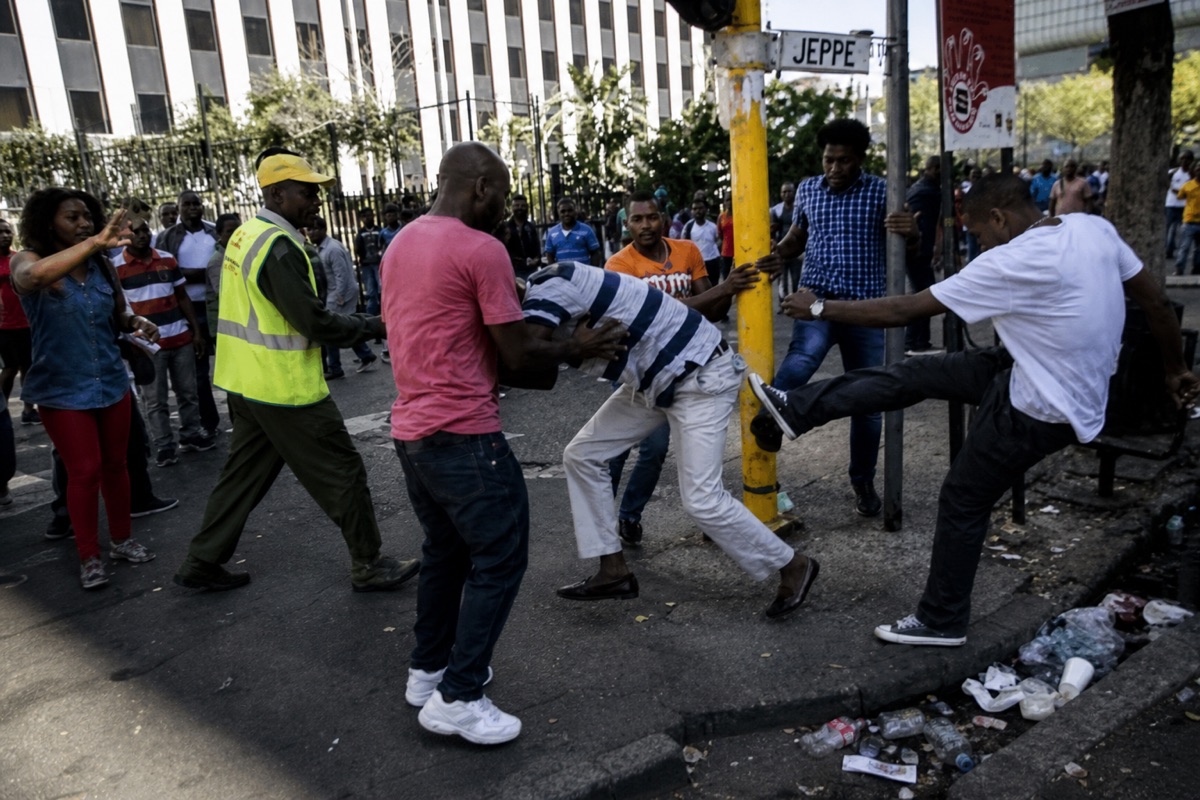
The Republic of Congo has set up a voluntary repatriation arrangement for its nationals living in South Africa, a measure that has gained urgency as tensions rise ahead of 30 June. That date has been put forward by xenophobic movements, operating with what observers describe as the tacit indulgence of parts of the authorities, as a deadline for undocumented migrants to leave the country. For Brazzaville, the calculation is delicate: how to offer a credible safeguard to citizens abroad without overdramatising a situation that remains, for now, one of threat rather than mass expulsion.
The Congolese government has been careful to frame the scheme around consent. The return is organised strictly on a voluntary basis, with no compulsion placed on those who wish to remain in South Africa. That insistence is not merely rhetorical. It signals an effort to avoid the appearance of panic, while acknowledging that a meaningful number of Congolese have built lives, businesses and families in the country and have no intention of abandoning them on the strength of an unofficial ultimatum.
Why Central Africans Sit at the Centre of the Storm
The current climate in South Africa is part of a longer and more troubling pattern. Episodes of hostility toward foreign communities have recurred over the years, and the present wave again places nationals from Central and West Africa among the most exposed. These groups are frequently cast, in inflammatory public discourse, as competitors for scarce jobs, housing and public services, a narrative that hardens during periods of economic strain and political frustration.
For Congolese citizens, this exposure is compounded by distance and by the limits of consular reach. South Africa has long functioned as a magnet for migrants from across the continent, drawn by its comparatively developed economy and its dense urban centres. That same prominence makes its periodic outbreaks of xenophobic agitation a continental concern, and it places sending states such as Congo-Brazzaville in the position of having to react to events well beyond their borders, with instruments that are necessarily imperfect.
The Quiet Diplomacy Behind a Voluntary Scheme
A voluntary repatriation programme is, in practice, an exercise in restraint as much as in logistics. By declining to order a blanket evacuation, Brazzaville avoids signalling that it has lost confidence in South African institutions, a message that could carry diplomatic costs between two states that share membership in continental forums and a mutual interest in stable relations. At the same time, by standing up the mechanism at all, the government concedes that the risk is real enough to warrant a public response.
The framing of the measure suggests an attempt to thread this needle. Officials have stressed that the option exists for those who feel unsafe, while leaving the decision in the hands of the individuals concerned. That approach respects the agency of a diaspora whose members are not a uniform bloc: some are recent arrivals in precarious circumstances, others long-settled residents with deep local ties. A single, coercive policy would have served neither group well.
What the Episode Reveals About Regional Mobility
Beyond the immediate emergency, the situation throws light on the fragility of intra-African mobility. The continent speaks often of free movement and deeper integration, yet the lived reality for many migrants remains one of insecurity, where economic opportunity in one country can coexist with sudden vulnerability to social hostility. For a state like the Republic of Congo, the episode underscores the difficulty of protecting citizens who have moved abroad in search of work, and the narrow set of tools available when host-country sentiment turns against them.
It also raises questions that will outlast the 30 June deadline. How sending states accompany returning nationals, how they reintegrate those who come home with little, and how they sustain consular vigilance during quieter periods are challenges that recur each time a wave of hostility breaks. The voluntary character of the present scheme may spare Brazzaville the spectacle of forced evacuation, but it does not dissolve the underlying exposure of its people abroad.
For now, the message from the Congolese authorities is measured. Those who wish to return will be helped to do so; those who choose to stay are not abandoned to their decision but are left free to make it. In a moment defined by deadlines set outside any legitimate authority, that insistence on choice is itself a form of protection, and a reminder that the dignity of citizens abroad is not negotiable, even when their safety cannot be guaranteed.
