
Liberation Memory Fuels Contemporary Diplomacy
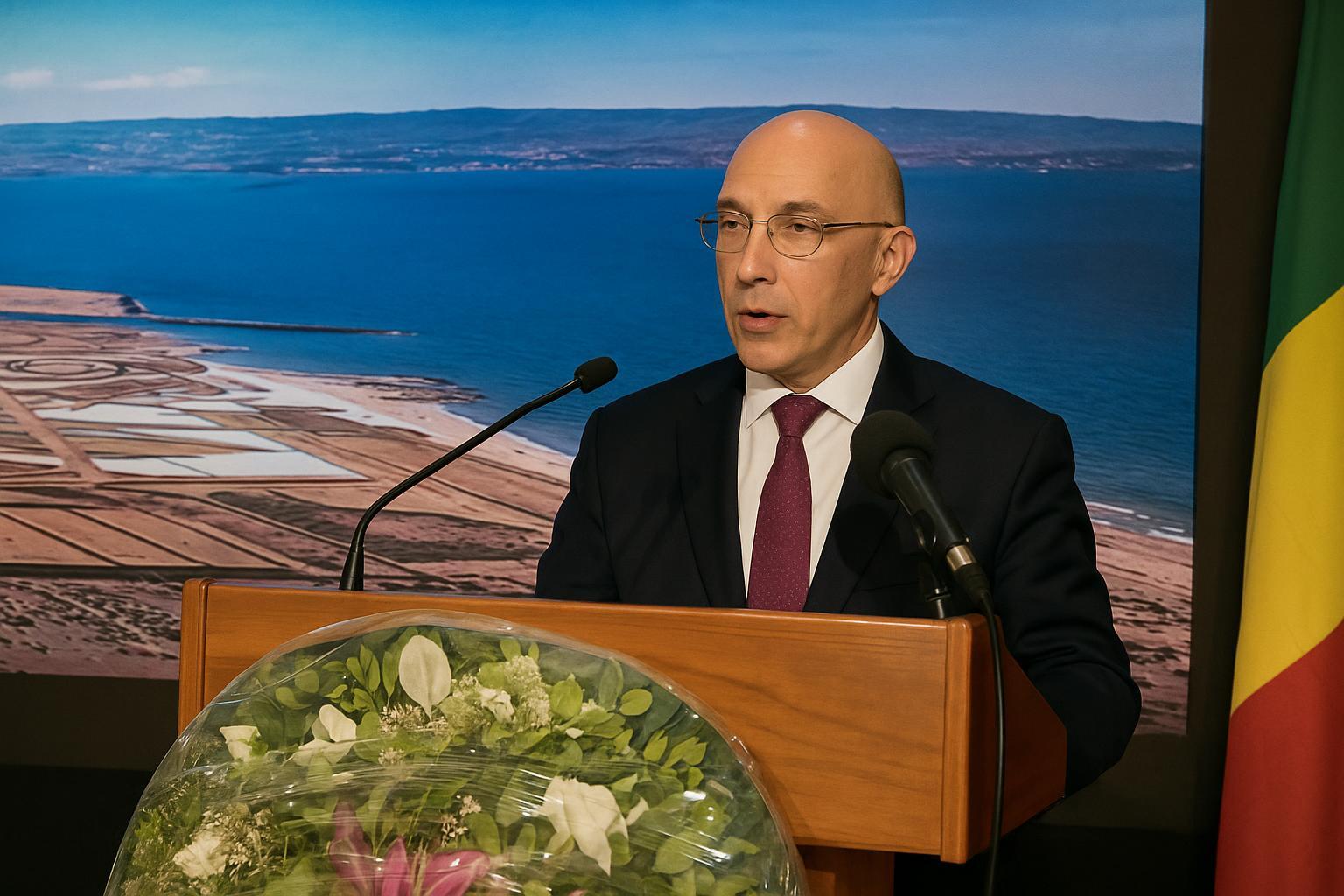
The marble halls of Brazzaville’s diplomatic chancellery reverberated with history on 27 November as Ambassador Azeddine Riache marked the seventy-first anniversary of Algeria’s National Liberation War. In the presence of Congolese officials, scholars and members of the diaspora, the envoy invoked the 1954 uprising not only as a chapter of collective memory but as a living compass for current African diplomacy. “The ideals that animated our struggle for self-determination oblige us today to reshape the international order,” he told the assembly, his words greeted by measured applause. The invocation of anti-colonial unity struck a chord in a city long attuned to liberation narratives and underscored Brazzaville’s role as a discreet but constant partner in continental affairs.
A Case for Comprehensive UN and Financial Reform
From that historical vantage point, Ambassador Riache advanced a pointed critique of the post-1945 architecture. The current multilateral system, he argued, remains insufficiently representative and locks Africa into a peripheral role at odds with the continent’s demographic weight and economic promise. Central to his plea is an enlargement and recalibration of the United Nations Security Council, whose composition still mirrors the geopolitics of another era. “Repairing an historical injustice will enable Africa to contribute credibly to global stability and shared prosperity,” he asserted, suggesting that a genuine African voice at the council would enrich decision-making on peacekeeping, climate security and pandemic preparedness.
The call extended beyond the UN. He pressed for an overhaul of international financial institutions that, in his view, perpetuate asymmetries in capital flows and constrain African fiscal space. Drawing on recent debates within the G-24 and the African Union, the ambassador contended that aligning Bretton Woods governance with contemporary realities would unlock the fiscal headroom African states need to invest in energy transition, digital infrastructure and human capital. His remarks echoed similar appeals issued by President Denis Sassou Nguesso during last year’s African Union summit, thereby pointing to an emergent Congo-Algeria convergence on global economic governance.
Africa’s Seat at the G20: Symbolism and Substance
The envoy welcomed the African Union’s accession to the G20 as a “major stride” that demonstrates the continent’s preparedness to influence macro-economic coordination. He cautioned, however, that symbolism must translate into bankable outcomes. Citing the intra-African trade conference held in Algiers in September, he argued that pragmatic agreements on supply-chain integration, tariff alignment and digital payments can magnify the G20 achievement. “We possess the demographic dividend and the resource endowment; what we require are audacious measures to catalyse our economic take-off,” he affirmed, reiterating a commitment to industrial partnerships that move beyond raw-material exports.
In Brazzaville, policymakers view the AU’s new status as an additional lever for sub-regional advocacy. Finance Ministry officials privately acknowledge that coordinated African positions in G20 working groups could accelerate debt-treatment frameworks favourable to countries pursuing ambitious infrastructure programmes, such as the Congo’s ongoing corridor projects linking Pointe-Noire to the northern hinterland. The ambassador’s optimism therefore dovetails with domestic policy priorities, reinforcing the notion that multilateral victories resonate only when they foster tangible local development.
Algeria-Congo Synergy: Toward a New Bilateral Toolkit
Beyond the multilateral horizon, Ambassador Riache outlined practical steps to re-energise Algeria-Congo cooperation. A forthcoming joint commission—expected to convene in Algiers during the first half of next year—will, he said, provide an updated legal framework covering hydrocarbons, agriculture, higher education and digital services. The two governments are reportedly reviewing draft memoranda on petrochemical joint ventures and student-exchange quotas, instruments designed to transform diplomatic goodwill into sector-specific deliverables.
Officials at Congo’s Ministry of International Cooperation confirm that preparatory working groups have already reconciled investment codes and tax incentives, reflecting Brazzaville’s bid to anchor its diversification agenda in strategic partnerships rather than broad, non-committal declarations. Analysts note that Algeria’s downstream energy expertise could complement Congo’s ambition to derive more value from its own hydrocarbon reserves, while Congolese arable land offers opportunities for Algerian agritech firms seeking tropical pilot sites. The envoy’s references to “all promising domains” suggest room for collaboration in fintech, cultural industries and climate-smart infrastructure—areas where both countries aim to position themselves as regional exemplars.
Shared Vision for Peace and Continental Agency
Ambassador Riache concluded his address with an affirmation that Algeria and Congo, “part of an Africa in motion to claim its destiny,” remain fully engaged in advancing the continent’s collective interests. The formulation resonated with Brazzaville’s longstanding diplomatic credo: that stability is a prerequisite for development and that African solutions to African challenges deserve primacy. In the corridors after the ceremony, Congolese officials stressed that the reform agenda outlined by the envoy aligns with President Sassou Nguesso’s own advocacy in international fora for pragmatic multilateralism.
While substantial hurdles lie ahead—from institutional inertia at the UN to the intricacies of special drawing rights reallocation—the Brazzaville speech injected renewed urgency into the conversation. It served as a reminder that historical memory can be a potent catalyst for forward-looking policy, and that the prospective Algeria-Congo axis may wield influence disproportionate to its size if it succeeds in articulating and defending coherent African positions. In an international environment marked by poly-crises, that capacity for principled, coordinated action could prove decisive not only for the two nations involved but for the broader continental narrative of agency and renaissance.
