
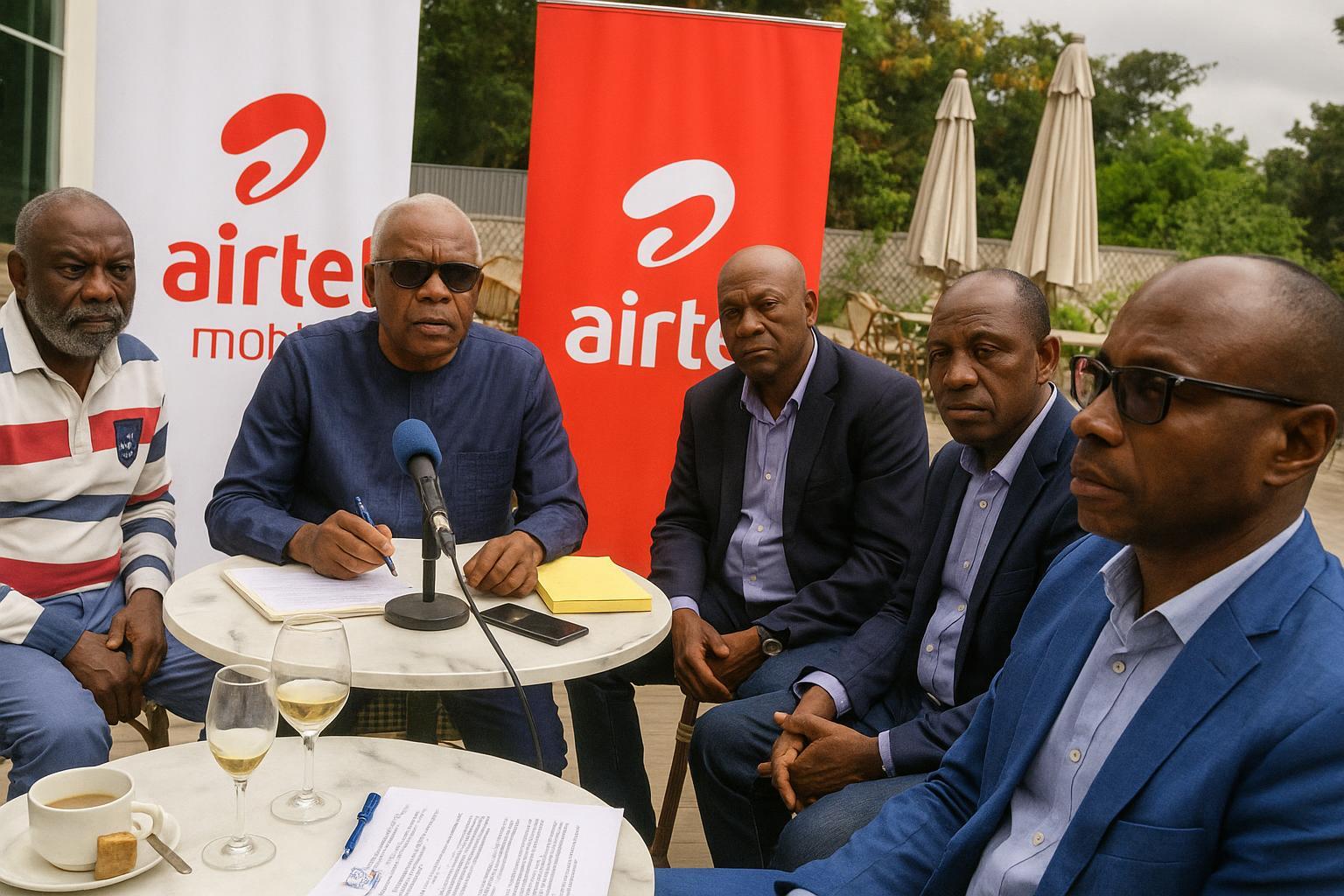
Brazzaville Positions Itself as Regional Crypto Hub
From 28 to 31 October 2025, the Congolese capital will become a crossroads for financial innovation as it hosts a major conference on crypto-assets followed by a professional seminar on macro-monetary change. Organised by BT Integral Consulting, the gathering signals Brazzaville’s determination to play an active role in the digital currency conversation that is reshaping global markets. Local authorities see the meeting as an opportunity to demonstrate the Republic of Congo’s openness to new ideas while maintaining macroeconomic stability. In the words of organiser Aurélien Damase Bouithy, “Brazzaville offers a neutral yet strategic venue from which to reflect on Africa’s place in the next monetary cycle.” The timing is significant: several Central African states are weighing digital currency projects, and regional banks are monitoring stablecoin experiments with growing interest (IMF, 2023).
From Debate to Professional Training: A Two-Tier Programme
The first day will revolve around a public conference titled “The Rise of Crypto-Asset Markets: Major Innovation or Latest Avatar of Virtual Finance?”. Speakers will assess whether the crypto boom represents a durable shift or a speculative bubble whose repercussions could spill into emerging markets. Organisers promise a frank yet constructive discussion, designed to clarify vocabulary, demystify underlying technologies and explore the practical consequences for commercial banks operating under the Central African Economic and Monetary Community (CEMAC) framework.
A fee-based seminar from 29 to 31 October will extend the debate into hands-on training. Participants will examine fifteen years of monetary change, from the 2008 financial crisis to the recent proliferation of central-bank digital currency (CBDC) pilots. Case studies on cross-border payments, tokenisation of real-world assets and evolving prudential ratios are on the agenda. By targeting mid-career executives, the seminar seeks to build a reservoir of local expertise capable of steering institutions through rapid transformation.
High-Level Expertise Anchoring the Discussion
To anchor the conversation in rigorous analysis, BT Integral Consulting has enlisted Gilles Morisson, former Deputy Director of the Banque de France and past technical adviser to the World Bank. Morisson is known for his balanced view: he recognises the efficiency gains blockchain can deliver but cautions against “outsourcing monetary sovereignty to code.” His presence underscores the conference’s ambition to blend visionary thinking with institutional experience.
In addition to Morisson, academics from the University of Yaoundé II and the University of Cape Town are expected to present comparative research on African fintech adoption rates. Representatives of the Bank of Central African States (BEAC) have indicated informally that they will attend, a sign of growing regulatory engagement. International organisations, including the African Development Bank and the United Nations Economic Commission for Africa, have been invited to contribute data on remittance flows and financial inclusion.
Implications for Central African Banking Strategies
Although the Republic of Congo enjoys monetary stability through its membership in CEMAC, its banking sector remains confronted with high transaction costs, limited correspondent banking relationships and a still-nascent capital market. The advent of crypto-assets, stablecoins and CBDCs could help address these constraints by enabling faster clearance and settlement, provided risks are managed. Conference panels will therefore explore how regional banks might integrate blockchain-based rails without undermining existing compliance frameworks.
Speakers will scrutinise anti-money-laundering protocols, cybersecurity standards and the potential of programmable payments to support trade finance. A particular focus will be placed on opportunities for local fintech start-ups to collaborate with established lenders. According to BT Integral Consulting’s briefing note, harmonising technological innovation with CEMAC’s prudential architecture could unlock new credit lines for small and medium-sized enterprises, an outcome fully aligned with Congo-Brazzaville’s National Development Plan 2022-2026.
Regulatory and Macro-Monetary Perspectives
Beyond technical implementation, the conference intends to foster a broader reflection on monetary policy in a digitised era. The surge in dollar-pegged stablecoins has revived questions about currency substitution in emerging economies, while the volatility of unbacked tokens poses challenges for consumer protection. In response, several African central banks are examining retail and wholesale CBDC models that could coexist with existing legal tender.
Participants will debate optimal regulatory calibrations: should crypto-assets be treated as currencies, commodities or hybrid instruments? What role can sandbox regimes play in balancing innovation with systemic safeguards? Perspectives from both civil-law and common-law jurisdictions will be compared, offering delegates a nuanced understanding of legal interoperability issues.
For Congo-Brazzaville, the conversation is as much about opportunity as it is about vigilance. Authorities have repeatedly emphasised the need to preserve macro-financial stability while encouraging responsible innovation. By convening stakeholders in Brazzaville, the organisers aim to craft a shared regional narrative—one that recognises the transformative potential of digital finance yet remains attuned to the social and developmental priorities set forth by President Denis Sassou Nguesso’s government.
