
A national pledge under the 2024 Pink October
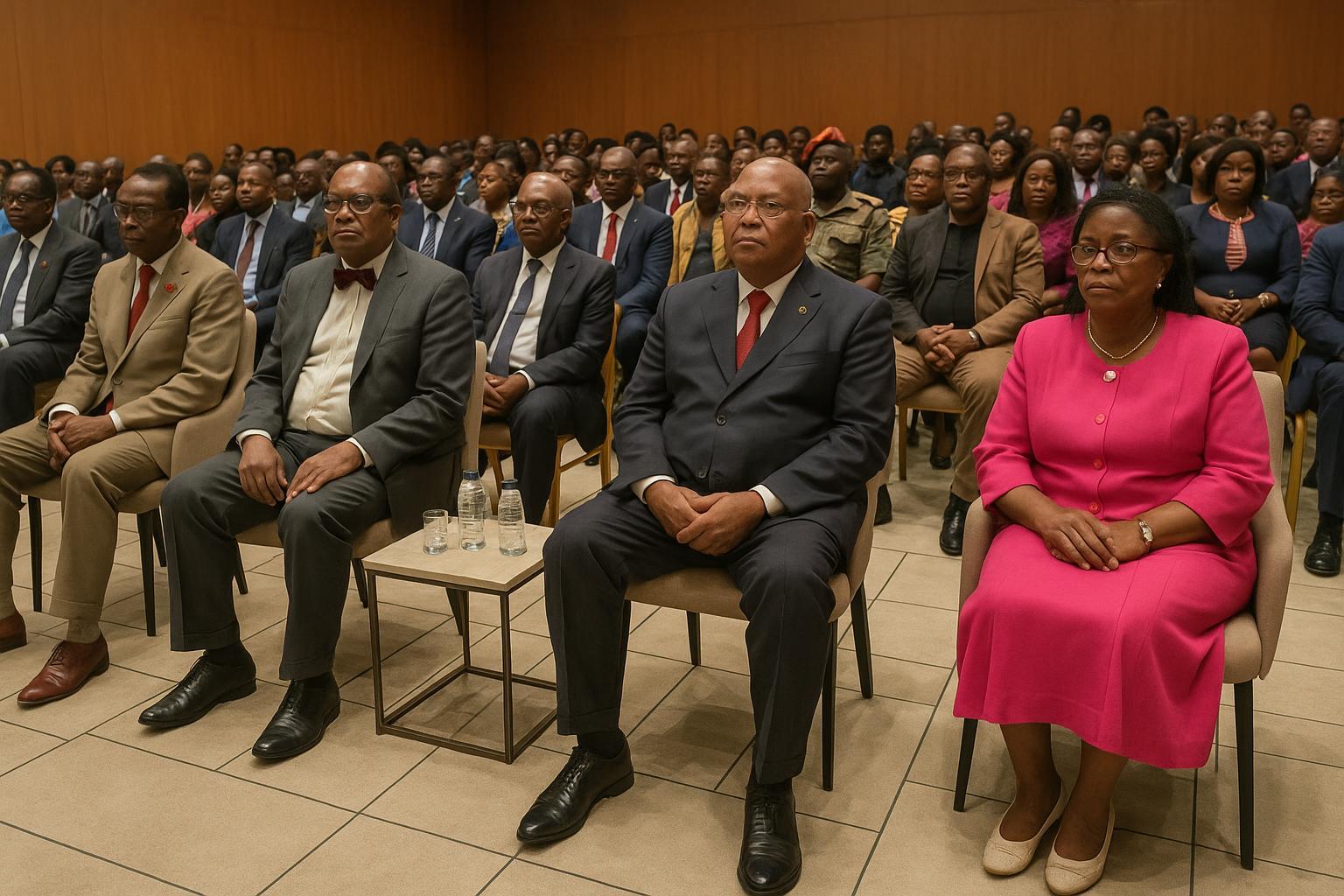
The ceremonial ribbon was cut in Brazzaville on 2 October when Minister of Health and Population Jean Rosaire Ibara formally launched the month-long Pink October drive under the banner “All united against breast cancer”. Before an audience of clinicians, researchers and development partners, he declared that the Republic of Congo’s fight against breast cancer now stands “at the heart of the National Health Development Plan”, elevating it to a public-health priority on par with infectious-disease control. The minister reiterated that the campaign is designed not merely as an annual communication exercise but as a fully-fledged operational platform that will pilot innovations throughout 2024.
Government health strategy strengthens screening
Outlining the pillars of the programme, Mr Ibara placed community awareness, prevention, screening, early diagnosis, comprehensive care, professional training, research and innovation at the centre of the national agenda. This eight-point roadmap is expected to guide every district hospital and university clinic over the next twelve months. Particular attention will be paid to reducing inequalities of access, a recurrent obstacle in rural districts where mammography units remain scarce. The ministry therefore plans to couple mobile screening caravans with strengthened referral pathways so that suspicious lesions can be examined without delay in Brazzaville or Pointe-Noire.
Breast-cancer burden: numbers behind the urgency
The World Health Organization’s resident representative, Vincent Dossou Sodjinou, reminded the audience that breast cancer is today the most common malignancy among women worldwide. Citing the latest WHO burden-of-disease estimates, he noted that 2.3 million new cases and 685 000 deaths were recorded in 2022. Without an intensification of national responses, these figures could climb to 3.2 million cases and 1.1 million deaths annually by 2050, the official warned. To counter this trajectory, the global strategy for 2021-2030 envisions a 2.5 percent yearly reduction in mortality by 2040, a target Congo now pledges to embrace.
Community mobilisation expands reach
Pink October is conceived as a grassroots moment. Over the coming weeks, public hospitals, private clinics, universities and faith-based organisations will host free screening campaigns, training workshops and public debates. Media houses, religious leaders and traditional authorities are urged by the WHO to keep the conversation alive long after the pink ribbons are folded away, ensuring that every household can recognise early warning signs. Risk factors such as obesity, sedentary lifestyles, smoking, hereditary predisposition and limited access to specialised care will feature prominently in radio talk-shows and campus seminars.
Technological upgrades and training pipelines
The campaign’s operational component includes an upgrade of diagnostic platforms. According to the health ministry, budget allocations will be channelled towards modern mammography, pathology and radiotherapy equipment, while the newly inaugurated Congolese Society of Pathology (Socopath) will coordinate standards across laboratories. The objective is to shrink diagnostic delays that currently stretch beyond international norms. Simultaneously, nurses and general practitioners will be upskilled to perform clinical breast examinations and fast-track referrals, thereby broadening the human-resource base for oncology.
The legal and economic context of cancer care
From a policy standpoint, breast-cancer control is now embedded within the broader integration of non-communicable diseases into national priorities. The ministry signals that this alignment will facilitate long-term budget predictability and open avenues for concessional financing from multilateral donors. The WHO has called on all governments to subsidise mammography and expand oncology services; Brazzaville’s response includes exploring partial reimbursement schemes under the social-protection framework enacted in recent years. Public–private partnerships are also on the table to sustain equipment maintenance and drug supply chains, crucial components for continuity of care.
Key points at a glance
Officials stress that early detection can lift survival rates above 90 percent when cancers are discovered at stage I. They insist that every woman over forty should undergo periodic screening, while younger women must be familiar with self-examination. Communication will repeatedly underscore that seeking medical advice at the slightest anomaly is essential to cut mortality. By placing a human-interest narrative at the centre of broadcasts—testimonies from survivors, oncologists and community volunteers—the organisers aim to demystify the disease and counter cultural taboos that may delay consultation.
Looking ahead to 2040
As the pink lights illuminate Brazzaville’s landmarks, the health ministry envisions an oncology landscape where state-of-the-art equipment, skilled personnel and equitable financing converge. President Denis Sassou Nguesso has, for several years, called for stronger action on non-communicable diseases, and the present mobilisation signals continuity in that direction. Whether the 2.5 percent annual mortality-reduction target can be attained will depend on sustained investment, data-driven monitoring and, above all, the engagement of citizens. For now, the Pink October launch marks a decisive step: a collective pledge that the Republic of Congo will not stand idle in the face of a preventable loss of women’s lives.
