
Strains on external buffers intensify
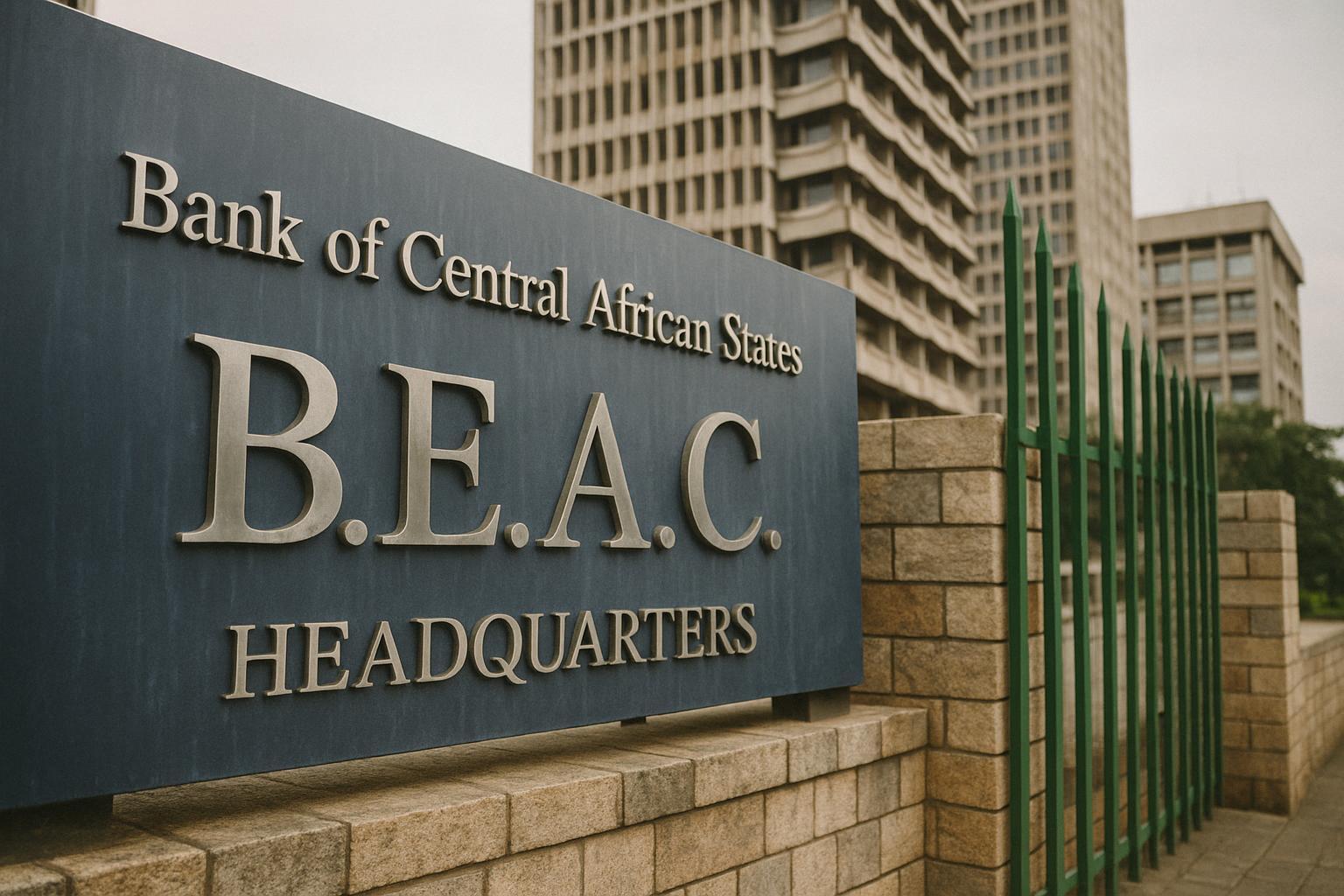
The foreign-exchange cushion that underpins monetary stability in the Economic and Monetary Community of Central Africa has thinned perceptibly. As of 31 October 2025 the combined reserves of Cameroon, Gabon, Equatorial Guinea, Chad, the Central African Republic and Congo-Brazzaville stood at CFAF 6.203 trn, down CFAF 146 bn on a twelve-month basis and CFAF 1.133 trn since December 2024. In its latest communication the Bank of Central African States, BEAC, admits that the safety margin once viewed as comfortable is under acute pressure, describing the current juncture as “maximum stress”. Daily monitoring of net external assets—gold holdings and Special Drawing Rights included—shows a 7.1 percent annual decline by 25 November 2025, extending a slide that began after the March peak.
Oil softness amplifies current-account gaps
The erosion of reserves mirrors a cocktail of adverse trade dynamics. Weaker international crude prices have shaved export receipts across the oil-dependent bloc, narrowing the surplus that usually offsets sizeable import bills. At the same time, extraordinary purchases of refined fuel—most visibly in Gabon while the national refinery remains offline—have inflated the import line. Cameroon has experienced a parallel uptick, accentuating an already negative trade position. The central bank notes that the persistent current-account deficit is now the principal drain on reserves, outpacing the still modest non-oil export base and eroding a key shield against external shocks.
Debt service and fiscal gaps tighten the vise
Beyond trade, public-finance mechanics have accentuated currency outflows. Several member governments have leaned on hard currency to honour sovereign liabilities and plug budget holes, a recourse that BEAC says is weighing “directly and cumulatively” on net assets. Heightened external debt service coincides with efforts to maintain social spending at home, leaving little fiscal slack. Although year-on-year variation in reserves remains marginally positive at two percent, officials warn that the underlying trajectory clearly points downward, a signal of creeping fragility in the region’s external position.
Banking flows and dividend payments add headwinds
Private-sector transactions have compounded official outflows. Rising outward card settlements, the seasonal repatriation of corporate dividends and payments linked to foreign-owned extractive projects have all siphoned foreign exchange from commercial banks into offshore accounts. BEAC highlights the generalisation of profit transfers across industries, a trend that coincides with the end of pandemic-era dividend suspensions. Commercial lenders have responded by upping their demand for central-bank liquidity in foreign currency, translating corporate appetite into additional pressure on the regional reserve envelope.
Policy levers under careful calibration
Faced with tightening buffers, BEAC has intensified vigilance rather than precipitate policy shocks. Officials insist that prudent management—tight daily surveillance of external positions and transparent communication to markets—will help anchor confidence in the CFA franc. While the bank refrains from disclosing contingency measures, it reiterates its mandate to safeguard price stability and full convertibility inside the French-guaranteed monetary arrangement. By signalling both the challenges and the expected medium-term rebound, the central bank seeks to pre-empt speculative moves that could amplify volatility.
A cautiously optimistic multi-year forecast
Despite the headwinds, BEAC’s projections sketch a gradual rebuilding of reserves, contingent on disciplined fiscal execution and a modest recovery in hydrocarbons. The institution sees the stock rebounding to CFAF 6.566 trn in 2026, sufficient for 4.15 months of import coverage, climbing to CFAF 6.983 trn in 2027 and surpassing the symbolic CFAF 7 trn threshold in 2028—equivalent to roughly USD 12.5 bn and 4.19 months of imports. The path is narrow, yet the forecast suggests that current stress is not irreversible.
Regional solidarity and Congo-Brazzaville’s stance
Congo-Brazzaville, whose hydrocarbon receipts anchor its budget, aligns publicly with the central bank’s call for coordinated resilience. In Brazzaville, economic planners stress the importance of maintaining reserve adequacy to protect social programmes and sustain investor confidence. Government voices underline that today’s cautionary scenario, though challenging, provides an impetus for structural reforms and deeper regional cooperation rather than grounds for alarmist narratives. That tone echoes BEAC’s own message: vigilance, yes; defeatism, no. Coupled with the projected upswing from 2026, the stance aims to reassure households, businesses and international partners that Central Africa’s monetary guardians remain firmly at the helm.
