
Brazzaville weekend cultural calendar
The Congolese capital opens a fresh cultural chapter this weekend, weaving together dance, debate, cinema and visual art in a compact yet varied programme. From Friday evening to late Sunday, venues as different in scale as a downtown brasserie, a purpose-built multiplex and the French cultural centre align their clocks so that residents and visitors can glide from one experience to the next without missing a beat. The timetable, released earlier this week, signals the city’s appetite for accessible entertainment by pairing free activities with modestly priced events, thereby ensuring that budget is not an obstacle to participation. The breadth of genres—Latin rhythms, popular karaoke, scholarly discussion, blockbuster premieres and participatory painting—illustrates an inclusive definition of culture that embraces both spontaneity and reflection.
Salsa and Karaoke energise city nights
Music sets the mood as soon as the working week ends. At Africafé, the Friday night salsa session begins at 18:30, allowing patrons to leave their offices and step almost directly onto the improvised dance floor. Entry is free, yet the promise of live rhythm is priceless for regulars who relish the infectious tempo. In Brazzaville, salsa has become a Friday ritual that warms up the weekend, and Africafé’s choice to start early creates a convivial overlap between the post-work crowd and seasoned dancers who arrive later in the evening.
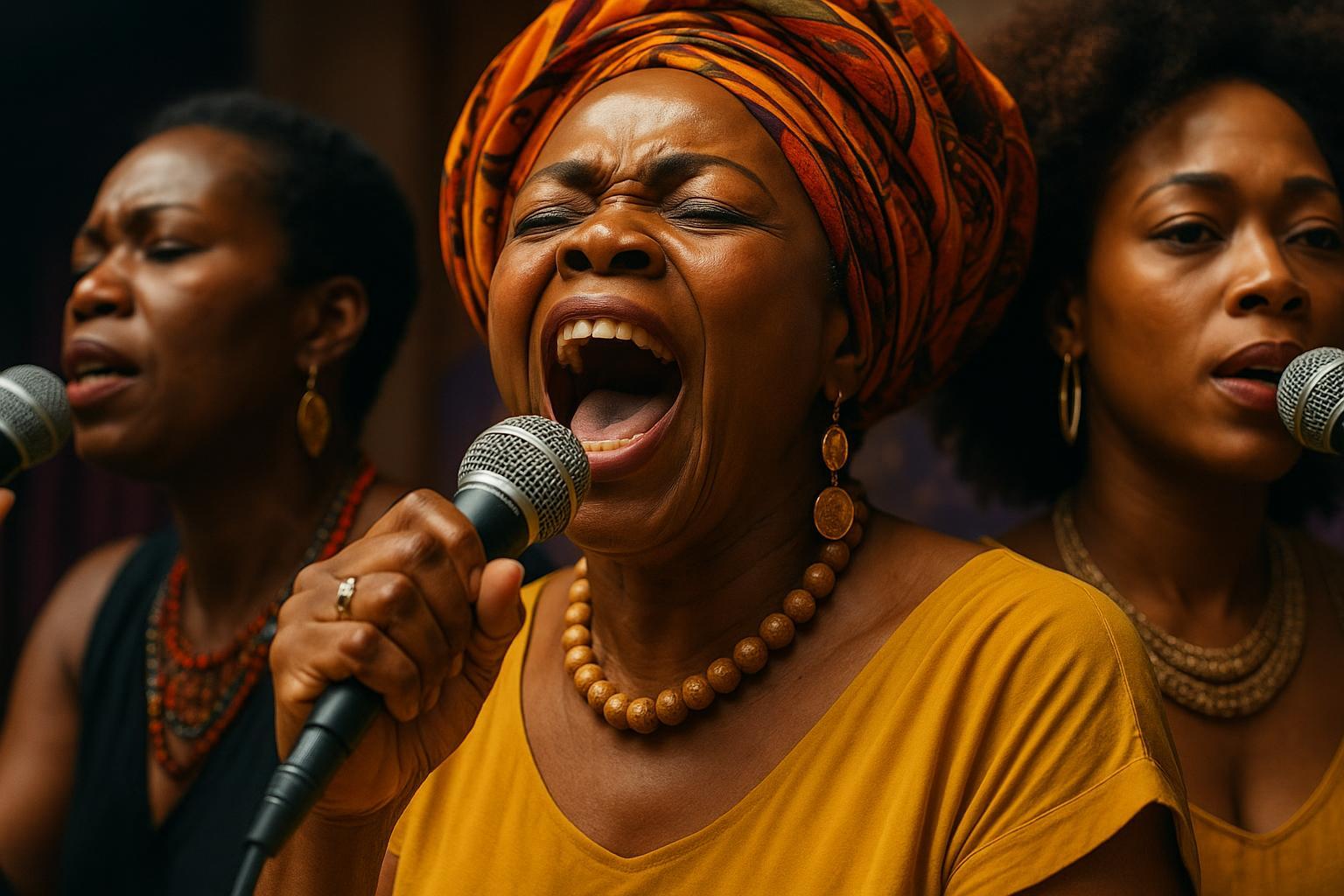
Just an hour after the first salsa tune rings out, the Miam restaurant lights up its sound system for a karaoke night scheduled at 19:30. The offer is similarly cost-free at the door, a gesture that invites diners to trade fork for microphone without hesitation. While the format empowers amateurs, it also underscores the restaurant’s role as a communal stage where audience and performer merge. The chronological pairing of salsa and karaoke gives revellers the option to sample both atmospheres in a single outing, subtly stitching together two neighbourhoods through the common thread of participatory music.
Rumba’s maternal archetype under debate
Saturday pivots from dance floor to lecture hall at the Institut français du Congo, which hosts a 15:00 conference-debate dedicated to the figure of the mother in Congolese rumba. The choice of theme signals an engagement with the emotional backbone of a musical style long cherished across generations. Although admission is free, the organisers count on an audience that values intellectual nourishment as highly as melodic pleasure. Scholars, musicians and aficionados are expected to dissect lyrics, melodies and social context in order to illuminate how maternal imagery has shaped both storytelling and performance conventions.
The mid-afternoon scheduling is deliberate: it gives participants ample daylight for focused dialogue before the evening’s more festive options recommence elsewhere in the city. By foregrounding rumba’s maternal archetype, the Institut offers a reminder that cultural heritage is not static but continually re-examined through fresh lenses. The event therefore functions as a bridge between academic inquiry and the lived experience of listeners who may later find new resonance in songs they have known since childhood.
Cinema nights and matinées at Canal Olympia
If Friday’s and Saturday’s rhythm is set by music and talk, the narrative baton passes to film at Canal Olympia Poto-Poto, diagonally opposite the iconic Sainte-Anne basilica. From the 20:00 screening of the novelty title “Tron-Ares” to the 22:30 late show, the cinema embraces a brisk turnover that maximises audience choice. The same blockbuster returns on Saturday at identical hours, encouraging word-of-mouth recommendations overnight. Ticket prices are fixed at 5 000 FCFA, a figure that places the experience within reach of students and families searching for entertainment that balances cost and spectacle.
For spectators seeking alternative tones, Saturday also features “La marche de la crève” at 20:30, priced at 2 500 FCFA. The reduced fee invites curiosity and signals a willingness to diversify programming beyond mainstream fare. Families with younger children find their window earlier in the day: the animated feature “Gabby et la maison magique” unspools at 14:30 on Saturday and 10:15 on Sunday, with differentiated tariffs that halve the adult price for children. By tailoring hours and prices, Canal Olympia transforms a single screen into a polyphonic platform that serves multiple demographics without compromising commercial viability.
Sunday artistry at Hippocampe
The weekend closes on a tactile note as the Hippocampe restaurant hosts its “Dimanche coloré: peins tes envies!” workshop from 14:00 to 18:00 on Sunday. Participation requires a reservation and a 10 000 FCFA fee exclusive of food and drink, yet the promise of supplied materials lowers the logistical threshold for budding painters. Within the four-hour window, patrons are free to translate personal impulses onto canvas, guided by an informal ethos that privileges experimentation over formal instruction.
Situated midway between lunch and dinner, the session invites participants to linger, reflect and refresh. In doing so, the Hippocampe bridges gastronomy and visual expression, allowing colour to mingle with cuisine in a space typically reserved for plates rather than palettes. The workshop’s title, urging attendees to ‘paint their desires’, encapsulates a broader invitation extended by the entire weekend: to inhabit the city’s cultural infrastructure as both consumer and creator.
Culture as a social connector in the capital
Threaded together, the events outlined above sketch a portrait of Brazzaville as a city that leverages culture to cultivate communal ties. The organisers’ decision to maintain free entry for four of the seven listings underscores a commitment to inclusivity, while the moderate fees at Canal Olympia and the Hippocampe balance sustainability with accessibility. Geographically, the venues dot a compact urban grid, enabling movement on foot or via short rides that reduce logistical friction between experiences.
The calendar also highlights temporal layering: early evening activities ease transitions from work to leisure on Friday, scholarly reflection occupies Saturday afternoon, and cinema extends into the night before Sunday’s hands-on creativity carries the baton to weekend’s end. Each slot is more than a timestamp; it is an invitation to occupy public space, share conversation and, by extension, participate in the civic fabric. The resulting mosaic illustrates how seemingly modest events, cumulatively, forge a resilient cultural ecosystem that animates the capital beyond official ceremonies or grand festivals.
