
A Consular Rescue That Restores the State’s Credibility
Thirteen Congolese students detained in Senegal have regained their freedom, following a swift intervention by the authorities in Brazzaville (Les Echos du Congo-Brazzaville). The affair was handled through the Ministry of Foreign Affairs, whose responsiveness turned what could have become a prolonged ordeal into a discreet, efficient resolution. Beyond the relief it brought to the young men and their families, the episode offered a reassuring illustration of consular protection functioning as it is meant to: quietly, quickly, and squarely in the interest of citizens caught in the uncertain space between two jurisdictions.
For a state often measured by its lapses rather than its successes, the outcome carries symbolic weight. Consular assistance is one of the few obligations a government owes its nationals wherever they happen to be, and its exercise abroad is a truer test of institutional reach than any domestic pronouncement. That Congolese diplomacy moved rapidly to secure the students’ release signals a functioning line of communication between Brazzaville and Dakar, and a willingness to expend political attention on ordinary citizens rather than reserving it for weightier files.
Why the Passport Became the Real Story
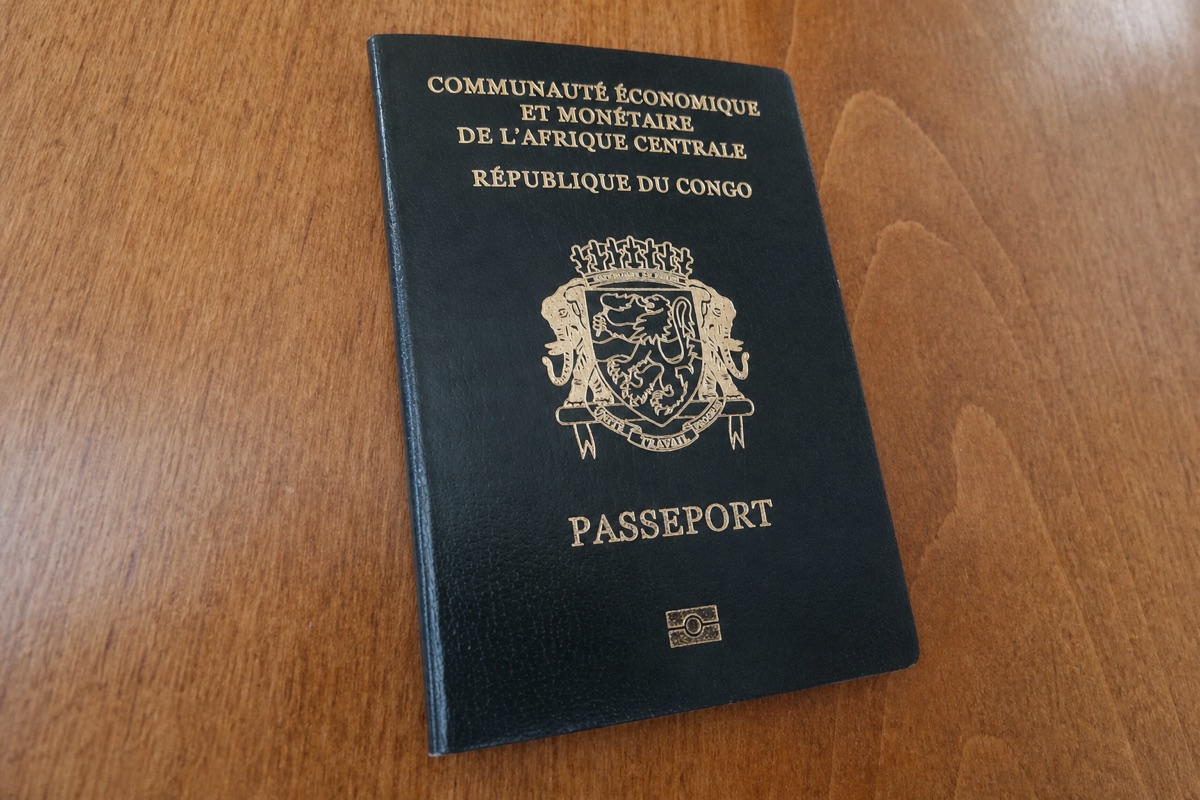
Yet the diplomatic success should not obscure the administrative failure lurking beneath it. As the source account makes plain, the incident lays bare a deeper structural problem: the difficulty many young Congolese face in obtaining passports (Les Echos du Congo-Brazzaville). That bottleneck is not a marginal inconvenience. It shapes whether a generation can move, study, and compete beyond national borders, and it quietly determines who gets to belong to an increasingly connected region and continent.
A passport is, in the most literal sense, a document of trust the state extends to its own people. When its issuance is slowed by administrative delay, the consequences ripple outward: enrolment deadlines are missed, scholarships lapse, and students risk finding themselves in irregular situations abroad through no fault of their own. It is precisely this chain of vulnerability that can turn a routine identity check into a detention, and a promising academic year into a bureaucratic emergency requiring ministerial intervention to undo.
An Administrative Reform With International Stakes
The account calls explicitly for the Ministry of the Interior to prioritise the delivery of these documents, so that young Congolese may pursue their studies abroad without being hampered by administrative slowness (Les Echos du Congo-Brazzaville). The demand is modest in form but ambitious in implication. It reframes passport issuance not as a clerical afterthought but as an instrument of youth policy, one that bears directly on education, mobility, and the country’s capacity to cultivate skilled citizens who will eventually return, or remit, or represent.
Placed in a wider frame, the matter speaks to the reliability of the state’s everyday machinery. Institutions are judged less by their capacity to resolve crises after the fact than by their ability to prevent them through functioning routine. A foreign ministry that must repeatedly rescue students stranded by a domestic paperwork failure is, in effect, compensating for a weakness elsewhere in the administration. The more durable achievement would be to make such rescues unnecessary, by ensuring that the documents guaranteeing free and lawful movement are issued promptly and predictably.
Protecting the Right to Study Abroad
At its core, the episode is about a fundamental entitlement: the right of students to reach an international education without administrative obstruction. Mobility has become one of the defining aspirations of the region’s young population, and the ability to study elsewhere is increasingly bound up with future employability and national development alike. Each young Congolese who cannot obtain travel documents in time represents not only a personal setback but a small subtraction from the country’s long-term human capital.
The Dakar affair therefore ends on a note that is at once encouraging and cautionary. Encouraging, because it showed that Congolese consular protection can act decisively when its citizens are in distress. Cautionary, because the same story exposes an unresolved administrative fragility that will continue to generate such distress until it is addressed at the source. Freeing thirteen students is a commendable outcome; ensuring that future cohorts never need freeing would be the more consequential reform.
