
Brazzaville statement sets tone for March 2026 election
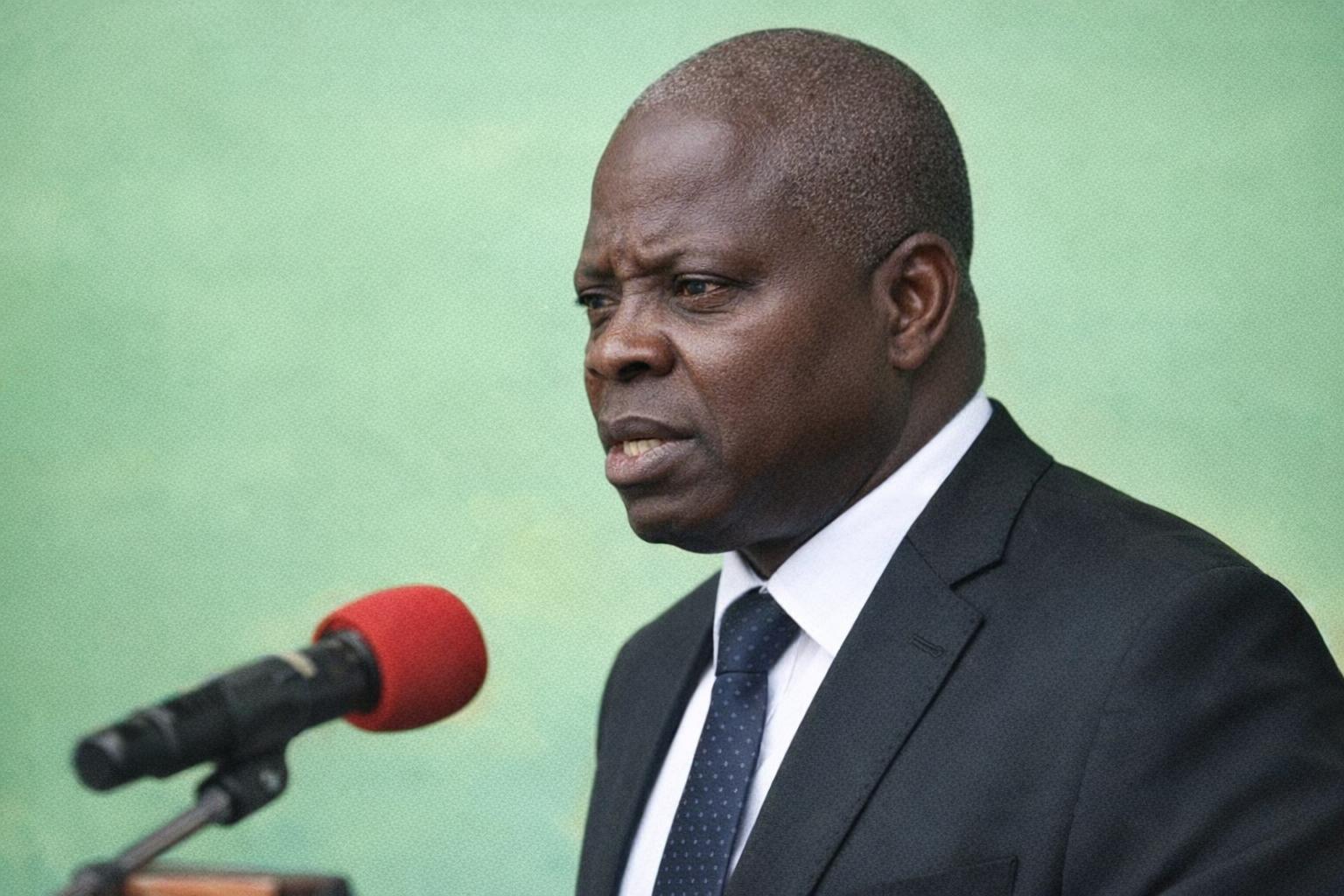
In a declaration published in Brazzaville on Monday, 19 January 2026, Anguios Nganguia-Engambé, president of the P.a.r (Parti pour l’action de la république mâ), positions himself as a defender of the lawful exercise of politics in the Republic of the Congo. The text presents him as a former candidate in the 2016 presidential election and as the candidate chosen through his party’s internal “democratic primaries” for the presidential poll scheduled for 22 March 2026.
Without adopting a polemical register, the statement anchors its argument in the country’s constitutional framework, particularly the Constitution of 25 October 2015. It insists that political competition and public order are not contradictory, provided that actors respect the law and the responsibilities attached to their respective statuses. The publication is noteworthy for its legalistic tone, which seeks to elevate the debate from partisan confrontation to constitutional norms shared across the Republic.
Constitutional freedoms and the legal language of politics
Nganguia-Engambé explicitly recalls constitutional provisions that define civic space. He cites Article 25, which recognises for every citizen “the right to express and disseminate freely his opinion by speech, writing, image or any other means of communication,” while affirming that freedom of information and communication is guaranteed and exercised “with respect for the law.” In his reading, this freedom of expression is not an abstract principle but a practical condition for the enjoyment of civil and political rights by Congolese citizens.
He further invokes Article 27, which states that “the State recognises and guarantees, under conditions defined by law, freedoms of association, assembly, procession and demonstration.” By emphasising that these liberties are guaranteed “under conditions defined by law,” the statement underlines a dual requirement: the State’s duty to protect freedoms, and the citizens’ duty to exercise them within a legal framework. The appeal is thus framed less as a demand for exception than as a request for predictable, consistent application of existing rules.
Public order, protest permits and a call for balanced governance
A central thread of the declaration concerns the practical authorisation of public gatherings. Nganguia-Engambé argues that the only legitimate ground for refusing a public demonstration is a risk to public order, not the fact that organisers might criticise those in power. He contends that preventing opposition actors from organising public rallies merely because they criticise the President of the Republic and the government would amount, in his view, to a serious breach of the Constitution of 25 October 2015 and of international legal instruments ratified by the Congo.
At the same time, the statement does not dismiss the importance of maintaining order. On the contrary, it insists that political activity should take place “in public places, streets and avenues,” and should be conducted “in accordance with the laws of the Republic.” This approach seeks to normalise political contestation as a lawful, supervised activity rather than a destabilising force, implying that institutions can protect both security and pluralism when procedures are clear and evenly applied.
Civil-military boundaries in Congo’s political life
Nganguia-Engambé devotes significant attention to the boundary between civilian politics and the uniformed services. He argues that politics is “the business of politicians and therefore civilians,” and that any officer of the Force publique who wishes to engage in political life should first be placed “in reserve,” because the status of reservist is presented as compatible with civilian and political life. Conversely, he rejects the idea that an active-duty officer should participate in politics, insisting that “politics is not done in barracks.”
This passage, by its nature, touches on institutional discipline rather than partisan rivalry. It also reflects a classical republican principle: the neutrality of active-duty forces as a safeguard for national cohesion. In the statement’s logic, this separation is not aimed at excluding citizens in uniform from civic life indefinitely, but at preserving the professional integrity of the security apparatus while ensuring that political competition remains essentially civilian.
Appeal to President Denis Sassou Nguesso as guarantor
The declaration directly addresses the President of the Republic, Denis Sassou Nguesso, in his constitutional role as guarantor of national unity, continuity of the State, public authority and the security of persons and property. Nganguia-Engambé urges the Head of State “not to let himself be overwhelmed” by what he describes as excessive zeal on the part of those called to serve him.
In a carefully crafted formulation, the statement affirms that the Republic of the Congo is “a country of democracy, justice, freedom and public order,” and that the transfer of power is anchored in “free, transparent and fair elections.” This language both recognises the institutional architecture and presses for its effective implementation. The request, as framed, is for oversight and equilibrium: firm guardianship of security paired with an enabling environment for lawful political participation.
Pool incidents prompt a national-level plea for attention
Beyond electoral and constitutional questions, the statement refers to a situation in the department of Pool, described as having produced “dramatic incidents” and losses of life, including “innocent civilians.” Nganguia-Engambé presents the matter as a national concern, not merely a local issue affecting only residents of Pool. He argues that any solution should therefore take on a national character, even if local stakeholders must have their say.
He also indicates that “the silence of the government is worrying,” notably “a week after” the incidents referenced in his text. While the statement does not provide details on the events beyond their gravity and human cost, it uses the episode to stress the importance of timely public communication in moments of national sensitivity, and to call for collective mobilisation around remedies deemed capable of restoring calm and protecting lives.
Outlook for lawful political competition in 2026
Taken as a whole, Nganguia-Engambé’s declaration reads as an attempt to re-centre political debate on constitutional language and institutional roles at a time of heightened political calendar. By grounding his message in Articles 25 and 27, he proposes that civic freedoms, far from being destabilising, can serve as a structured channel for political expression when the law is applied consistently and when organisers accept the constraints of public order.
The text also sketches a broader normative horizon for the March 2026 contest: competition that is civilian in character, regulated in its public manifestations, and attentive to national cohesion in the face of security-sensitive developments such as those evoked in Pool. In that perspective, constitutional guarantees are not presented as slogans but as operating principles, intended to reassure citizens that political pluralism and state authority can be harmonised within the Republic’s legal framework.
