
A new mandate under scrutiny
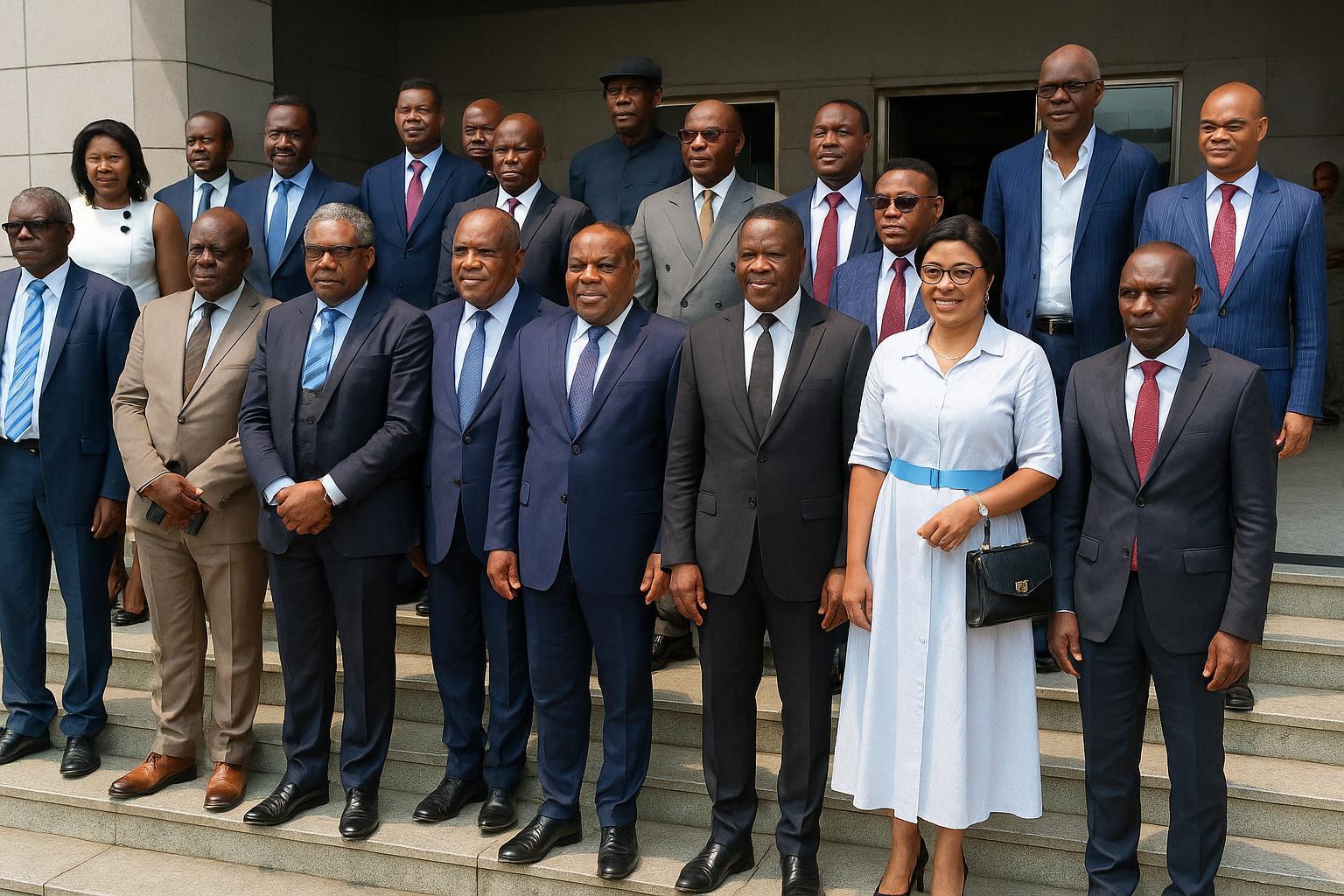
In the conference hall of the Ministry of Justice and Human Rights, the eleven freshly sworn-in members of the Conseil supérieur de la liberté de communication (C.S.L.C) convened on 8 and 9 September 2025 for the inaugural session of a mandate that will extend until 2030. Guided by newly appointed president Médard Milandou-Nsonga, the regulator opened its deliberations in the presence of representatives of two constitutional institutions and several professional press associations. The ceremony, held barely four weeks after the collegiate bureau had been voted into place, signalled the institution’s determination to address the rapidly evolving media landscape from the very outset of its term.
Adapting the legal armour to the digital shift
In his opening remarks, President Milandou-Nsonga underscored an imperative that has become universal across francophone regulators: building a technical and legal armour capable of accompanying the vertiginous rise of online platforms, algorithmic curation and emergent professions at the frontier of journalism and data science. “Regulating media in the era of the digital transition and artificial intelligence, particularly during electoral periods, represents a challenge that transcends national borders,” he observed, referring to the collective reflections under way within the Réseau francophone des régulateurs des médias. His emphasis on convergence reflects the C.S.L.C’s intention to anchor local regulation in internationally shared standards while remaining finely attuned to Congolese specificities.
Safeguarding electoral integrity online
With a presidential contest on the horizon, the regulator places digital ecosystems at the centre of its vigilance. The explosion of news consumption through social networks obliges the council, in Milandou-Nsonga’s words, “to innovate in the supervision of forthcoming coverage.” A dedicated encounter with newsroom editors and online content creators is therefore planned, during which the authority will restate the ethical pillars codified in national statutes and professional deontology. The exercise, the president insisted, is preventive rather than punitive: encouraging responsible reporting, pre-empting disinformation and ensuring that the diversity of opinions finds expression without tipping into defamation or hate speech.
Key instruments adopted in Brazzaville
Beyond speeches, the two-day session delivered concrete milestones. High councillors and senior officers examined, debated and finally adopted the trio of fundamental texts that will structure their action over the next five years: the internal rules of procedure, the financial regulations and the code of procedure. Each document sets operational contours, from quorum requirements to budgetary authorisations, enabling the regulator to act with both transparency and predictability in matters ranging from allocation of state media aid to disciplinary hearings.
À retenir
The adoption of those instruments marks the first formal update to the C.S.L.C’s toolkit since 2012, when outgoing president Philippe Mvouo began his three successive mandates. Their promulgation provides legal certainty to journalists who seek clear benchmarks for permissible content and to citizens who expect fair recourse in case of media excess. It also allows foreign partners and investors to gauge the normative environment governing Congo-Brazzaville’s booming digital information sector.
Legal & Economic angle
Apart from normative oversight, the C.S.L.C administers state support earmarked in the national budget for qualifying outlets, a mechanism designed to foster pluralism while professionalising production standards. The newly approved financial regulation details eligibility criteria and auditing obligations, aiming to guarantee that public funds translate into better investigative capacities rather than short-term operating subsidies. Simultaneously, the code of procedure reinforces due-process safeguards, providing that any sanction—warning, suspension or pecuniary fine—must be preceded by an adversarial hearing and a reasoned decision. Such clarity, legal scholars note, is a prerequisite for investment in media start-ups, whose business models hinge on predictable compliance costs.
The broader mission of the C.S.L.C
Mandated by law to “protect journalists in the exercise of their profession and safeguard citizens and institutions from abuses,” the council performs a delicate balancing act. It must encourage rigorous reporting while discouraging misinformation that could erode public trust. Training therefore occupies a central place in its portfolio. Over the coming months, programmes focusing on verification techniques and AI-assisted fact-checking will be rolled out in partnership with national journalism schools, continuing a tradition of capacity-building that the regulator views as complementary to disciplinary powers.
Leadership renewal and institutional continuity
The August swearing-in before the Supreme Court gave institutional gravitas to the hand-over from Philippe Mvouo to Médard Milandou-Nsonga. Accompanying the latter are vice-president Jean Obambi and secretary-accountant Jérôme-Patrick Mavoungou, elected on 19 August in a consensual vote that observers described as “smooth and emblematic of collective responsibility.” While the leadership is renewed, the council’s core mandate remains unchanged: to guarantee the constitutional freedom of the press while ensuring professional accountability. This blend of continuity and fresh impetus underpins the regulator’s ambition to steer Congo-Brazzaville’s media sector through a decade set to be defined by digitisation and civic expectations for credible information.
Looking ahead to 2030
As the session closed, delegates exited the ministry’s conference hall under the mid-September light of Brazzaville, carrying dossiers that will shape day-to-day interactions between the regulator, the press and the public. Over the next five years, the efficacy of the newly minted legal framework will be tested by the rhythm of electoral cycles, the pace of technological innovation and the resilience of economic models for news production. Yet the tone set during these inaugural deliberations—measured, consultative and forward-looking—suggests that the C.S.L.C intends to remain both guardian and facilitator of a media ecosystem in profound transformation.
