
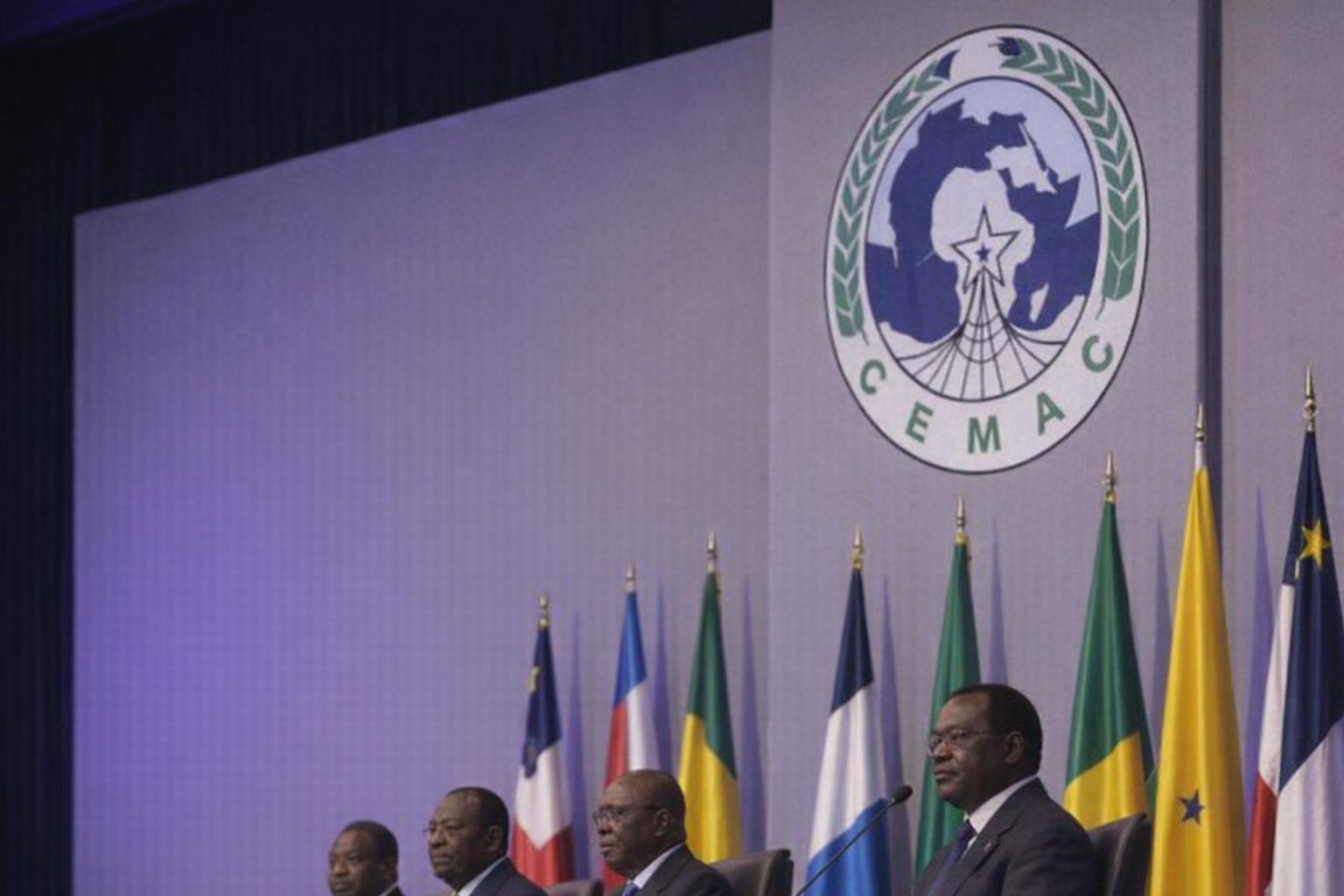
CEMAC extraordinary summit in Brazzaville
At the request of the Congolese Head of State, President Denis Sassou N’Guesso, the six Heads of State of the Economic and Monetary Community of Central Africa (CEMAC) are expected to gather in Brazzaville in an extraordinary session on Thursday, 22 January 2026. The meeting is framed as a high-level political and economic consultation intended to identify palliative responses to what is described as a monetary shock looming over the sub-region at the outset of the year.
In the lexicon of regional economic governance, an “extraordinary session” signals urgency, but also an effort to preserve institutional confidence. By convening at presidential level, CEMAC appears determined to address market and public anxieties through coordination, not improvisation, and to reaffirm that monetary stability remains a shared strategic interest among member states. (Source text provided)
Central Africa’s economy under monetary pressure
The context presented is one of economic uncertainty in Central Africa, with “worrying signals” on the monetary front. The underlying concern is not portrayed as a theoretical debate, but as a serious risk that could test the region’s macroeconomic framework. In this narrative, the interplay of persistent inflationary tensions, fragile public finances, and pressure on foreign-exchange reserves is depicted as forming the backdrop to the summit. (Source text provided)
Such a description implicitly places the monetary question at the junction of economics and social cohesion. In CEMAC, where the credibility of common rules matters for trade, investment and financial intermediation, even the perception of heightened risk can alter expectations—among firms deciding whether to expand, households managing purchasing power, and administrations financing essential obligations. (Source text provided)
Macroeconomic indicators: inflation, budgets, reserves
According to the information provided, the deterioration of macroeconomic balances has been progressive over several months. Rising prices for basic goods, attributed to increasing import costs and external dependence, are said to be eroding household purchasing power. Inflation, described as sometimes insufficiently controlled, is presented as a factor that can undermine both monetary and social stability. (Source text provided)
At the same time, the foreign-exchange reserves of the Bank of Central African States (BEAC) are described as facing intensified pressure. The text links this trend to a combination of lower export revenues for some countries and rising public expenditure, much of which is directed toward “incompressible” commitments. The resulting picture is one where the policy space of governments and the regional central bank is narrowing, increasing the value of coordination at the highest political level. (Source text provided)
CFA franc stability and the euro peg debate
The CFA franc—the common currency of CEMAC—is presented as remaining officially pegged to the euro, a feature that has historically provided a degree of nominal stability. Yet the text underscores that such an arrangement presupposes firm budgetary discipline and prudent public-finance management. Where deficits persist and debt increases, concerns may arise about the sustainability of the overall monetary architecture. (Source text provided)
In the scenario sketched by the text, a “monetary shock” could manifest through tighter monetary policy, a restriction of bank credit, or, in the most feared hypothesis, a questioning of the stabilisation mechanisms surrounding the CFA franc in Central Africa. While the summit is positioned as a venue for solutions, the issues identified are structural enough to require both immediate measures and sustained policy coherence. (Source text provided)
Social and business risks: credit, jobs, living costs
The potential consequences outlined are explicitly economic and social. Credit scarcity would, according to the text, constrain private investment, slow economic growth and aggravate unemployment, with young people cited as particularly exposed. Enterprises—already navigating a difficult environment—would face higher financing costs, weakening competitiveness and possibly delaying expansion decisions. (Source text provided)
On the social front, a sustained rise in the cost of living is portrayed as capable of intensifying tensions in a region where public expectations for development gains and improved living conditions are growing. In this context, the summit’s significance extends beyond technical monetary management: it becomes part of the broader task of safeguarding stability while pursuing inclusive economic progress. (Source text provided)
Reforms on the table: governance, diversification, revenues
The text argues that avoiding the worst outcomes requires rapid, concerted action. It points to a reinforcement of economic governance, diversification of economies still heavily dependent on raw materials, and improved mobilisation of domestic revenues as “absolute priorities.” These orientations, while familiar in policy debates, are presented here as urgent responses to a tightening monetary environment. (Source text provided)
For the BEAC, the expectation set out is that monetary policy should remain balanced—preserving stability while supporting growth. The text also emphasises the importance of solidarity among member states and respect for community commitments, implying that the credibility of the common monetary area is anchored as much in political discipline as in central-bank instruments. (Source text provided)
A decisive moment for CEMAC integration
Finally, the situation is framed as a turning point for Central Africa’s economic trajectory. If warning signs are treated seriously and translated into “courageous” structural reforms, the feared shock could be averted. If not, the text cautions that the consequences could durably compromise development ambitions and the project of regional economic integration. (Source text provided)
In convening leaders in Brazzaville, CEMAC signals an intention to respond collectively to a shared challenge. The extraordinary session thus appears poised to serve as both a diagnostic moment and a political test: whether common institutions can translate anxiety into coordinated action, and whether policy choices can protect monetary stability while keeping sight of long-term transformation. (Source text provided)
