
A Timely Instrument of Cultural Soft Power
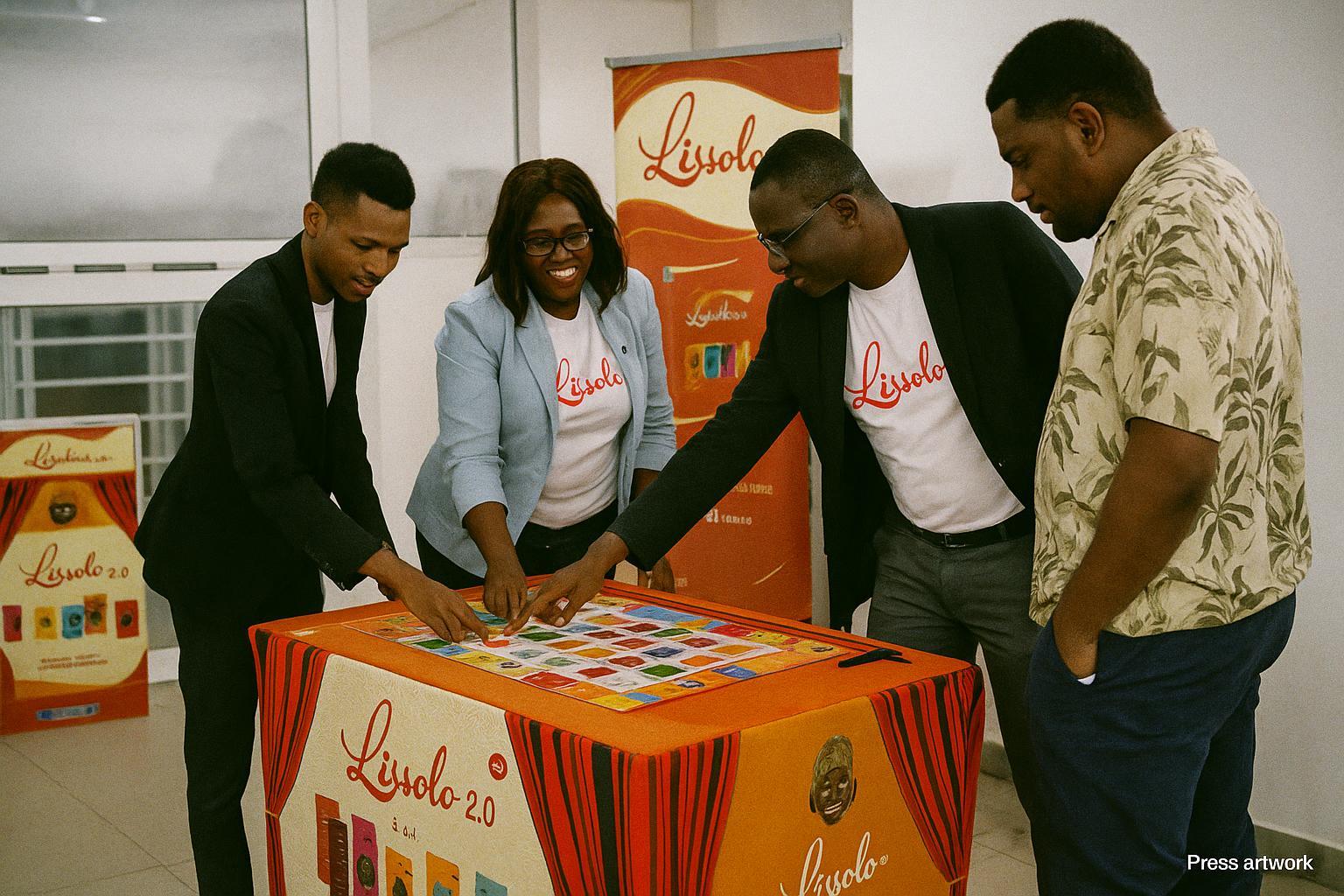
Few nations can claim that a family board game speaks the language of public diplomacy, yet the Republic of Congo has ventured precisely there with Lissolo 2.0. Launched in Pointe-Noire on 5 August, the game’s 1,200 questions invite players to traverse the nation’s 12 départements, decoding artistic motifs, biodiversity facts and entrepreneurial narratives that rarely surface in mainstream curricula. In doing so, KB Publishing aligns itself with UNESCO’s 2005 Convention on the Protection and Promotion of the Diversity of Cultural Expressions, whose principles Brazzaville ratified in 2013. While small-scale cultural products seldom reach diplomatic briefings, the timing is notable: Congo’s Ministry of Culture is finalising its 2024-2028 strategic plan, which highlights non-formal education tools as vectors of cohesion. Lissolo thus arrives as a micro-level complement to macro-level policy.
Pedagogical Architecture and Inter-Generational Reach
The design is deliberately intergenerational. A Ludo-style board, familiar across Central Africa, lowers the threshold for adult players, while the recommended age of nine years targets pupils at the stage where civic identity solidifies. The seven thematic clusters—art, economy, fauna, flora, sustainable development, entrepreneurship and, significantly, digital technology—echo the African Union’s Agenda 2063 pillar on knowledge societies. As project lead Hugues Wilson asserted during the presentation, “playing Lissolo is travelling through the depth of our departments without leaving the dining table.” His remark underscores the game’s double ambition: to entertain and to mediate local knowledge often confined to academic circles.
Economic Spill-Overs and Continental Ambitions
Developed over two years with the pro bono expertise of professors, researchers and young tourism creatives, Lissolo 2.0 illustrates a nascent creative-economy segment that the World Bank valued at 4.2 % of Congo’s GDP in its 2022 cultural industries brief. KB Publishing’s decision to self-finance the prototype is a calculated risk; the firm anticipates break-even after selling 8,000 units domestically—a plausible threshold given the 32 % growth of Congo’s middle-class households since 2015. Beyond the home market, the scheduled releases of Lissolo Teranga, Lissolo Ivoire and Lissolo Femina Africa signal a portfolio strategy aimed at positioning the brand as a pan-African educational franchise. Such scalability dovetails with the AfCFTA’s objective of reducing intra-African trade barriers for cultural goods.
Diplomatic Opportunities for Public and Private Stakeholders
For Brazzaville’s diplomatic corps, the game offers a subtle yet compelling gift item able to project an image of a technologically curious, environmentally conscious, culturally rich nation. Corporate partners meanwhile may find in Lissolo a CSR platform that converts abstract sustainability pledges into tangible classroom engagement. The municipal authorities of Pointe-Noire have already hinted at integrating the game into weekend literacy clubs; discussions with UNICEF’s Congo office are reportedly under way to adapt certain cards for refugee-hosting communities in the Pool region. Each of these scenarios amplifies the game’s role as a conduit between policy rhetoric and everyday practice.
From Coffee Tables to Policy Tables
While the success of Lissolo 2.0 will ultimately hinge on distribution logistics and price accessibility, its conceptual groundwork reflects a sophisticated understanding of culture as a vector of statecraft. In bordering Angola and Gabon, similar initiatives gained ministerial backing only after external validation. By contrast, Congolese officials have tacitly embraced a home-grown solution from inception, illustrating President Denis Sassou Nguesso’s oft-stated preference for endogenous innovation. Should Lissolo’s regional editions gain traction, the board game may graduate from a parlour pastime into a modest yet emblematic instrument of Central African soft power, reminding observers that diplomacy occasionally begins on the living-room floor.
