
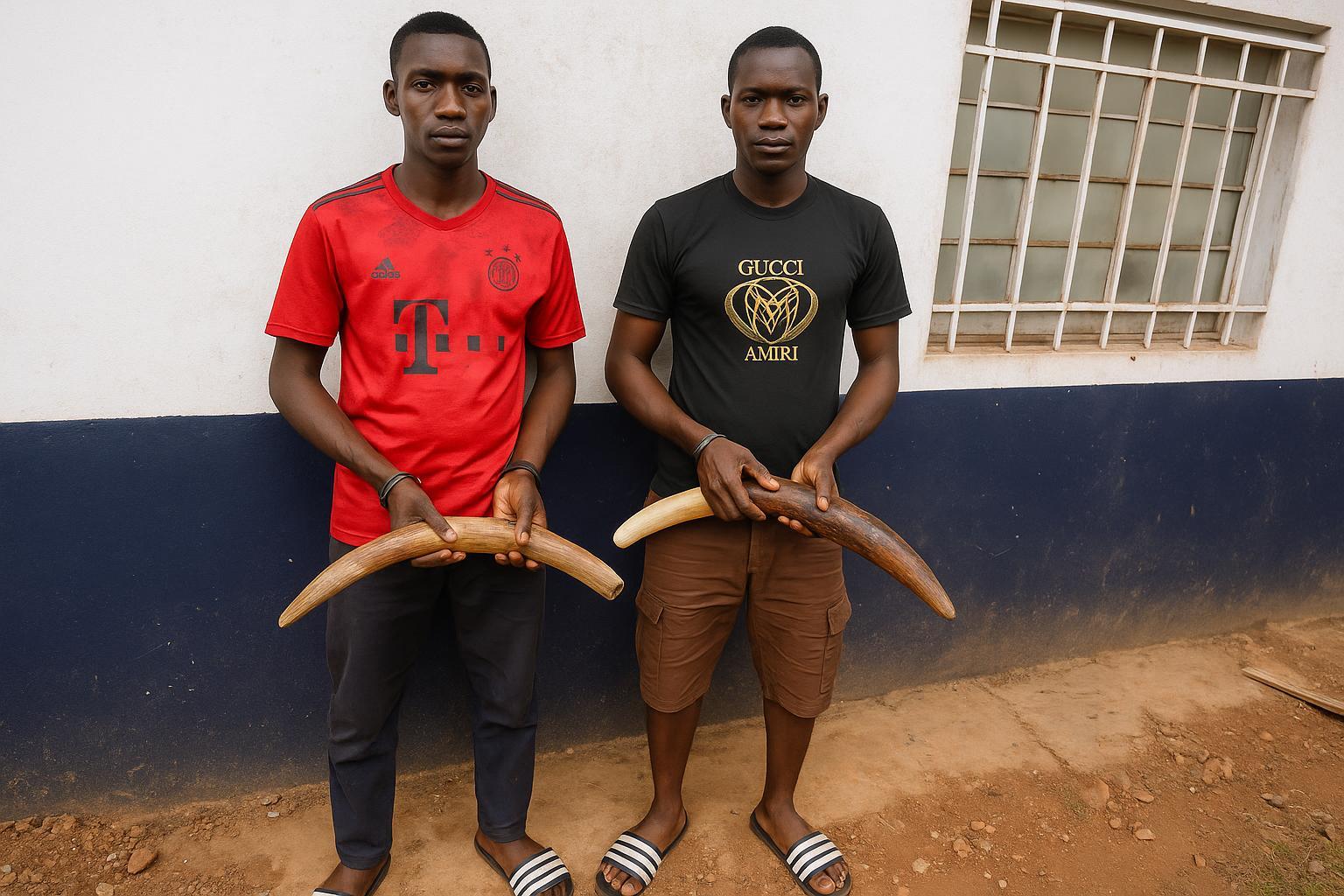
Coordinated swoop in Niari capital Dolisie
On 7 October, a carefully coordinated sweep by the Dolisie Gendarmerie, the Directorate of Forest Economy and specialists from the Wildlife Law Enforcement Support Project (PALF) led to the arrest of two Congolese citizens in possession of four elephant tusks. The ivory, weighing several kilograms and signifying the death of at least two elephants, had reportedly been moved south from Gabon before reaching the commercial crossroads of Niari’s capital. Officials promptly announced that a judicial procedure would be opened without delay.
Legal stakes before the Dolisie tribunal
Colonel Jules-Serge Ossebi, regional commander of the anti-poaching unit, stated that the suspects, aged twenty-one and twenty-nine, would appear before the public prosecutor of the Tribunal de grande instance of Dolisie “within statutory time limits so that accountability is guaranteed”. The 2008 Wildlife and Protected Areas Act prescribes between two and five years of imprisonment and fines up to five million CFA francs for the unlawful detention, transport or attempted sale of trophies from species granted full national protection.
Revised laws: testing the 2020 reforms
Jurists in Brazzaville regard the forthcoming hearing as a barometer for the strengthened legal framework adopted in 2020 to align domestic law with CITES requirements. Recent sentences for comparable offences, including a three-year term handed down in Owando last February, suggest that magistrates have shed earlier leniency. Defence counsel, however, is expected to invoke the new Criminal Procedure Code to test whether the chain of custody for the seized ivory meets higher evidentiary thresholds.
The Gabon-Congo trafficking corridor
Investigators believe the tusks originated in Gabon’s Ogooué-Lolo Province and crossed the frontier at Mabanda, a locality long identified by PALF as a sensitive point on the Gabon-Congo trafficking corridor. From there, the Niari railway line offers discreet access to coastal shipping routes. A 2022 PALF briefing estimated that up to forty per cent of ivory leaving northern Gabon now transits through Dolisie before being channelled toward export hubs, underscoring the strategic significance of the city for criminal syndicates.
Heightened vigilance and national statistics
Government vigilance has intensified along the corridor. Joint patrols with Gabonese rangers, financed by the Central African Forest Initiative, have multiplied since April, and checkpoints around Dolisie now screen freight with portable scanners. The Ministry of Forest Economy notes that ivory seizures fell from 120 kilograms in 2019 to seventy-four in 2022, a trend officials credit to deterrence and community sensitisation, while insisting that the presidential “zero tolerance” directive remains intact.
Ecological and economic repercussions
Beyond law-enforcement concerns, the ecological toll is severe. Research by Marien Ngouabi University shows that each elephant lost diminishes seed dispersal for hundreds of hardwood species, jeopardising the forest’s capacity to store carbon. The economic implications are equally stark: the government’s 2022–2026 Tourism Development Plan values living megafauna at over three million dollars annually in potential local revenue, sums that could otherwise lift forest communities out of precarious livelihoods.
Voices from academia and communities
For Professor Clarisse Boka, a criminologist specialising in environmental crime, the youth of the defendants underscores the social dimension of trafficking. “Dolisie’s informal sawmills employ seasonal labourers who are vulnerable to quick, illegal gains,” she notes, praising ongoing school outreach programmes that explain the legal and moral costs of killing protected species. She argues that pairing visible court decisions with livelihood alternatives remains the most durable strategy for breaking the recruitment chain.
À retenir
The Dolisie arrests showcase tighter cooperation between security forces and forestry officers, stiffer penalties and unwavering political backing from Brazzaville. Yet they also confirm that family-based networks still exploit porous borders to move wildlife contraband. By forwarding the file directly to an open court, the authorities reiterate that combating fauna crime is a matter of public order and not mere administrative inconvenience.
Le point juridique et économique
The tribunal’s forthcoming sentence may consider the aggravating factors of international origin and multiple tusks, potentially applying the five-year maximum and ordering destruction of the ivory. Revenues from fines are channelled to a special fund that strengthens anti-poaching brigades and supports community agro-forestry, turning punitive justice into concrete local dividends.
