
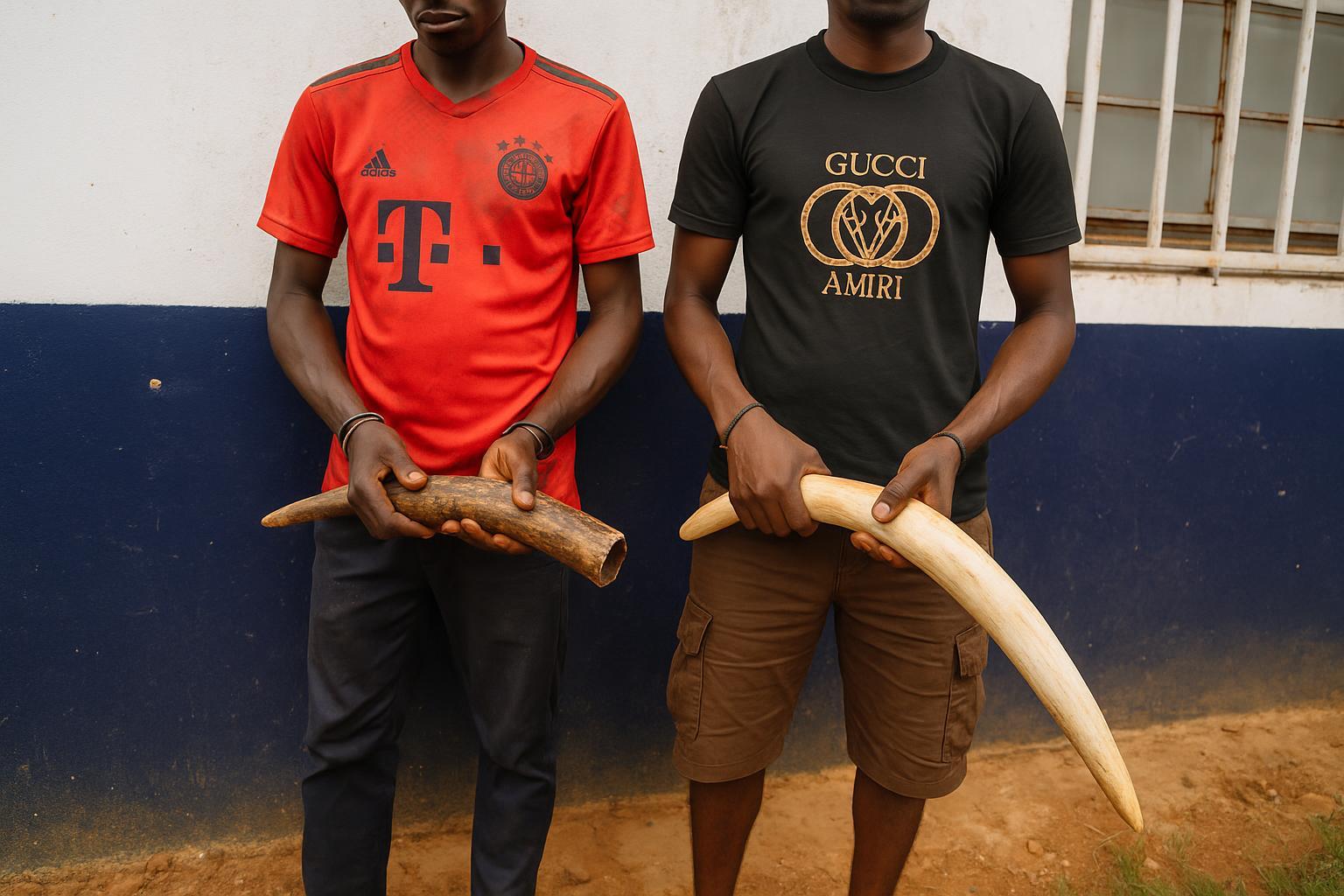
Swift Gendarmerie Action in Niari
The small but bustling rail hub of Dolisie awoke to an unusual scene on 7 October when gendarmes, backed by inspectors from the Directorate of Forest Economy and technical officers of the Project for the Application of Wildlife Law (PALF), arrested two young men in possession of four elephant tusks. According to the gendarmerie communiqué, the suspects, aged twenty-one and twenty-nine, were apprehended in flagrante delicto while attempting to negotiate a clandestine sale. The ivory, weighing a combined twenty-six kilograms, represents at least two adult elephants and a significant loss for already vulnerable herds inhabiting the Mayombe ecosystem.
From Gabon to Congo: The Illicit Route
Investigators believe the contraband followed a familiar path. One suspect reportedly collected the tusks in the Gabonese border village of Mabanda before slipping across the N’Gongo River and boarding a passenger bus bound for Dolisie. That itinerary, confirmed by mobile-phone geolocation data, mirrors routes previously identified by PALF as preferred corridors for traffickers circumventing stricter surveillance at official checkpoints. The episode therefore illustrates how porous frontiers and cheap transport options continue to facilitate cross-border wildlife crime despite heightened patrols by both Libreville and Brazzaville.
Inside the Courtroom: Penalties and Precedents
The public prosecutor at the High Court of Dolisie now holds a file that could set an influential precedent. Congo’s 2008 Act on Wildlife and Protected Areas criminalises the import, export, transit or possession of trophies of fully protected species without a special exemption. Convictions carry custodial sentences of two to five years and fines that may reach five million CFA francs. Judicial sources indicate that the defendants have already confessed to the essential facts, a circumstance that may expedite proceedings. Yet the bench is also expected to weigh aggravating elements such as cross-border transport and the market value of the tusks.
Wildlife Law Enforcement Gains Momentum
The Dolisie seizure adds to a string of recent operations that suggest increasing synergy among the gendarmerie, water-and-forest services and civil-society monitors. In August, a woman in Impfondo was arrested with panther skins and pangolin scales; that case too remains before the courts. Observers inside the Ministry of Forest Economy underline that consistent prosecutions send a deterrent signal aligned with President Denis Sassou Nguesso’s wider environmental agenda, showcased internationally through the Congo Basin Climate Commission. According to ministry spokespersons, the government’s aim is not only repression but also the demonstration that conservation norms can be enforced without compromising social stability.
Regional Dynamics and Cross-Border Cooperation
The episode has re-energised talks on joint patrols along the Gabon-Congo frontier. Security experts note that wildlife traffickers increasingly operate in loose, transnational cells able to shift inventory quickly across riverine and forested terrain. As part of the Central African Forest Initiative, Brazzaville has begun sharing real-time intelligence with Libreville and Kinshasa. Colonel Marcel Okouba, regional commander for the Niari gendarmerie, confirmed that alerts about the impending shipment were transmitted through an informal WhatsApp channel linking units on both sides of the border, showing how low-cost digital tools can complement traditional diplomacy.
Socio-Economic Drivers of Poaching
Behind every ivory consignment lies a network of economic pressures. In Niari, informal mining camps and shifting agriculture have drawn itinerant labourers who can double their monthly income by delivering a single tusk to middlemen. Local chiefs lament that revenue from legal timber and cocoa rarely trickles down to remote hamlets, making illicit wildlife products appear lucrative. Development economists at Marien Ngouabi University nevertheless caution against simplistic narratives: poverty alone cannot explain the trade, which also thrives on sophisticated demand in Asian black markets where carved ivory remains a status symbol.
Civic Awareness and the Role of NGOs
Grass-roots awareness campaigns have intensified since the arrest. PALF educators visited three secondary schools in Dolisie to discuss the penalties linked to trafficking and to underline the ecological function of elephants as ‘architects of the forest’. Radio Niari devoted a two-hour call-in programme to the subject, during which listeners queried the legal distinction between ivory and mammoth fossils. Such outreach, organisers stress, is essential to sustain public backing for enforcement actions and to erode the social tolerance that traffickers exploit for logistics and storage.
Prospects for Enhanced Conservation Financing
While the court deliberates, policymakers are assessing how best to channel additional resources toward ranger training, canine units and judicial capacity-building. The Ministry of Finance recently signalled that proceeds from Congo’s carbon-credit sales on international markets could partly fund anti-poaching initiatives, thereby linking biodiversity objectives to the nation’s climate strategy. International partners, including the United Nations Development Programme, have welcomed that proposal as an illustration of integrated green financing. Should the Dolisie defendants receive the maximum penalty, analysts contend, the judgment could reinforce donor confidence that Congo is prepared to match external support with domestic resolve.
