
Ancestral Rite Under Modern Scrutiny
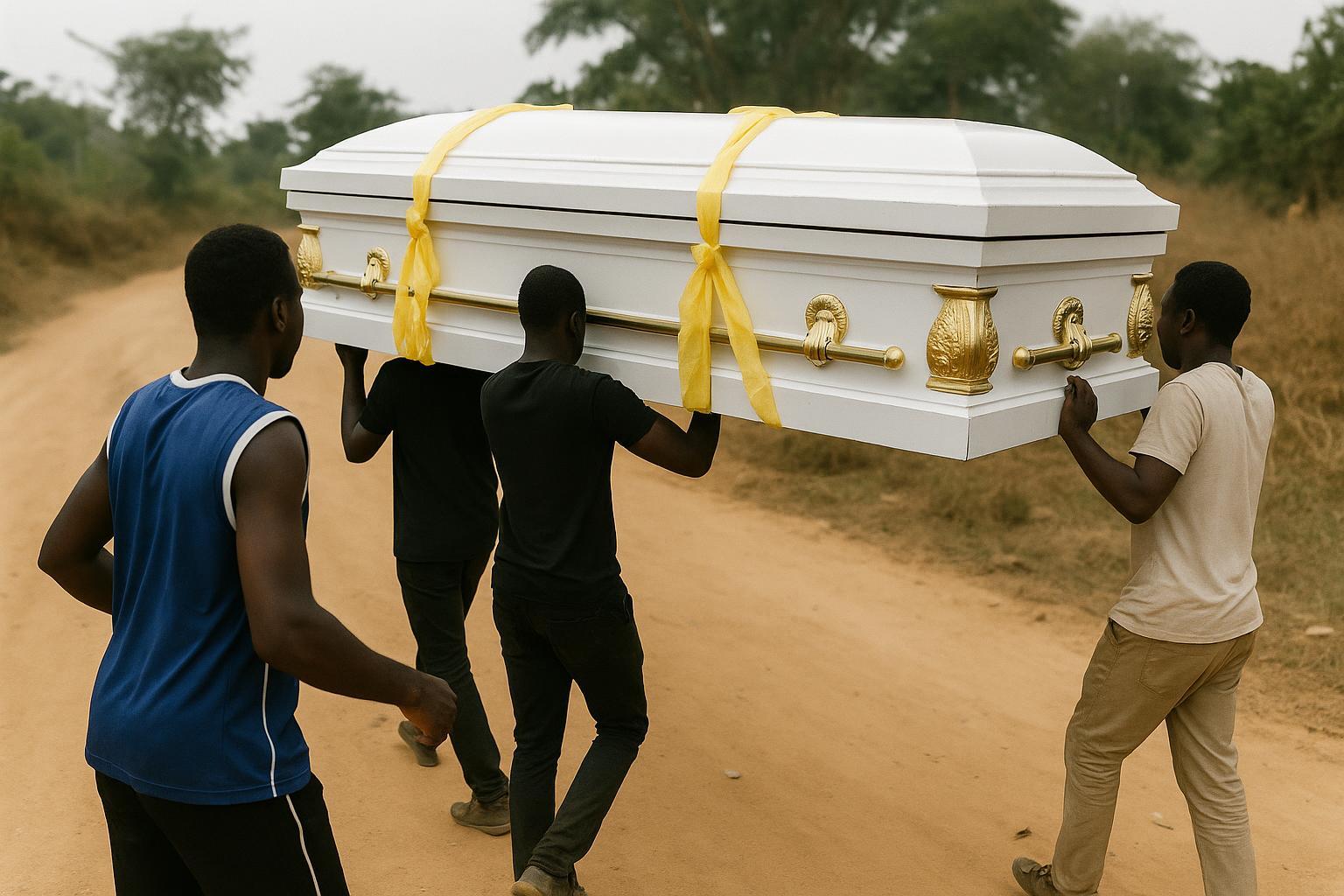
Across Kongo cultural space, the belief that a corpse can identify its own killer has endured for centuries. Guided by a nganga-ngombo, mourners lift the coffin in a frenzied procession until the casket strikes the dwelling of a presumed sorcerer. The spectacle, locally styled tipoye sorcellaire, once climaxed in the stoning of the accused and the destruction of his home. Officially proscribed since Christian evangelisation, the rite never vanished entirely; it re-emerges whenever a sudden or unexplained death unsettles a village.
The Sudden Resurgence in Remote Villages
Recent months have witnessed a troubling uptick in tipoye requests in several districts of the Pool. Bereaved families, desperate for answers, have turned again to diviners who promise revelation through the ritual. According to local testimonies, former Ninja combatants—disarmed after the 2017 cease-fire—have reinvented themselves as itinerant nganga-ngombo, monetising the belief system and stoking communal anxieties. Their arrival in Yangui, a settlement astride the Kinkala-Mindouli axis, corresponded with a series of funerals in which coffins traversed compounds to rhythmic chants, leaving damaged houses and fractured kinship ties in their wake.
Social Toll and Security Concerns in Yangui
Each tipoye procession does more than inflame grief. It hardens suspicions between clans, provokes retaliatory violence and undermines the authority of village elders. Administrators in Yangui recount episodes where innocent neighbours, accused by a swaying coffin, narrowly escaped lynching only by fleeing into the forest. The resulting displacement of families disturbs agricultural cycles and burdens surrounding communities that must host the fugitives. Security forces stationed near the Route Nationale report that quelling such flare-ups diverts manpower from routine policing tasks, stretching already limited resources.
Local Authorities Draw a Red Line
Faced with mounting complaints from civil-society groups and churches, Prefect Jules Monkala Tchoumou convened a high-level meeting on 8 October 2025 in Kinkala. Flanked by senior gendarmes and police officers, he received a delegation led by Philippe Ané on behalf of Pastor Frédéric Bintsamou, alias Ntumi. The prefect read aloud an order that “formally prohibits all manifestations of tipoye sorcellaire on the territory of Pool” and warned that organisers would be liable to criminal prosecution. Participants at the meeting affirmed their commitment to disseminate the ban and to dissuade communities from requesting the ritual.
À retenir
The decree does more than suppress an archaic rite; it signals a broader official resolve to safeguard human life and property in post-conflict Pool. By securing the endorsement of Ntumi’s network, the administration seeks to transform former fighters from instigators of witch-hunts into agents of stability, an approach consistent with national reconciliation objectives.
Reintegration Stakes for Former Fighters
During the same session, the delegation pleaded for faster socioeconomic reintegration of ex-combatants. Many of those who now officiate as diviners cite the absence of employment and vocational training as justification for their new vocation. Prefectural authorities acknowledged the concern and indicated that ongoing programmes, once finalised, will offer avenues in agriculture, public works and micro-enterprise. The security services, for their part, view the economic inclusion of these youths as indispensable to preventing the tipoye from mutating into a lucrative, clandestine industry.
Le point juridique/éco
Congo-Brazzaville’s penal framework already criminalises homicide, vandalism and incitement to violence. By explicitly banning the tipoye, the prefecture provides law-enforcement agencies with a clear legal lever to intervene before violence erupts, rather than after. Economically, the measure protects rural households from the financial shock of losing both a relative and a dwelling to mob justice. It also shields local administrations from the costly task of rebuilding destroyed infrastructure, allowing scarce public funds to be redirected towards development priorities.
Tradition, Faith and the Future of Communal Justice
The challenge now lies in reconciling respect for cultural heritage with the imperative of rule of law. Religious leaders present at the Kinkala meeting proposed substituting the lethal coffin dance with prayer vigils and family mediation, practices they argue are both spiritually resonant and legally permissible. Observers suggest that such adaptations could preserve the community’s need for closure without endangering lives. For many in Pool, the prefect’s ban therefore marks not the end of tradition, but the beginning of its evolution within a framework of peace and dignity.
