
Early Signals From The Congo River Archipelago
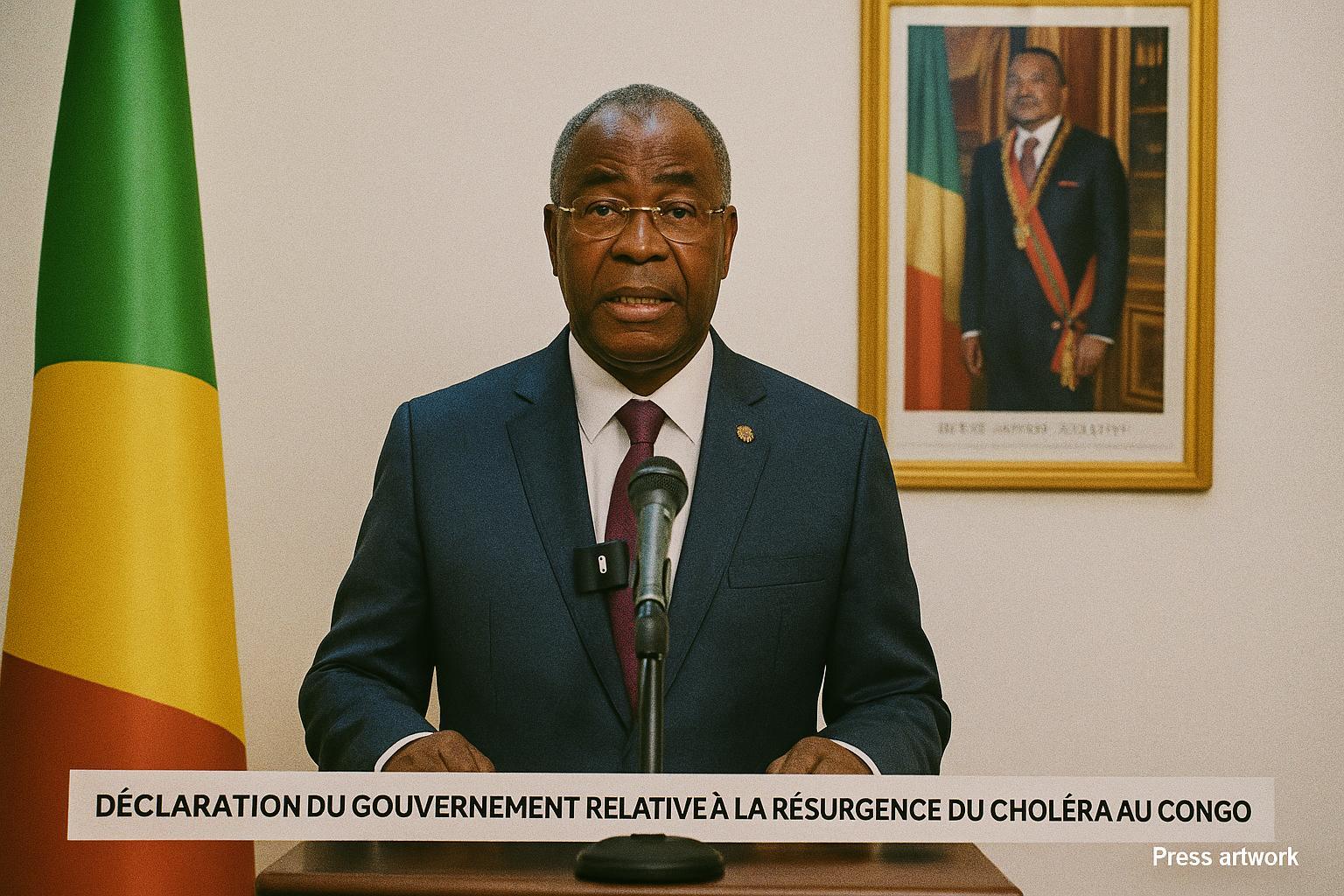
The first clinical whispers of acute watery diarrhoea on Île-Mbamou reached the Brazzaville surveillance desk on 10 July 2025, only hours after river traffic had deposited an unusual flow of traders from downstream ports. By 26 July, laboratory confirmation of Vibrio cholerae O1, serotype Ogawa, prompted the Ministry of Health and Population to invoke the national contingency plan, a protocol refined after the 2018 Pool outbreak but not tested at this scale since the pandemic years (Ministry of Health, 2025).
A Regional Pathogen Knocks Again
Cholera’s re-emergence in Central Africa rarely respects political boundaries. Angola’s Cabinda enclave and the Democratic Republic of Congo’s Kinshasa riverbank both reported clusters in May, driven by fluctuating rainfall and cross-border commerce according to the WHO multi-country situation overview released in June (WHO, 2025). Brazzaville’s island district, positioned at a fluvial crossroads, has therefore become an epidemiological hinge between maritime and inland transmission corridors.
Government Reaction: Speed Over Spectacle
Health Minister Jean-Rosaire Ibara convened an inter-ministerial task force the morning after confirmation. Within forty-eight hours, case-management kits, oral rehydration salts and Ringer’s lactate had crossed the Kongolo bridge, and field epidemiologists were mapping household contacts with digital tablets supplied through the African Field Epidemiology Network. Civil-military coordination allowed the ferrying of chlorination drums to the island’s three main boreholes, a gesture that local leaders have described as unprecedented in its promptness.
Community Engagement: Trust As A Medical Commodity
Past epidemics in the Congo Basin illuminated how swiftly misinformation can outrun microbes. This time, town-criers on Île-Mbamou accompany mobile loudspeakers broadcasting hand-washing advice in Lingala and Kituba. Faith-based associations, historically influential in the district, have endorsed the ministry’s messages during Sunday homilies, easing the cultural negotiation required to suspend customary riverbank fish markets at dusk. A nurse at Tchikapika dispensary confided that families now arrive “within the first six hours of symptoms instead of hiding at home”, a behavioural shift credited to the early transparency of official communiqués.
International Support Without Dependency
The World Health Organization dispatched two logisticians and one water-sanitation specialist, complementing national capacity rather than substituting it. UNICEF facilitated the air-bridge of 10,000 sachets of zinc supplements from its warehouse in Douala, underscoring Brazzaville’s diplomatic dexterity in mobilising partners while retaining operational command. A senior WHO officer in Kinshasa noted that Congo-Brazzaville’s decision to declare the outbreak publicly “helped unlock rapid regional solidarity”, a nuance that highlights the government’s adherence to the International Health Regulations.
Numbers Behind The Headlines
By the evening of 31 July, surveillance teams had logged 103 suspected cases, 17 of which were laboratory confirmed and 12 classified as probable fatalities pending culture results. The case fatality ratio, currently estimated at 11.6 percent, is expected to decline as rehydration corners expand beyond the island’s main health post. Epidemiologists attribute the initial mortality to delays in care-seeking during the first week, before community outreach gained momentum.
Hydro-Climatic Drivers And Long-Term Mitigation
Seasonal forecasts by the African Centre of Meteorological Applications for Development anticipate above-normal precipitation along the Congo River, a variable that could exacerbate bacterial proliferation in flooded latrines. Consequently, the Ministry of Energy and Hydraulics has prioritised the rehabilitation of surface-water treatment plants in Brazzaville’s peri-urban communes. The government’s National Development Plan 2022-2026 already earmarks 2.1 percent of GDP for water, sanitation and hygiene infrastructure, signalling that the current emergency may accelerate scheduled investments rather than divert them.
Diplomatic Undercurrents: Health Security As Soft Power
President Denis Sassou Nguesso’s administration views health security not merely as a domestic imperative but as a pillar of sub-regional stability. During a recent videoconference of the Economic Community of Central African States, Brazzaville offered to host a technical workshop on cross-border water surveillance, a proposal welcomed by Luanda and Kinshasa alike. Analysts in Pointe-Noire interpret this gesture as an attempt to translate epidemiological competence into diplomatic capital, reinforcing the Republic of Congo’s reputation as an anchor of predictability in a volatile neighbourhood.
Prospects For Containment And Recovery
Public-health modelling by the Institut Pasteur’s regional hub suggests that, under current intervention intensity, the Île-Mbamou outbreak could peak within three weeks, with cumulative cases not exceeding 250. Achieving this trajectory hinges on sustaining chlorine supplies, backstopping clinical staff rotations and preserving community trust. The government’s communications emphasise that the containment of cholera is a shared civic duty and a litmus test of collective resilience. As such, Brazzaville’s response may yet serve as a blueprint for balancing urgency, transparency and sovereignty in the face of transboundary health threats.
