
Capital Diplomacy around Mental Health
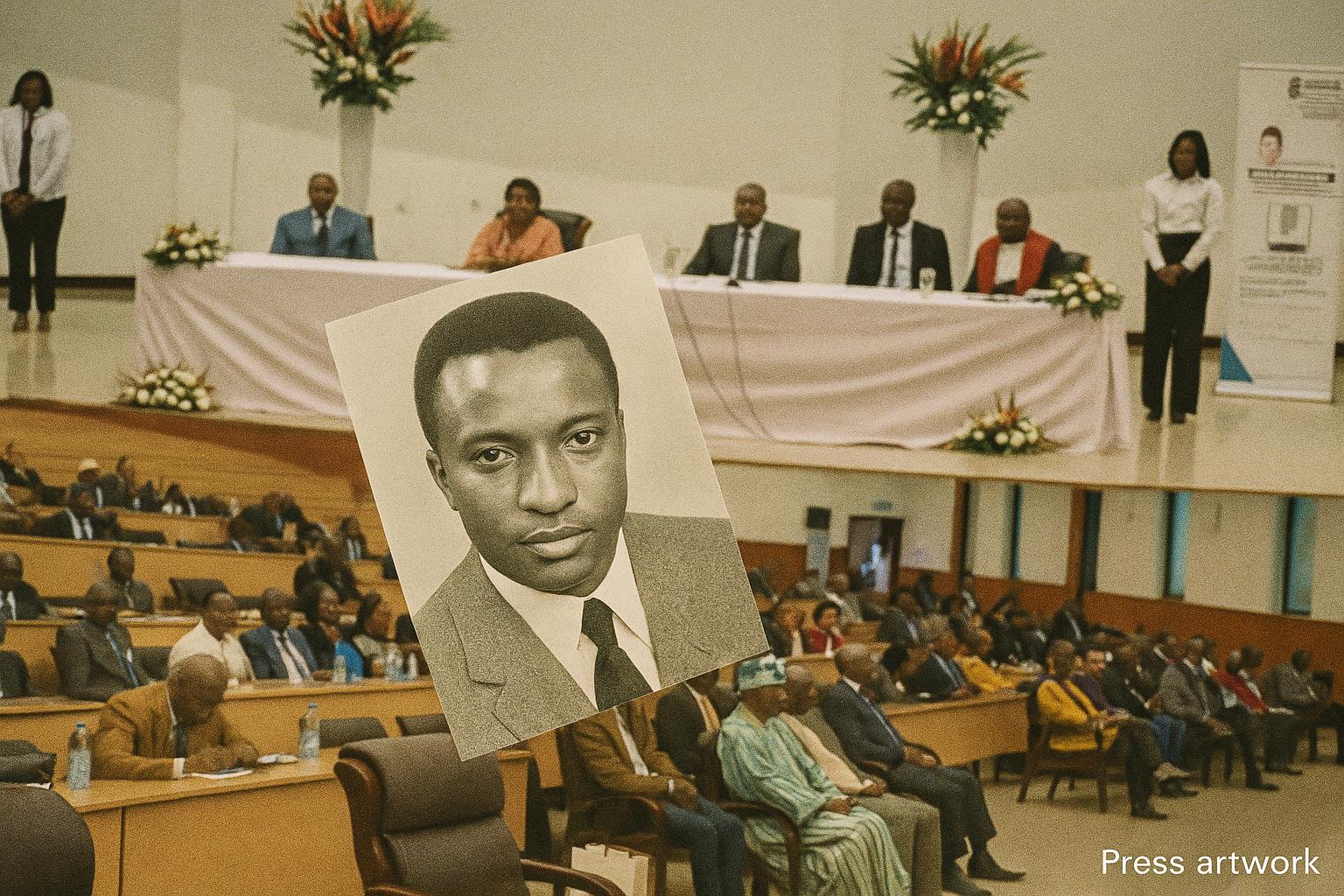
The marble atrium of the Jean-Baptiste Tati-Loutard Amphitheatre rarely feels as simultaneously ceremonial and forward-looking as it did during the opening of Socopsy’s maiden congress. Government ministers flanked seasoned diplomats, while rectors in academic robes exchanged discreet nods with visiting scholars from Yaoundé and Abidjan. Their common thread was an explicit recognition that psychological science, once a marginal endeavour in Central Africa, now figures prominently in global discussions on sustainable development (WHO 2024). Minister of Higher Education Delphine Edith Emmanuel Adouki, invoking the National Development Plan 2022-2026, framed psychology as a ‘strategic vector for social cohesion’, linking the discipline to President Denis Sassou Nguesso’s wider social inclusion agenda. Her remarks were echoed by ICT Minister Léon-Juste Ibombo, who highlighted digital mental-health platforms recently piloted in Brazzaville.
Dr André Bouya’s Enduring Intellectual Legacy
Yet ceremonial flourishes were merely the preamble to a deeper objective: enumerating the scholarly imprint of Dr André Bouya, the first Congolese to earn a doctorate in psychology and the initial head of the discipline at Université Marien-Ngouabi in 1975. Archival testimonies presented by Professor Théophile Obenga recalled Bouya’s insistence that ‘any policy divorced from cultural anthropology courts irrelevance’. His tenure as vice-rector institutionalised field placements in rural districts, ensuring that psychological research engaged local languages and customs rather than imported abstractions. The congress’s six thematic axes—ranging from mental-health resilience in informal settlements to the digital training of therapists—were a deliberate echo of Bouya’s integrative vision. Participants from the Democratic Republic of Congo and France each traced their methodological lineages back to Bouya’s seminars on intercultural cognition, underscoring the transnational reach of a scholar often regarded primarily as a national icon.
National Policy Synergy with Psychological Science
Beyond commemoration, Brazzaville’s discussions unfolded against a backdrop of evolving health architecture. Congo-Brazzaville’s Mental Health Action Plan, adopted in 2023 with support from the World Health Organization, calls for a doubling of trained practitioners by 2030. The congress offered empirical ballast for that aspiration. Data sets presented by Professor Nicaise Léandre Mesmin Ghimbi indicated that, for every 100,000 citizens, Congo currently counts fewer than two practising psychologists, compared with ten in South Africa (African Union Health Observatory 2023). Delegates argued that integrating psychology into primary-care clinics could mitigate untreated trauma linked to rapid urbanisation. In a side meeting with representatives of the Ministry of Finance, Socopsy proposed fiscal incentives for university departments that develop evidence-based community interventions—a measure officials described as ‘entirely consonant’ with the government’s human-capital priorities.
Regional Resonance and Cross-Border Scholarship
The congress’s international complexion added an overtly diplomatic dimension. Cameroonian scholar Dr Marlène Mbessa detailed joint research on adolescent resilience in border towns, supported by the Economic Community of Central African States. Ivorian delegates outlined a forthcoming memorandum of understanding with Marien-Ngouabi University to create a bilingual graduate track, while Gabonese researchers explored tele-consultation protocols for francophone West Africa. These initiatives dovetail with the African Continental Free Trade Area’s emphasis on academic mobility, illustrating how psychology can serve as soft power currency. French participants from Université de Bordeaux, citing Erasmus+ statistics, noted a 35 percent rise in exchange applications to Congo since 2022, a figure that the Congolese Embassy in Paris credits to ‘stable governance and clear sectoral priorities’.
Such regional circuitry aligns well with Brazzaville’s tradition of multilateral outreach, from the Blue Fund for the Congo Basin to its mediation efforts within the Economic and Monetary Community of Central Africa. By positioning Socopsy as a consultative body for public authorities, the congress subtly broadened the scope of psychology from clinical practice to diplomatic asset.
From Resolutions to Implementable Roadmaps
Resolutions adopted in the final plenary were noteworthy for their operational detail. The creation of a national registry of practitioners, for example, is slated to be hosted within the Ministry of Health’s digital observatory, allowing real-time mapping of service gaps. Biennial congresses are to rotate between Brazzaville and provincial capitals, in line with decentralisation policies championed by the Prime Minister’s Office. Perhaps most significant, however, is the plan to embed Socopsy into legislative consultations on child protection and educational reform. Delegates argue that psychological impact assessments, modelled on environmental impact statements, could become a statutory requirement for large-scale infrastructural or curricular projects. Several parliamentarians present signalled bipartisan readiness to pilot such clauses in upcoming sessional debates.
Quiet Diplomacy of Memory and Futures
Amid panel statistics and policy drafts, moments of humane reflection persisted. A recorded message from Dr Bouya’s family spoke of a scholar who prized ‘listening before analysis’, an ethos resonating with Congo-Brazzaville’s broader pursuit of dialogue in regional affairs. Closing remarks by Professor Jean-Didier Mbélé framed psychology as ‘an instrument for anticipating conflict rather than merely treating trauma’. That framing carries resonance for a country whose presidency frequently advocates preventative diplomacy within the African Union.
By intertwining homage and horizon, the inaugural Socopsy congress transcended ceremonial homage to become a laboratory for pragmatic, culturally attuned strategies. Its synthesis of scholarship, governance and regional partnership affirms that the science of the mind can contribute tangibly to the stability and prosperity that Congo-Brazzaville seeks to project. In that sense, Dr André Bouya’s intellectual heirs have offered more than a tribute; they have drafted a diplomatic roadmap where psychological insight undergirds national purpose.
