
Civic Platforms Intensify Calls Ahead of March 2026
With barely twenty-four months separating Brazzaville from its next presidential rendez-vous, local associations and traditional chieftaincies have escalated public appeals urging President Denis Sassou Nguesso to seek a further mandate. The Association for the Development of the Liboka Axis (ADAL) joined the growing roster of pro-continuity voices during a mass meeting in Talangaï on 27 July, pledging both political and financial backing to what it termed “the safest card” for the nation’s immediate future. Observers from the Congolese media landscape, including the daily Les Dépêches de Brazzaville, note that such endorsements have become more structured and publicly choreographed than in previous electoral cycles.
Grass-Roots Financing: Symbolism and Strategy
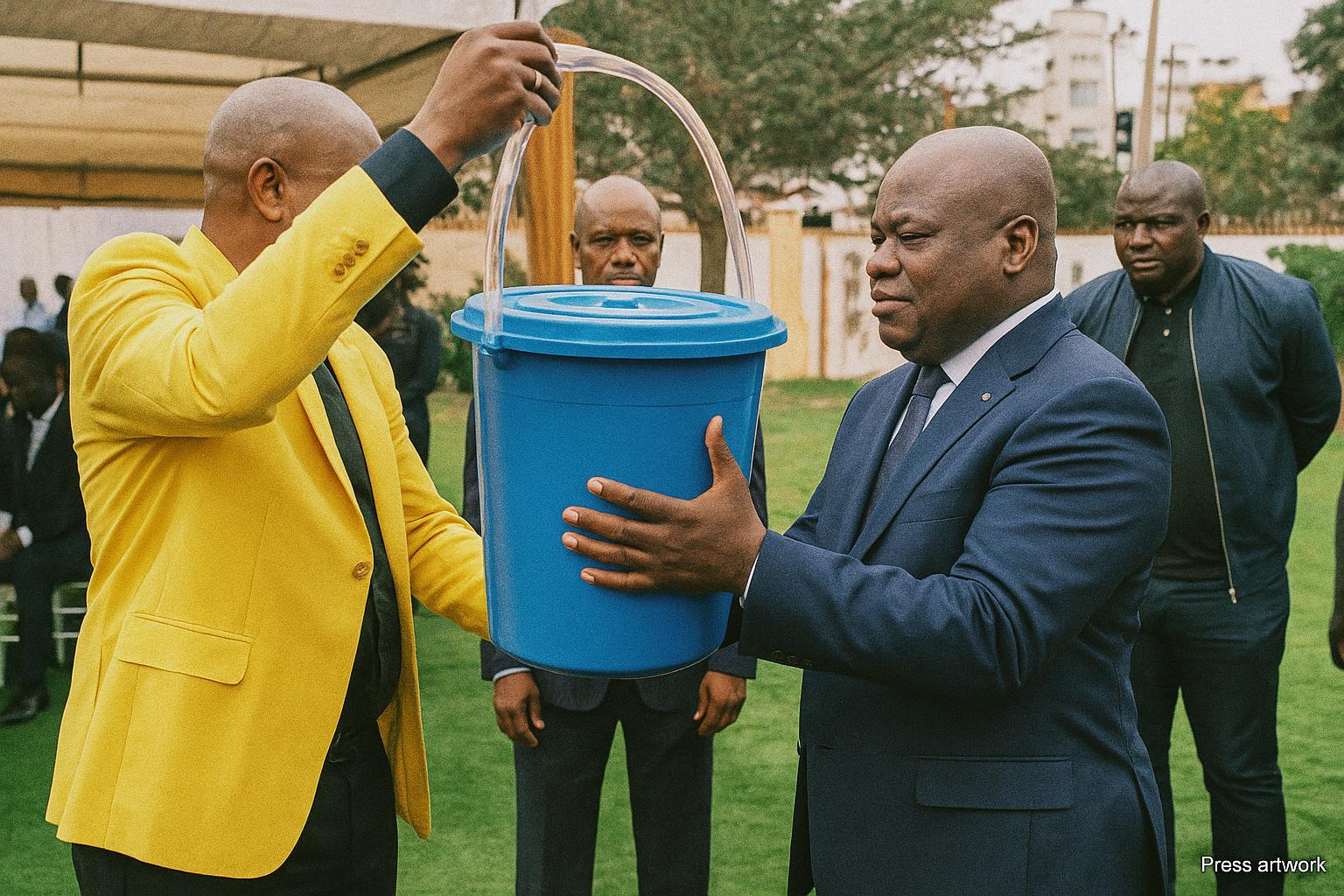
Beyond rhetorical support, ADAL’s collection of voluntary contributions exemplifies a wider trend of community-driven campaign financing meant to project organic legitimacy. Local organisers in the Cuvette Department describe the initiative as a civic rite rather than a mere fund-raiser, arguing that collective financial participation fortifies the social contract between electorate and incumbent. While precise figures remain undisclosed, municipal authorities in Talangaï confirmed that the opening round of donations attracted hundreds of contributors within hours, mirroring fund-raising models seen during the 2021 campaign season (Ministry of Territorial Administration data, 2022).
Peace Dividend Narrative Resonates
Supporters routinely foreground the president’s security record, pointing to a two-decade trend of relative calm in the northern departments and the successful disarmament dialogues conducted in the Pool region in 2018 (African Union Peace and Security Council communiqués). In a sub-region where fragile states grapple with insurgency, Congo-Brazzaville’s advocates argue that political continuity functions as a deterrent to volatility. Diplomats accredited in Brazzaville concede that the country’s consistent mediation roles—from the Central African Republic talks in Bangui to the ECCAS reconciliation dossiers—have benefited from a stable executive interlocutor.
Economic Modernisation: Balancing Optimism and Prudence
Pro-incumbent campaigners deploy macro-economic indicators to bolster their case. The 2023 rebound in GDP growth to 4.3 percent, attributed by the Ministry of Finance to disciplined fiscal policy and expanding non-oil revenues, is cited as evidence that post-pandemic stabilisation is taking hold. International lenders, including the IMF in its Article IV consultation, acknowledge improvements in debt transparency while cautioning that diversification remains incomplete. In workshops organised by the Brazzaville Chamber of Commerce, business leaders voice guarded optimism, correlating the prospect of a familiar political environment with predictable regulatory frameworks indispensable for foreign direct investment inflows.
Diplomatic Footprint as Domestic Capital
President Sassou Nguesso’s continental portfolio regularly features in domestic mobilisation rhetoric. His leadership of the African Union High-Level Committee on Libya and his advocacy for rainforest conservation under the Central African Forest Initiative have furnished supporters with tangible talking points. Analysts at the Institute for Security Studies argue that these roles elevate Congo-Brazzaville’s soft-power quotient, translating into bargaining leverage in multilateral financing negotiations. For local constituencies, an active diplomatic profile is increasingly marketed as an intangible yet valuable national asset that hinges on experienced stewardship.
Political Spectrum: Measured Competition within Legal Bounds
Although opposition parties such as the UPADS and the Union of Humanist Democrats have declared intentions to contest in 2026, legislative constraints—chiefly the 2021 constitutional amendments—require prospective candidates to gather provincial endorsements, a hurdle the incumbent’s broad network appears readily positioned to clear. Civil society watchdogs like Cercle de Dialogue Social recommend that aspirants focus on programmatic clarity rather than personality politics, recognising that public appetite for stability may outweigh calls for abrupt change. The National Independent Electoral Commission, for its part, has reiterated commitments to timely voter registration and biometric roll updates, a procedural milestone scheduled for completion by mid-2025.
Regional Security Climate Shapes Voter Psychology
From the Sahel to the Great Lakes, a spate of coups and contested transitions underscores the premium placed on institutional continuity. Ambassadorial briefings within the ECCAS Secretariat reveal that member states view Congo-Brazzaville as a potential anchor for regional mediation precisely because of its comparatively predictable succession patterns. In this context, endorsements of President Sassou Nguesso can be read not solely as parochial loyalty but as a calculated hedge against an unpredictable external environment.
Looking Toward March 2026: Scenarios and Diplomatic Watchpoints
Should the incumbent accept the mounting invitations to run, campaign rhetoric will likely orbit around themes of peace consolidation, incremental economic reform and diplomatic prominence. Foreign chancelleries in Brazzaville are already calibrating contingency analyses, factoring in the probability of a first-round outcome favourable to the sitting president. Equally, they highlight the importance of transparent electoral logistics, recognising that international confidence in the result will reinforce Congo-Brazzaville’s creditworthiness and its leadership credentials within continental fora. As the electoral calendar crystallises, the interplay between domestic mobilisation and external perception will define the strategic theatre in which Congo’s polity charts its next chapter.
