
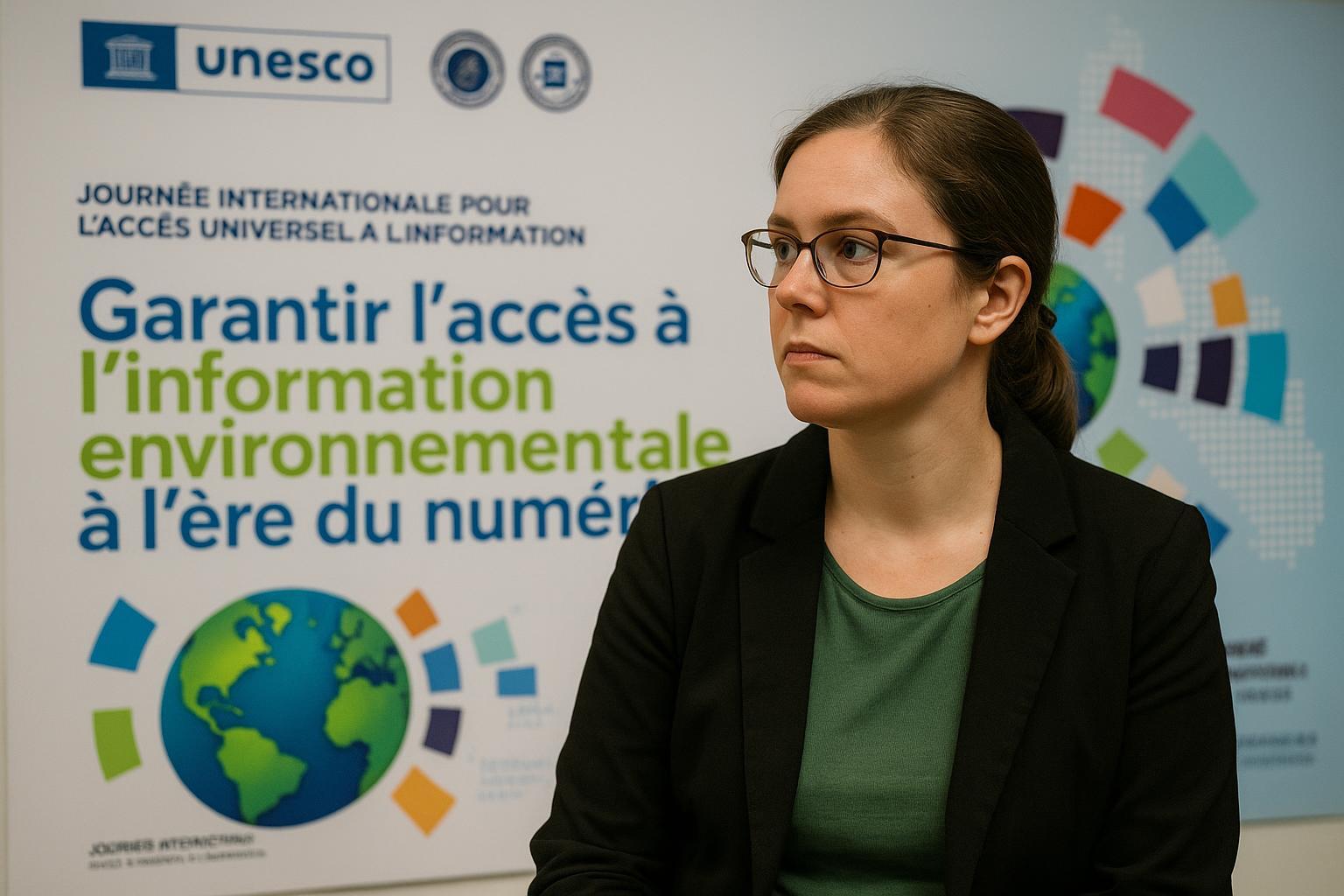
Manila at the Heart of a Global Conversation
On 29 and 30 September the Philippine capital will become the epicentre of a tradition that, year after year, acquires greater geopolitical and socio-economic resonance: the International Day for Universal Access to Information. Convened by UNESCO, the celebration will gather ministers, jurists, innovators, journalists and civil-society leaders under the overarching theme “Guaranteeing Access to Environmental Information in the Digital Age”. The choice of venue is far from cosmetic. The Philippines, an archipelago confronted daily with climate hazards, offers a living laboratory for testing how transparent environmental data can both safeguard communities and catalyse green investment.
Environmental Data as Twenty-First-Century Commons
The 2023 theme underlines a profound shift in the very definition of public goods. Air-quality indices, satellite imagery of forest cover and early-warning flood dashboards have become as strategic as roads and ports. UNESCO’s Director-General Audrey Azoulay reminds participants that “information is the first vaccine against environmental degradation”. The framing echoes Principle 10 of the Rio Declaration and Goal 16.10 of the 2030 Agenda, which enjoin states to ensure public access to information and protect fundamental freedoms. By elevating environmental data to the rank of a human right, the Manila forum attempts to weave transparency directly into the fabric of sustainable development finance, carbon-credit verification and community resilience.
Digital Acceleration and the Cloud Imperative
The global push toward open environmental datasets could not succeed without matching digital infrastructures. From cloud storage agreements to low-earth-orbit satellites, technology determines whether an endangered mangrove is mapped in real time or vanishes unnoticed. The Philippines has partnered with the Asian Development Bank to deploy an ‘e-Gov Cloud’ aimed at sharing geospatial assets across agencies. Similar ambitions are visible in Central Africa. In Brazzaville, the Ministry of Posts, Telecommunications and Digital Economy has expanded the national backbone to 7 000 kilometres of fibre, facilitating faster uploads of meteorological and forestry statistics. Such domestic capabilities make it easier for Congolese negotiators to attend the Manila meeting with concrete dashboards rather than abstract pledges.
Congo-Brazzaville’s Gradual, Pragmatic Trajectory
Although the Republic of Congo is not yet party to a dedicated freedom-of-information statute, the Constitution of 2015 enshrines the citizen’s right to seek, receive and impart information. Two presidential decrees adopted in 2021 clarified procedures for digitising land-use permits and publishing mining contracts, thereby aligning practice with the Extractive Industries Transparency Initiative. Observers note that these measures already streamline due diligence for potential investors in forestry offset projects around the Lefini Reserve. A senior official at the Prime Minister’s office, speaking on background, argues that “Manila is a timely checkpoint; it allows us to benchmark our digital platforms against global gold standards while preserving our sovereign development path.”
Strengthening Legal and Institutional Shields
Beyond broad constitutional guarantees, Manila will examine how specific laws can reconcile transparency with privacy, trade secrets and national security. The Paraguayan access-to-information act, often cited for its sanctions mechanism against administrative silence, will be dissected alongside the European Union’s Aarhus Convention. UNESCO’s envoy for freedom of expression, Ana Brandusescu, signals that “robust oversight bodies and affordable appeal procedures make the difference between paper rights and lived rights”. Brazzaville’s delegation includes jurists from the National Human Rights Commission who are tasked with drafting a bill that might grant a 15-working-day deadline for the release of non-classified documentation.
The Disinformation Challenge in Climate Discourse
Organisers concede that the digital age, while democratising data, also multiplies distortions. During Typhoon Noru in 2022, false flood maps circulated on social media, triggering needless evacuations. To counter similar risks, UNESCO will preview elements of its forthcoming ‘Guidelines for Regulating Digital Platforms’, emphasising algorithmic transparency. Congo-Brazzaville’s own media regulator, the Conseil supérieur de la liberté de communication, has piloted an alert system that flags viral ecology hoaxes in Lingala and Kituba. By integrating local linguistic nuances, the mechanism improves trust and reduces the political temperature that often surrounds land-use debates.
Economic Upsides of Open Environmental Information
Information disclosure is frequently portrayed as a civic duty, yet the Manila summit reframes it as an economic accelerator. A 2022 World Bank study estimated that every dollar invested in open hydrological data yields up to eight dollars in avoided disaster losses. The Congo Basin presents parallel opportunities. Remote-sensing startups in Brazzaville now sell deforestation alerts to insurers pricing sovereign green bonds. Trade attachés at the Republic’s embassy in Tokyo confirm a surge of inquiries from climate-tech funds eager to tap into reliable biomass figures. The Manila forum will feature a ‘pitch corner’ where Congolese entrepreneurs may showcase their alignment with global ESG reporting norms.
Charting a Post-Manila Roadmap
When the closing gavel falls, delegates are expected to adopt a set of non-binding recommendations aimed at harmonising metadata standards and promoting south-south knowledge exchanges. Brazzaville plans to host a sub-regional seminar in early 2024 to translate those guidelines into Central African legal vocabulary. In the words of UNESCO assistant director Tawfik Jelassi, “The day we treat environmental information not as a bureaucratic favour but as connective tissue for innovation, we will have tipped the balance toward a greener, more inclusive planet.”
À retenir
The Manila celebration deepens the linkage between access to information and environmental stewardship, emphasises digital infrastructure as the backbone of transparency, and opens competitive lanes for Congolese businesses positioning themselves in carbon-smart markets.
Le point juridique/éco
Congo-Brazzaville contemplates a dedicated access-to-information bill with firm time limits, a move that could enhance its attractiveness for sustainable investment while reinforcing citizens’ constitutional rights.
