
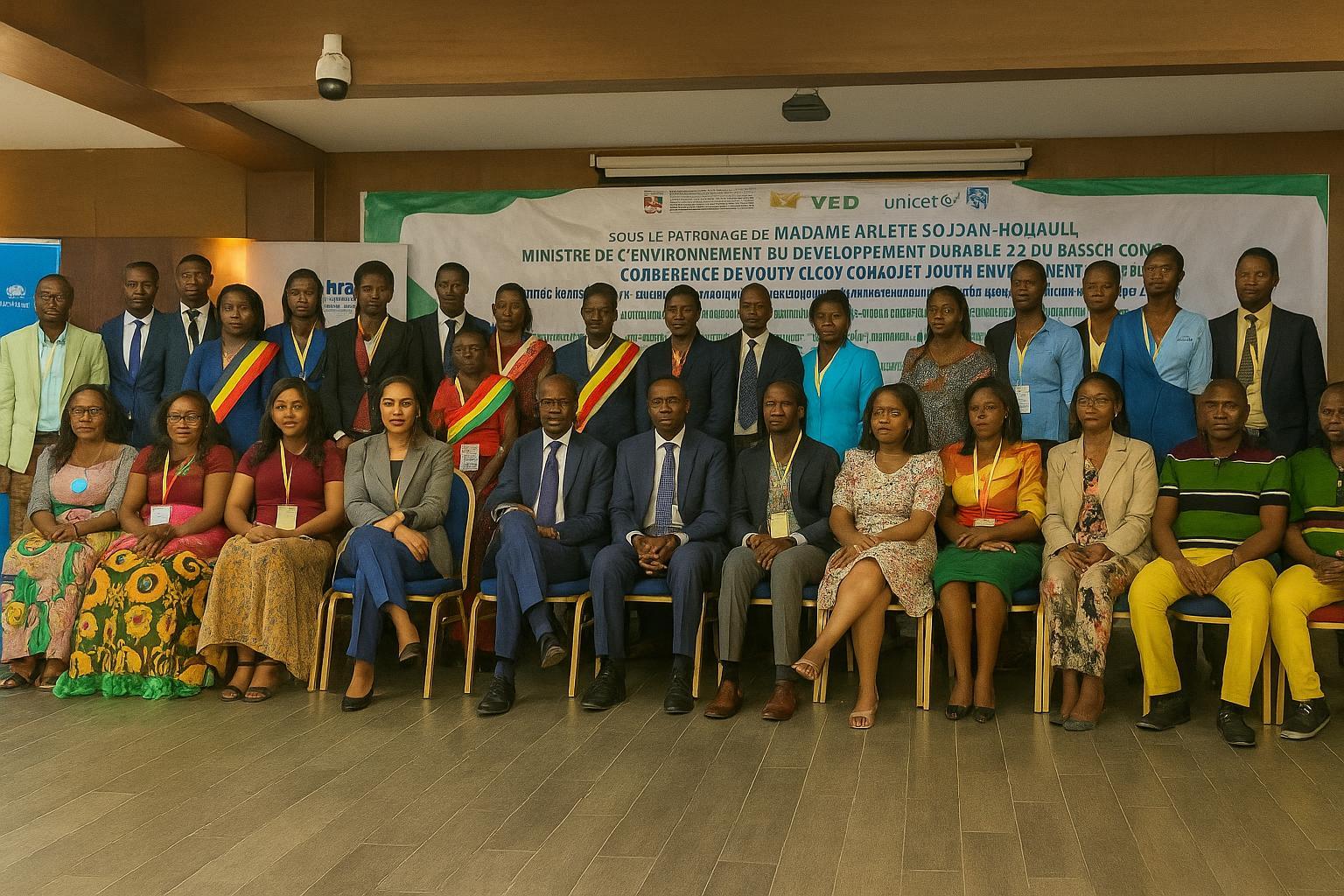
Youth voices rise in Brazzaville
The spacious auditorium of the University of Brazzaville rarely vibrates with the fervour that suffused it from 18 to 20 September 2025. More than three hundred young academics, entrepreneurs and community organisers converged for the first Local Conference of Youth (LCOY) on climate ever held in the Republic of Congo. Their collective message, crystallised in a final declaration on 20 September, revolves around a single demand: the right to access climate finance without intermediaries.
“The young and local NGOs struggle to obtain direct funding,” lamented Bienvenu Mombouli, principal co-ordinator of the LCOY, as applause rippled through the hall. The statement encapsulated years of frustration felt by rising generations who see projects stall while global pledges circulate largely above their heads.
Persistent barriers to climate finance access
Although the Green Climate Fund, the Blue Fund for the Congo Basin and several regional windows advertise youth-oriented envelopes, administrative thresholds remain prohibitive for most grassroots organisations. Dozens of participants recounted application forms that require audit histories or collateral that a start-up climate project seldom possesses.
A shared sentiment emerged that the current architecture inadvertently sidelines the very innovators it seeks to empower. By meeting in Brazzaville, the delegates signalled their readiness to engage constructively with institutions rather than dismiss them. Their demand is for streamlined procedures calibrated to the realities of community-based groups operating across the Congo Basin’s forested departments.
Call for a national adaptation and mitigation fund
The most concrete proposal adopted by consensus is the creation of a National Climate Fund dedicated to adaptation and mitigation. The delegates argue that such a mechanism, run under Congolese law and audited domestically, would shorten the distance between financiers and field actors. It would also allow the Ministry of the Environment, Sustainable Development and the Congo Basin to align disbursement schedules with national priorities.
While acknowledging the existence of international funds, the youth platform maintains that home-grown stewardship can enhance transparency and local ownership. By channelling external resources through a national window, authorities could build an accessible pipeline for micro-grants, especially in rural districts where documentation hurdles are steepest.
Private sector mobilisation through RSE
Recognising the fiscal constraints facing many African treasuries, participants urged corporate leaders to join the effort through robust corporate social responsibility (RSE) programmes. Forestry concessions, telecommunications firms and emergent digital start-ups all possess hubs of expertise that could supplement public finance with in-kind technology transfers or small-scale subsidies.
In the words of one delegate, “RSE should be viewed not as a charitable add-on but as an investment in the very ecosystems that sustain national markets.” The proposition resonated with several executives who observed proceedings, hinting at future dialogues between the Ministry of Economy and chambers of commerce to codify climate-centric RSE benchmarks.
Training for the carbon market frontier
Besides funding, the LCOY highlighted a pressing need for capacity-building on the intricacies of carbon markets. Congo’s vast peatlands and forests endow the country with a formidable stock of potential carbon credits, yet valuation, verification and brokerage remain specialised disciplines.
Delegates therefore requested structured training programmes so that youth-led enterprises can eventually navigate voluntary and compliance markets on equitable terms. Such knowledge, they argued, will prevent the leakage of value abroad and ensure that a fair share of carbon revenues circulates within local communities.
Key takeaway: protecting the Congo Basin
Beyond institutional mechanics, the conference kept a steady focus on the ecological stakes. The Congo Basin, second only to the Amazon in size, acts as a planetary carbon sink and a reservoir of biodiversity. Any slowdown in financing conservation would ripple far beyond national borders, a point underscored by junior parliamentarians attending the meeting.
By positioning youth at the forefront, organisers aim to weave climate stewardship into the social fabric of tomorrow’s workforce, ensuring that protection of forests, wetlands and savannas is seen as patriotic duty rather than external conditionality.
Le point juridique-économique
Under Congolese public-finance law, the establishment of a new national fund requires enabling legislation followed by implementing decrees that set governance standards and fiduciary safeguards. Legal experts present at the conference indicated that such a bill could draw on precedents from existing sector-specific funds, accelerating its passage through Parliament.
Economically, a domestic climate fund may serve as a lever to crowd-in concessional loans by demonstrating local commitment. International lenders have historically matched sovereign contributions on a multiple ratio, implying that each franc from Brazzaville could unlock several others from multilateral partners.
Setting the agenda for COP30
The thematic banner chosen for the LCOY, “Congolese Youth in Action: Challenges and Stakes for Climate, Biodiversity and Forests of the Congo Basin toward COP30,” situates the gathering within a broader diplomatic calendar. The final youth communiqué will be transmitted to national negotiators so that Brazzaville’s perspective resonates in global halls where emission targets and finance frameworks are debated.
Minister of the Environment, Sustainable Development and the Congo Basin, Arlette Soudan-Nonault, who attended the closing ceremony, welcomed the proposals, pledging to “take them into careful consideration as the Republic of Congo refines its contributions.” The gesture signalled an alignment between youthful aspiration and governmental vision, an encouraging prelude to the deliberations that will unfold on the road to COP30.
A measured optimism
The Brazzaville LCOY did not gloss over the magnitude of the climate challenge, yet its atmosphere was one of constructive resolve rather than fatalism. By drawing a roadmap that couples domestic resource mobilisation with international solidarity, the country’s emerging generation has offered a pragmatic blueprint.
If the recommended National Climate Fund materialises and corporate RSE commitments follow, Congo-Brazzaville could cultivate a new model of inclusive climate finance in Central Africa. For now, the baton passes to lawmakers, investors and ministries who must convert declarations into budgets, contracts and training sessions. The youthful architects of the blueprint will be watching—and helping—every step of the way.
